
TL;DR

Get the latest gadgets delivered free with Prime
- Fast, free delivery on millions of items
- Prime Video, Amazon Music and more included
- Member-only deals all year
German quantum computing startup Quint has raised €9.1 million in its first funding round to develop superconducting chips designed to reduce errors and the resources needed for error correction. The company says its patented architecture coordinates circuit design and electrical controls; it still must show that the approach works at hundreds of qubits and can be manufactured reliably.
German quantum computing startup Quint has raised €9.1 million in its first funding round to develop superconducting chips designed to reduce calculation errors and the cost of correcting them. The round was led by Vsquared Ventures, with participation from Quantonation, Nucleus Capital and industry specialists, according to Handelsblatt.
Quint plans to use the funding to advance its chip technology, which aims to suppress some errors through the design of the chip’s circuit elements and their electrical controls. The company has developed a patented architecture, Handelsblatt reported. Its approach is intended to reduce the hardware overhead that quantum computers need to identify and correct errors, but the available report does not provide independent performance results or a quantified error reduction.
Handelsblatt reported that the round also included IQM co-founder Mikko Möttönen and described it as the largest funding round for a German quantum computing company at such an early stage. That characterization is the newspaper’s assessment. Quint has also received a European Union funding award of more than €2 million, according to the report; the award is separate from the €9.1 million financing.
The startup intends to move toward commercialization while relying on contract manufacturers for production in the medium term. Its founders say they want the technology to meet a range of customer requirements. The manufacturing model would let Quint focus on chip design, but its architecture will need to perform consistently beyond laboratory conditions and as systems grow.
The Cost of Correcting Quantum Errors
Errors are a major obstacle to using quantum computers for reliable calculations. Because physical qubits are vulnerable to disturbances, systems typically use multiple physical qubits to protect information and detect and correct mistakes. That redundancy increases the hardware required for useful, fault-tolerant computation.
If Quint’s design can reliably reduce errors at the chip level, it could lower some of that overhead and make larger systems less costly to build. Quantum physicist and investor Ion Hauer told Handelsblatt that error correction is the biggest cost driver in quantum computing today. That is an attributed assessment, not evidence that Quint has already reduced costs. Any practical benefit depends on testing, scaling and manufacturing results.
The development is relevant to potential industrial users because sectors such as chemistry and pharmaceuticals are often discussed as possible beneficiaries of quantum computing. Quint has cited companies including BASF and Bayer as examples of the industrial market it hopes to serve. The funding gives the startup resources to pursue that goal, but does not establish when customers could use its chips or whether they will outperform alternatives.
Products Worth Considering
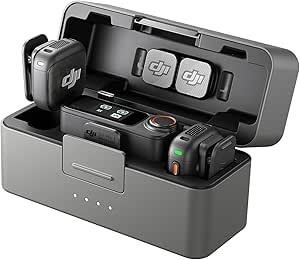
DJI Mic 3 Wireless Microphone Kit (2 Transmitters, 1 Receiver, Charging Case)

Apple Watch SE (2nd Gen) GPS 40mm with Starlight Aluminum Case and Sport Band (S/M)

LG UltraGear 34GX90SA-W 34-inch WQHD Curved OLED Gaming Monitor
As an affiliate, we earn on qualifying purchases.
From University Research to Chip Production
Quint is a spinout from Friedrich-Alexander University Erlangen-Nuremberg. Its founding team includes quantum physicists Michael Hartmann and Christopher Eichler, as well as economist Jona Stinner. Hartmann previously worked on Google’s quantum team, Handelsblatt reported. The founders had spent years developing the chip architecture before setting up the company.
The company is based in Munich and has said it chose Germany partly for proximity to prospective industrial customers. Its technology uses superconducting circuits, a platform used by several quantum computing efforts. The company’s distinction, as described in the report, is its attempt to coordinate the physical circuit structure with the electrical signals that control it.
Quint’s plans place design and production on separate tracks: the startup develops the architecture while contract manufacturers would handle production in the medium term. Handelsblatt compared the planned arrangement to NVIDIA’s business model. The comparison concerns the division between design and manufacturing; it does not mean Quint’s business, production scale or market position is equivalent to NVIDIA’s.
““Error correction is the biggest cost driver in quantum computing today.””
— Ion Hauer, quantum physicist and investor, speaking to Handelsblatt
Scaling Beyond the Laboratory
The report does not disclose Quint’s current qubit count, measured error rates, test conditions, production yield, or a timeline for delivering chips to customers. It is also not yet clear how much the architecture reduces errors compared with other designs, or whether any reduction would translate into lower total system costs.
Hauer told Handelsblatt that Quint needs to show its advantage at the scale of hundreds of qubits. A patent and early-stage financing do not establish that the design will retain its performance as it scales. Production through contractors adds another test: whether the chip can be made repeatedly and reliably in quantities relevant to customers.
Quint also faces competition from established companies including Google and IBM, which have invested heavily in quantum computing, according to Hauer. The available information does not specify how Quint’s chips compare with competitors’ systems, when a commercial product may be available, or which customers have committed to buying or testing the technology.
Testing the Hundreds-of-Qubits Milestone
The immediate next step is for Quint to use the new financing to advance its chip architecture and demonstrate that its claimed error-control benefits persist as the number of qubits increases. The key milestone identified in the report is evidence at the scale of hundreds of qubits, alongside proof that the design can move from research into reliable production.
Quint has said it plans to work with contract manufacturers in the medium term and to prepare its technology for a range of requirements. No manufacturing partner, product launch date, or customer deployment schedule was specified in the source report. Further performance data and details about production plans will be needed to judge whether the approach can reduce the cost of building reliable quantum computers.
Key Questions
How much funding did Quint raise?
Quint raised €9.1 million in its first funding round, according to Handelsblatt. Vsquared Ventures led the round; Quantonation, Nucleus Capital and industry specialists also participated.
What is Quint developing?
The German startup is developing superconducting quantum chips with a patented architecture intended to reduce errors through the interaction of circuit design and electrical controls. The company’s performance claims have not been independently established in the information provided.
Why do quantum computers need error correction?
Physical qubits can make errors that undermine calculations. Quantum computers use redundancy across multiple physical qubits to detect and correct some errors, which adds hardware requirements. Quint aims to reduce part of that burden within the chip.
Has Quint shown that its chips work at scale?
The source report does not provide results at hundreds of qubits or disclose measured error rates. Investor Ion Hauer told Handelsblatt that demonstrating the architecture’s advantage at that scale remains a key challenge.
When will Quint’s chips be available?
No product release date or customer delivery schedule was reported. Quint intends to use contract manufacturers in the medium term, but the timing and scale of production remain unclear.
Source: thequantuminsider.com