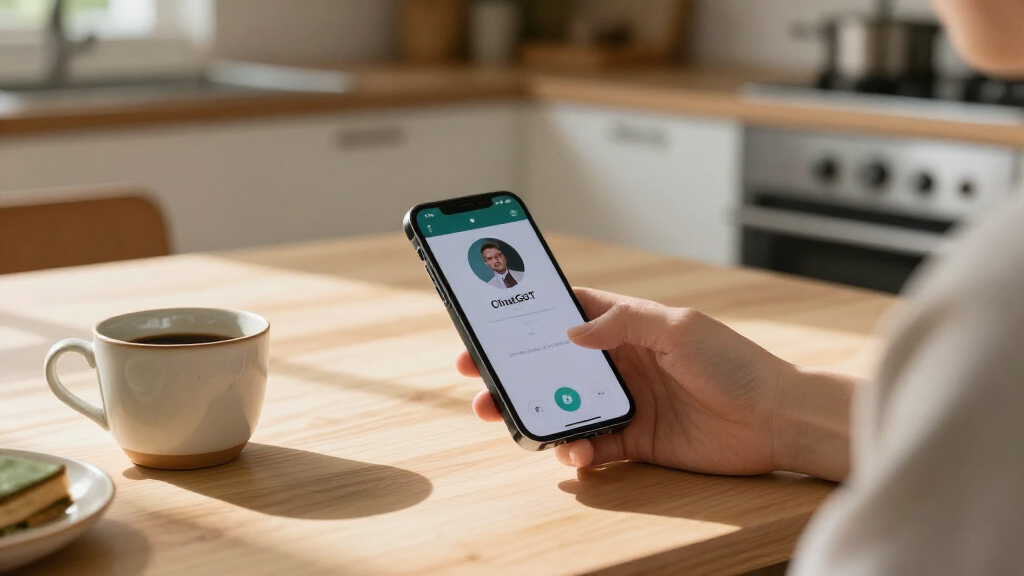

🔍 Read the full analysis: OpenAI To Retire Two ChatGPT Voice Modes: What You Should Know on ThorstenMeyerAI.com

Get the latest gadgets delivered free with Prime
- Fast, free delivery on millions of items
- Prime Video, Amazon Music and more included
- Member-only deals all year
TL;DR
OpenAI plans to remove Advanced and Standard voice from ChatGPT on Dec. 11, 2026, switching users who selected either mode to GPT-Live. Existing conversations will remain available, but users have raised concerns about differences in how GPT-Live sounds and handles interruptions; OpenAI has not announced when it will support live video and screen sharing.
OpenAI will retire Advanced and Standard voice in ChatGPT on Dec. 11, 2026, leaving GPT-Live as the remaining voice mode, the company said in a Nov. 10 post. Users who selected either older mode will be switched to Live voice, while their existing conversations will remain in chat history.
OpenAI’s announcement gives users 31 days’ notice before the change. According to the company’s help-center guidance, as quoted by Interesting Engineering and FourWeekMBA, Advanced and Standard remain available during the notice period and will then be removed from Settings > Voice. Users will not need to move their conversation histories manually; earlier chats can continue by text or voice, with spoken replies using GPT-Live after the change.
The retirement does not immediately cover every feature that relies on the older system. OpenAI’s help-center wording, as reported by FourWeekMBA, says live video and screen sharing will continue to use Advanced voice until GPT-Live can support them. Voice with custom GPTs is also set to remain on Advanced voice until Dec. 11, when those custom GPTs are due to be retired under a separate ChatGPT change.
OpenAI says voice use has “nearly doubled” since GPT-Live launched in July and that “virtually all” ChatGPT voice users now use it. Those are the company’s explanations for consolidating the options. Users cited by TechRadar have reported concerns about the newer mode, including interruptions, verbal fillers and a different sound from the voices they had used previously. Some users on OpenAI’s community forum have also said they rely on voice for accessibility.
Two voice modes are retiring What the switch means
OpenAI plans to retire Advanced and Standard voice, moving users to GPT-Live. Existing conversations will remain available.
What changes for users
The selected voice system changes; earlier chats stay in history.
- Advanced and Standard remain available, according to reported help-center guidance.
- Users can keep choosing either older mode.
- Users of those modes are expected to switch to GPT-Live.
- Earlier chats can continue by text or voice; spoken replies use GPT-Live.
How the modes differ
GPT-Live is designed for real-time conversation, with listening and speaking at the same time.
A staged process
Speech recognition, a language model and speech generation handled the conversation in sequence.
Direct speech processing
Generally waited for the user to finish speaking before responding.
Full-duplex voice
Can listen and speak at the same time; some users report concerns about interruptions, fillers and voice differences.
Features and services to watch
The ChatGPT mode change does not establish a general shutdown of OpenAI voice services.
| Area | What the supplied information says |
|---|---|
| Live video and screen sharing | Continue using Advanced voice until GPT-Live supports them; no support date announced. |
| Custom GPT voice | Scheduled to remain on Advanced voice until Dec. 11, alongside a separate custom GPT retirement. |
| Voice API | The ChatGPT announcement is not identified as an API shutdown; developers should check model-specific notices. |
What remains uncertain
OpenAI has not specified when older capabilities will arrive in GPT-Live or quantified how many users still rely on the retiring modes.
- Some users raise accessibility concerns about losing the older experience.
- Reported complaints do not establish how widespread opposition is.
- The supplied material lists separate older audio and voice API model retirements between Jan. 6 and Feb. 26, 2027.
What the Voice Switch Means
For most ChatGPT users who speak with the assistant, the immediate change is which system handles voice conversations, not whether their previous chats disappear. OpenAI says older conversations stay in history and can be continued. But users who prefer the pacing or sound of Advanced or Standard voice will lose the option to select those modes after Dec. 11.
The switch also matters to people who use voice for practical reasons, including accessibility. Forum posts and complaints reported by TechRadar show that some users regard the older experience as more than a setting preference. OpenAI has not provided public figures about how many users oppose the change or how many depend on the retiring modes, so the scale of that impact is not established.
Businesses and developers should distinguish the ChatGPT product change from an API shutdown. The source material does not identify the Dec. 11 retirement as a deprecation of OpenAI’s voice API. However, OpenAI’s API documentation lists separate retirement dates for some older audio and voice models in 2027, meaning developers should check the notices for the specific models they use rather than assume the ChatGPT deadline applies to them.
Products Worth Considering

Jackery Explorer 2000 v2 Portable Power Station with Two 200W Solar Panels

Logitech MX Mechanical Wireless Illuminated Keyboard, Clicky Switches

LG UltraGear 27-inch QHD OLED Gaming Monitor, 240Hz, 0.03ms, G-SYNC Compatible, FreeSync Premium Pro, HDMI 2.1, DisplayPort 1.4, Black
As an affiliate, we earn on qualifying purchases.
How GPT-Live Differs
The three modes use different approaches to speech. Standard voice, according to OpenAI’s help-center description quoted by FourWeekMBA, used a sequence of speech recognition, a language model and speech generation. Advanced voice processed speech directly, but generally waited for a user to finish speaking before responding. That turn-taking behavior differs from GPT-Live’s full-duplex design, which can listen and speak at the same time.
OpenAI introduced GPT-Live on July 8 as a new generation of voice models for ChatGPT. Its developer documentation describes the API model GPT-Live-1 as supporting real-time conversation and delegating reasoning or tool use to a backend agent. The company’s stated direction is to bring features from the older modes into GPT-Live and improve response depth, continuity and personalization. These are OpenAI’s plans; the material does not establish that every older capability will be available by the retirement date.
The Dec. 11 date also coincides with a separate plan to retire custom GPTs across ChatGPT plans, according to the supplied reporting on OpenAI’s release notes and migration guidance. The two changes intersect because voice with custom GPTs is scheduled to use Advanced voice until that date. They remain distinct product changes, and the voice announcement should not be read as a general end to OpenAI voice services.
““I’m beyond disappointed because ChatGPT means a lot to me.””
— A ChatGPT user quoted by TechRadar
Open Questions on the Change
OpenAI has not said when GPT-Live will support live video and screen sharing, or whether those capabilities will be ready by the time Advanced voice is retired. The company’s stated intention to bring older features to GPT-Live does not specify which features will arrive when.
The size and nature of user opposition are also difficult to measure. The supplied source material cites complaints on TechRadar and an OpenAI forum thread, but those examples are not a representative survey. OpenAI has not publicly quantified how many users still choose Advanced or Standard voice, or explained whether it will offer additional settings for people who prefer their behavior.
OpenAI’s help-center pages could not be independently retrieved in the source reporting; details about the transition and exceptions are attributed to outlets that quoted them. The company’s X announcement and its stated usage rationale are directly attributed to OpenAI. The precise effect on API customers also remains separate from the ChatGPT change and depends on the models and documentation relevant to each developer.
Before the December 11 Cutoff
Users can continue choosing Advanced or Standard voice until Dec. 11, 2026, according to the reported help-center guidance. After that, ChatGPT is expected to switch users of those modes to GPT-Live, while retaining earlier conversations in chat history. People who use live video, screen sharing or custom GPT voice should watch for further product guidance because the listed exceptions are tied to capabilities or services that are also changing.
Developers should review OpenAI’s API deprecation documentation for any separate shutdown dates affecting their integrations. The supplied material lists some older voice and audio model retirements between Jan. 6 and Feb. 26, 2027, but does not identify those dates as consequences of the ChatGPT mode retirement. OpenAI has not announced a date for GPT-Live support for live video or screen sharing.
Key Questions
When will Advanced and Standard voice be removed from ChatGPT?
OpenAI has set Dec. 11, 2026 as the retirement date. The modes are expected to remain available during the notice period.
What happens to conversations made with the old voice modes?
According to the help-center information quoted by Interesting Engineering, existing conversations will remain in ChatGPT. Users can continue them by text or voice; voice continuations will use GPT-Live.
Will live video and screen sharing stop on Dec. 11?
Not necessarily. OpenAI’s help-center guidance, as quoted by FourWeekMBA, says those features will continue using Advanced voice until GPT-Live supports them. The company has not announced when that support will arrive.
Does this mean OpenAI is shutting down its voice API?
The announced change concerns voice modes in ChatGPT and is not described as an API deprecation. OpenAI documentation lists separate retirement dates for some older audio and voice API models, so developers should check the notices for the specific models they use.
Source: ThorstenMeyerAI.com