Deepfakes are reshaping culture by blurring the lines between reality and fiction in politics and art. You might see convincing videos that deceive viewers, influence public opinion, or challenge trust in media. They also open new creative horizons, allowing artists to explore identity and history in innovative ways. However, ethical dilemmas around authenticity and consent emerge, making it essential to understand the full scope of their impact. Continuing will reveal more about how deepfakes are changing our society.
Open a free Amazon Business account
Business pricing, bulk buying and tax-exempt orders.
As an affiliate, we earn on qualifying purchases.
Key Takeaways
- Deepfakes transform culture creation and sharing by blurring reality and fiction, impacting media perception and dissemination.
- They influence politics by deceiving viewers, manipulating public opinion, and eroding trust in visual evidence.
- Artists use deepfakes for innovative expression, exploring identity and history, while raising concerns about deception and exploitation.
- Ethical dilemmas arise around authenticity, consent, ownership, and the potential misuse of realistic media manipulation.
- Society’s media literacy and regulation are crucial to prevent misinformation, preserve trust, and responsibly harness deepfake technology.
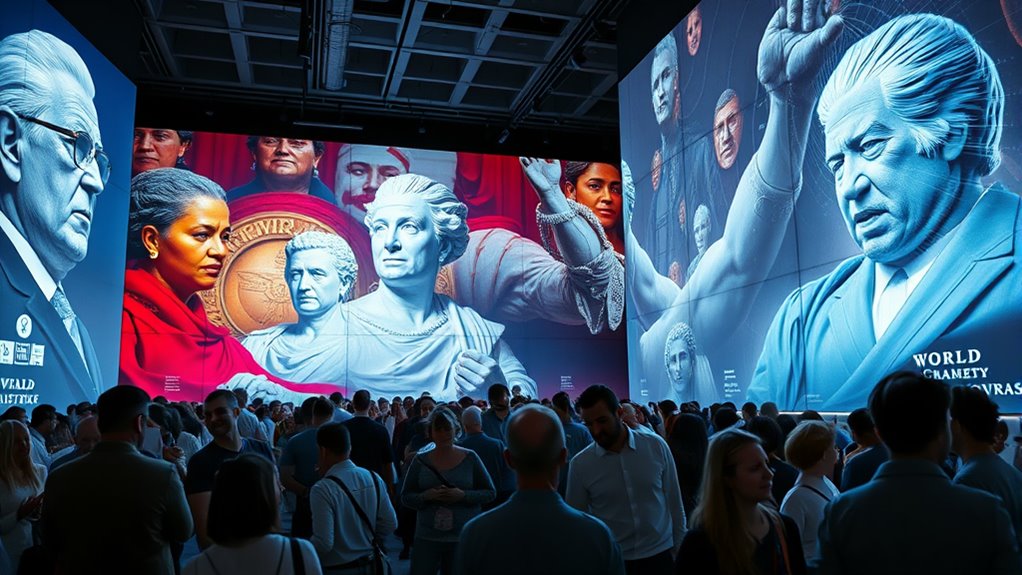
Deepfakes are transforming the way culture is created, shared, and perceived, often blurring the line between reality and fiction. As you encounter these hyper-realistic videos, you realize they can be powerful tools for media manipulation, shaping public opinion with startling accuracy. In politics, deepfakes can deceive viewers into believing false statements or actions by public figures, turning easily into tools for identity deception. You might see a video of a politician making controversial remarks or appearing to endorse policies they oppose, all fabricated but convincing enough to sway voters or influence debates. This erosion of trust in visual evidence challenges the very foundation of democratic discourse, forcing you to question what’s real and what’s fabricated. The ease of creating such convincing illusions amplifies concerns about misinformation, making it harder to discern fact from fiction in an age flooded with digital content. Additionally, the high-pressure environment of social media accelerates the dissemination of deepfakes, increasing their potential impact before detection.
In the domain of art and culture, deepfakes open exciting creative opportunities but also pose ethical dilemmas. Artists can manipulate images and videos to produce innovative projects that explore identity, history, and human experience. You may find yourself captivated by a performance where a deceased legend appears to perform once more, blurring the boundaries of life and art. However, this innovation comes with risks. The same technology that enables compelling art can also be used to deceive or exploit, especially when it involves identity deception. A celebrity’s face might be superimposed onto someone else’s body without consent, raising questions about ownership, authenticity, and the morality of such manipulations. These issues challenge cultural norms around originality and authenticity, forcing you to consider whether a deepfake can truly be a form of artistic expression or if it’s just a new way to manipulate perceptions.
As deepfakes become more sophisticated, the potential for misuse grows, making media literacy more vital than ever. You need to develop a keen eye for inconsistencies and learn how to question the sources of the content you consume. The danger lies in how easily these videos can be weaponized for misinformation, propaganda, or personal gain. Meanwhile, creators and consumers of art must grapple with the ethical implications of using deepfakes, balancing innovation with integrity. Ultimately, the cultural impact of deepfakes depends on how society chooses to regulate and adapt to this technology. If used responsibly, it could revolutionize storytelling and artistic expression. But if left unchecked, it risks undermining trust, fueling deception, and destabilizing the very fabric of shared culture. Recognizing the importance of media literacy can help you better evaluate the authenticity of digital content and protect yourself from manipulation.
As an affiliate, we earn on qualifying purchases.
Frequently Asked Questions
How Do Deepfakes Influence Political Campaign Strategies?
Deepfakes influence your political campaign strategies by enabling disinformation campaigns that can sway voter opinions. You might use deepfakes to create realistic videos that promote false narratives or discredit opponents. However, this also risks voter manipulation, as voters may be duped into believing fake content. To succeed, you need to develop countermeasures, verify content thoroughly, and promote transparency to maintain trust and integrity in your campaign efforts.
What Legal Measures Exist Against Malicious Deepfake Creation?
Think of legal measures against malicious deepfakes as guardrails on a winding road—you need them to stay safe. Laws like the US’s DEEPFAKES Accountability Act and the EU’s Digital Services Act aim to regulate creation and distribution. Regulatory enforcement targets offenders, penalizing malicious creators and platforms hosting harmful deepfakes. While enforcement varies, these frameworks help protect truth and trust in digital spaces, making it harder for deception to run unchecked.
Can Deepfakes Enhance Artistic Expression Legally and Ethically?
Yes, deepfakes can enhance artistic expression legally and ethically when they foster authentic expression and preserve creative authenticity. You can use this technology to experiment with new visual styles, create compelling narratives, or explore innovative concepts without misleading viewers. Just guarantee your work clearly distinguishes between art and reality, respects intellectual property rights, and avoids deception. This way, deepfakes become a powerful tool for artistic growth while maintaining ethical integrity.
How Do Deepfakes Affect Public Trust in Media Sources?
Deepfakes can substantially erode your trust in media sources, making it harder to distinguish real from fake content. You need strong media literacy skills and misinformation detection tools to navigate this landscape. When you critically analyze videos and verify sources, you protect yourself from deception. Staying informed and cautious helps maintain confidence in credible media, reducing the risk of falling for misleading or manipulated deepfake content.
What Are Future Technological Developments in Deepfake Detection?
Future deepfake detection will leverage biometric authentication and neural network advancements to stay ahead. You’ll see more sophisticated algorithms that analyze facial features, voice patterns, and biometric data to identify fakes quickly. Neural networks will become better at learning subtle inconsistencies, making detection more accurate. These innovations will help you trust media sources again by making it harder for deepfakes to go unnoticed, ensuring authenticity remains verifiable and reliable.
As an affiliate, we earn on qualifying purchases.
Conclusion
As you imagine a world where faces can be convincingly swapped and voices manipulated, the line between reality and illusion blurs. Deepfakes paint a shifting canvas of politics and art, where trust becomes fragile, and authenticity feels like a fleeting shadow. You stand at the crossroads, wary of the digital mirror reflecting truths or falsehoods. In this age of illusions, your perception shapes your understanding—becoming both the viewer and the guardian of truth.
As an affiliate, we earn on qualifying purchases.
As an affiliate, we earn on qualifying purchases.
Flea & tick season Picks
flea and tick prevention
As an affiliate, we earn on qualifying purchases.