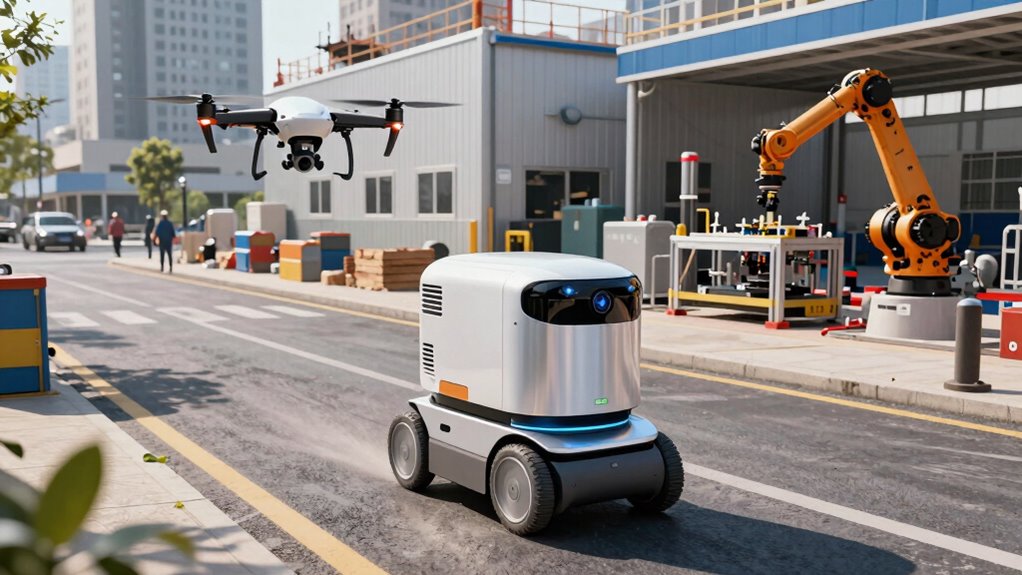

Enterprise robotics is expanding beyond warehouses because businesses see it as a way to boost efficiency, safety, and innovation across industries like healthcare, agriculture, and retail. Advances in technology let robots handle complex and adaptable tasks, while human-robot collaboration enhances productivity and safety. As safety, ethics, and regulation evolve, companies continue to adopt robotics responsibly, shaping a future where automation transforms more than just logistics. If you’re curious about how this shift impacts various sectors, keep exploring.
Key Takeaways
- Robotics are increasingly used in sectors like healthcare, agriculture, and retail to improve efficiency and safety.
- Technological advances allow robots to perform complex, adaptable tasks beyond simple warehouse automation.
- Human-robot collaboration enhances productivity and safety across various industries.
- Businesses see robotics as strategic tools for innovation and competitive advantage beyond logistics.
- Evolving regulations and safety standards support responsible deployment in diverse operational environments.
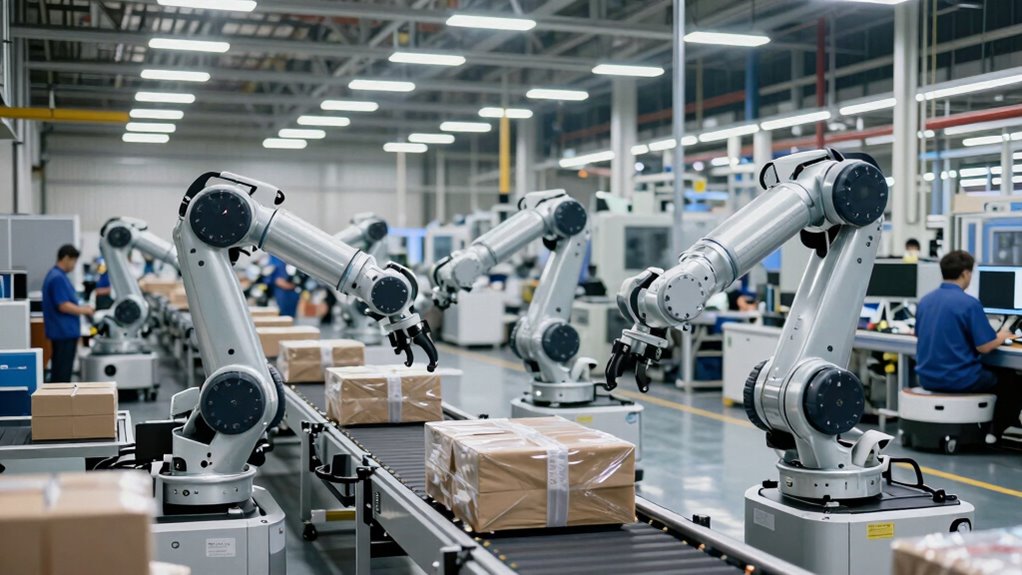
Have you noticed how robotics are transforming the way businesses operate? It’s no longer just about automating warehouse tasks; enterprises across various industries are embracing robotics to boost efficiency, safety, and innovation. This expansion is driven by advances in technology that allow robots to perform complex tasks, collaborate seamlessly with humans, and adapt to new environments. As a result, companies see robotics as a strategic tool that extends beyond traditional logistics, impacting manufacturing, healthcare, agriculture, and even retail sectors.
One of the key factors fueling this growth is human-robot collaboration. Instead of replacing humans entirely, robots now work alongside people, enhancing productivity and reducing workload. For example, in manufacturing plants, collaborative robots, or cobots, assist workers on assembly lines, handling repetitive or hazardous tasks while humans focus on quality control and decision-making. This synergy not only speeds up processes but also creates safer workplaces, where humans are protected from dangerous duties. As these partnerships become more sophisticated, businesses are discovering new ways to leverage human skills combined with robotic precision, pushing the boundaries of what’s possible.
Human-robot collaboration boosts productivity, safety, and innovation across industries by combining human skills with robotic precision.
However, as robotics expand into new domains, concerns about safety, ethics, and accountability have prompted the need for solid robotics regulation. You might wonder how these regulations keep pace with rapid technological innovation. Governments and industry bodies are working to establish standards that ensure robots operate safely around humans, prevent misuse, and respect privacy. Clear rules are essential to build trust in robotic systems, especially as they become more autonomous and integrated into critical functions. Additionally, ongoing regulatory development is necessary to address the unique challenges posed by increasingly intelligent robots that can learn and adapt. These standards are vital for fostering a trustworthy environment where innovation can flourish without compromising safety or legal norms. For businesses, navigating robotics regulation means staying compliant while still harnessing the benefits of automation. It also involves investing in training and infrastructure that support responsible robot deployment, ensuring that growth doesn’t come at the expense of safety or legal integrity.
Furthermore, the expansion of enterprise robotics into diverse sectors means that regulations will need to be adaptable and forward-looking. As robots become more intelligent and capable of learning from their environment, policymakers face the challenge of creating frameworks that encourage innovation without compromising safety. This ongoing balancing act is crucial for fostering a sustainable robotics ecosystem that benefits both companies and society at large. Additionally, advancements in robotics regulation are essential to ensure that technological progress aligns with societal values and legal standards, especially considering the resale value and ongoing maintenance costs associated with robotic systems. Recognizing the importance of safety standards and their role in responsible deployment is vital for maintaining public trust and facilitating broader adoption of robotic solutions.

INDUSTRIAL ROBOT SAFETY AND COLLABORATIVE SYSTEMS: Human Robot Interaction Standards Risk Assessment and Compliant Control
As an affiliate, we earn on qualifying purchases.
As an affiliate, we earn on qualifying purchases.
Frequently Asked Questions
How Cost-Effective Is Enterprise Robotics for Small Businesses?
Enterprise robotics can be cost-effective for small businesses when you focus on a thorough cost analysis and opt for small-scale solutions. You might find that initial investments are manageable, especially with flexible leasing options or modular systems. By aligning your robotics needs with your budget and goals, you reduce expenses while boosting efficiency. This approach helps small businesses enjoy the benefits of automation without overextending financially.
What Are the Biggest Challenges in Deploying Robotics Outside Warehouses?
You might think deploying robotics outside warehouses is a breeze, but robotics regulations and environmental impact pose real hurdles. Bypassing complex rules can slow down innovation, while concerns about ecological footprints demand smarter, eco-friendly designs. Ironically, what’s meant to increase efficiency often gets tangled in red tape and sustainability debates. The biggest challenge isn’t just the tech; it’s ensuring robots operate safely and responsibly amidst strict regulations and environmental worries.
How Do Robotics Impact Employee Roles in New Industries?
Robotics greatly impact your employee roles by prompting you to adapt and develop new skills. As automation takes over routine tasks, you’ll need to embrace employee adaptation, becoming proficient in operating and maintaining advanced systems. Skill development becomes essential, pushing you to learn technical roles and problem-solving. This shift encourages a more strategic, value-added workforce, ultimately fostering growth and innovation within your industry while ensuring you stay relevant in a changing job landscape.
What Industries Are Most Likely to Adopt Enterprise Robotics Next?
You’re entering an era where enterprise robotics will revolutionize industries faster than lightning strikes. Agriculture is poised to embrace automation, with robots tending fields and harvesting crops efficiently. Healthcare will also rapidly adopt robotics, transforming patient care with surgical robots and automated diagnostics. These sectors will soon see robotics becoming as essential as the air we breathe, reshaping workflows, boosting productivity, and freeing humans for more complex, creative tasks.
How Is Data Security Managed With Expanded Robotics Applications?
You manage data security in expanded robotics applications by implementing robust cybersecurity protocols and prioritizing data privacy. You guarantee that all robotics systems are protected against cyber threats through encryption, regular updates, and access controls. You also monitor data flow carefully, restricting sensitive information, and conducting security audits. By staying proactive and adhering to industry standards, you safeguard your enterprise’s data while leveraging robotics for increased efficiency and innovation.

Robotics and Automation in Healthcare: Advanced Applications (Frontiers of Mechanical and Industrial Engineering)
As an affiliate, we earn on qualifying purchases.
As an affiliate, we earn on qualifying purchases.
Conclusion
You might think robotics are only for warehouses, but they’re quickly proving their worth across various industries. Don’t worry about complexity or costs—advancements make these robots more accessible and adaptable than ever. As you embrace this shift, you’ll find that robotics can boost efficiency, safety, and innovation in ways you hadn’t imagined. So, why stay behind? The future of enterprise robotics is here, and it’s ready to transform your business—are you ready to lead the change?

Precision Agriculture Technology for Crop Farming
As an affiliate, we earn on qualifying purchases.
As an affiliate, we earn on qualifying purchases.
The Future of Work: Robots, AI, and Automation
As an affiliate, we earn on qualifying purchases.
As an affiliate, we earn on qualifying purchases.