
TL;DR
Donald Trump and Xi Jinping have started a summit in Beijing focused on easing tensions between the U.S. and China. The talks come amid ongoing disputes over trade, Taiwan, and Iran. The outcome could influence global stability and economic relations.
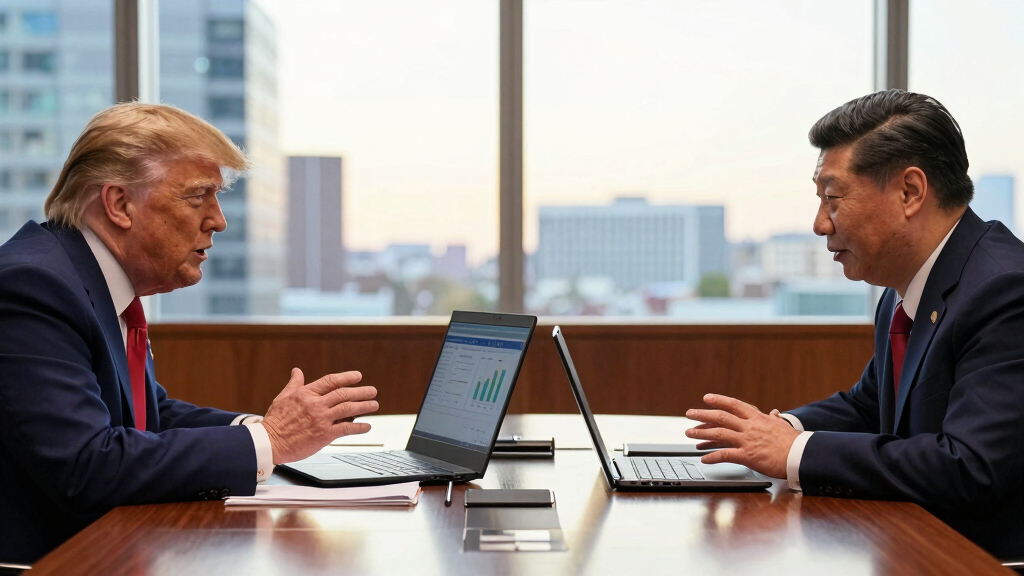
U.S. President Donald Trump and Chinese President Xi Jinping began a high-stakes summit in Beijing on May 14, 2026, aimed at stabilizing tense relations amid ongoing disputes over trade, Taiwan, and Iran. The meeting marks a critical moment in U.S.-China diplomacy, with both leaders seeking to manage escalating tensions that impact global stability.
The summit was officially initiated at the Great Hall of the People, where Xi Jinping greeted Trump, signaling the importance of the talks. Key issues on the agenda include economic cooperation, regional security, and efforts to mitigate conflict over Taiwan and Iran. While no immediate agreements have been announced, both leaders expressed a desire to find common ground. U.S. officials have indicated that discussions are expected to be candid, with a focus on de-escalating recent tensions.
Sources familiar with the negotiations suggest that the summit aims to prevent further deterioration of U.S.-China relations, which have been strained by trade disputes, military posturing, and diplomatic disagreements. The talks come after months of heightened tensions following U.S. sanctions and China’s assertive regional policies. Xi Jinping emphasized the importance of mutual respect and cooperation, according to state media reports. Trump highlighted the need for pragmatic solutions to complex issues, though details of specific agreements remain undisclosed.
Why It Matters
This summit is significant because it represents a rare direct engagement between the two superpowers amid ongoing geopolitical and economic disputes. Its outcome could influence global markets, regional stability, and international diplomacy. A successful meeting might lead to easing trade restrictions, reducing military tensions, and fostering cooperation on international issues. Conversely, failure to bridge differences could exacerbate global instability and economic uncertainty.

U.S.—China Trade Negotiations: Pergamon Policy Studies on Business and Economics
As an affiliate, we earn on qualifying purchases.
As an affiliate, we earn on qualifying purchases.
Background
Relations between the U.S. and China have been tense since 2018, with trade wars, tariffs, and diplomatic conflicts intensifying over issues like Taiwan, Iran, and technological competition. Previous high-level talks have produced limited results, and recent months have seen increased military activity and diplomatic friction. The current summit is viewed as a pivotal moment to reset or at least manage tensions, with both sides aware of the wider implications for global stability.
“We hope to build a foundation of mutual respect and cooperation to ensure peace and stability in the region.”
— Chinese President Xi Jinping
“We are here to find practical solutions and to promote peaceful relations between our countries.”
— U.S. President Donald Trump
diplomatic summit negotiation tools
As an affiliate, we earn on qualifying purchases.
As an affiliate, we earn on qualifying purchases.
What Remains Unclear
It is not yet clear whether the summit will produce concrete agreements or simply serve as a platform for dialogue. Details of negotiations remain confidential, and the potential for setbacks or misunderstandings persists.

The Gamer's Guide to International Relations
As an affiliate, we earn on qualifying purchases.
As an affiliate, we earn on qualifying purchases.
What’s Next
Following the summit, both sides are expected to assess progress and decide on subsequent diplomatic steps. Further meetings or negotiations may be scheduled to address unresolved issues, with international observers watching closely for signs of breakthroughs or setbacks.

Ready to Use Self-Esteem & Conflict-Solving Activities for Grades 4-8
Used Book in Good Condition
As an affiliate, we earn on qualifying purchases.
As an affiliate, we earn on qualifying purchases.
Key Questions
What are the main issues being discussed at the summit?
The main issues include trade relations, regional security concerns involving Taiwan, and Iran’s activities, along with broader economic cooperation and diplomatic stability.
Will this summit lead to immediate policy changes?
It is too early to tell. The summit aims to set a diplomatic tone and explore solutions, but concrete policy changes are unlikely to be announced immediately.
Why is this summit considered so important?
Because it involves the leaders of the world’s two largest economies and military powers, and its outcome could influence global economic stability and geopolitical dynamics.
Are there any signs of progress so far?
Both leaders expressed a willingness to engage constructively, but no specific agreements or breakthroughs have been publicly announced yet.