TL;DR

Get the latest gadgets delivered free with Prime
- Fast, free delivery on millions of items
- Prime Video, Amazon Music and more included
- Member-only deals all year
Cerebras Systems is set to increase its IPO size and price due to strong demand, highlighting a broader shift in AI hardware from GPU dominance to more diverse architectures. The development underscores ongoing innovation in AI compute infrastructure.
Cerebras Systems is planning to raise the size and price of its upcoming IPO, with a new range of $150-$160 per share and an increase to 30 million shares, as investor demand for AI hardware companies continues to grow, according to sources cited by Reuters.
Sources familiar with the matter indicate that Cerebras is considering these adjustments to capitalize on a surge in interest in AI compute infrastructure, driven by the increasing need for specialized hardware beyond traditional GPUs.
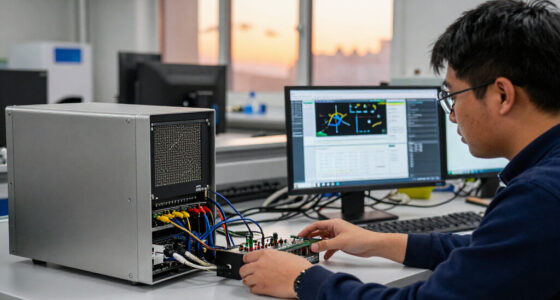
This move reflects broader industry trends where AI hardware innovation is shifting from GPU-centric designs to heterogeneous architectures, including novel chip designs like Cerebras’ wafer-scale processors, which differ fundamentally from Nvidia’s chip-based approach.
Why It Matters
This development signals a potential turning point in AI hardware funding and innovation, emphasizing diversification in compute architectures. The increased IPO valuation underscores the importance of AI infrastructure in the broader tech investment landscape, affecting future hardware development and deployment strategies.
Products Worth Considering

Samsung 34-Inch Odyssey G5 Ultra-Wide Curved Gaming Monitor

DJI Osmo Mobile 8 3-Axis Gimbal Stabilizer for Phones

Logitech MX Mechanical Wireless Illuminated Keyboard, Clicky
As an affiliate, we earn on qualifying purchases.
Background
The AI hardware market has been historically dominated by Nvidia’s GPUs, which excel in training large models due to their parallel processing capabilities and high memory bandwidth. However, recent innovations like Cerebras’ wafer-scale chips, which offer massive on-chip SRAM and unprecedented memory bandwidth, are challenging this dominance.
The surge in AI model sizes and complexity has increased demand for more specialized hardware solutions, leading to a broader ecosystem of heterogeneous chips designed for training and inference. Companies like SpaceX and Anthropic are investing heavily in GPU-based infrastructure, but Cerebras’ unique wafer-scale architecture offers a different approach that could reshape the landscape.
“Cerebras’ increased valuation reflects strong investor confidence in AI hardware innovation beyond GPUs.”
— a source familiar with the IPO plans
“The move signals a broader industry shift towards heterogeneous AI hardware, where wafer-scale chips could complement or even replace traditional GPU setups.”
— industry analyst
What Remains Unclear
It is not yet confirmed how much investor demand will translate into actual IPO performance, or whether other AI hardware firms will follow suit with similar funding rounds. Details on the final IPO valuation and market reception remain pending.
What’s Next
The IPO is expected to proceed shortly, with market reactions and investor interest closely watched. Industry analysts will monitor how Cerebras’ valuation influences other AI hardware companies and the broader investment climate for AI infrastructure.
Key Questions
Why is Cerebras raising its IPO price now?
Due to strong investor demand driven by the expanding need for specialized AI compute hardware, Cerebras aims to capitalize on market interest and fund its growth initiatives.
What makes Cerebras’ chips different from Nvidia’s GPUs?
Cerebras uses wafer-scale chips with a single, massive chip containing extensive on-chip SRAM and extremely high memory bandwidth, contrasting with Nvidia’s chip-based architecture that relies on high-bandwidth memory modules and chip-to-chip networking.
How does this development reflect broader trends in AI hardware?
It indicates a shift towards heterogeneous hardware architectures tailored for specific AI workloads, moving beyond the GPU-centric approach that has dominated the industry for years.
What impact could this have on AI model training and inference?
Innovations like Cerebras’ wafer-scale chips could lead to more efficient, faster, and scalable AI compute solutions, potentially reducing costs and increasing performance for both training and inference tasks.