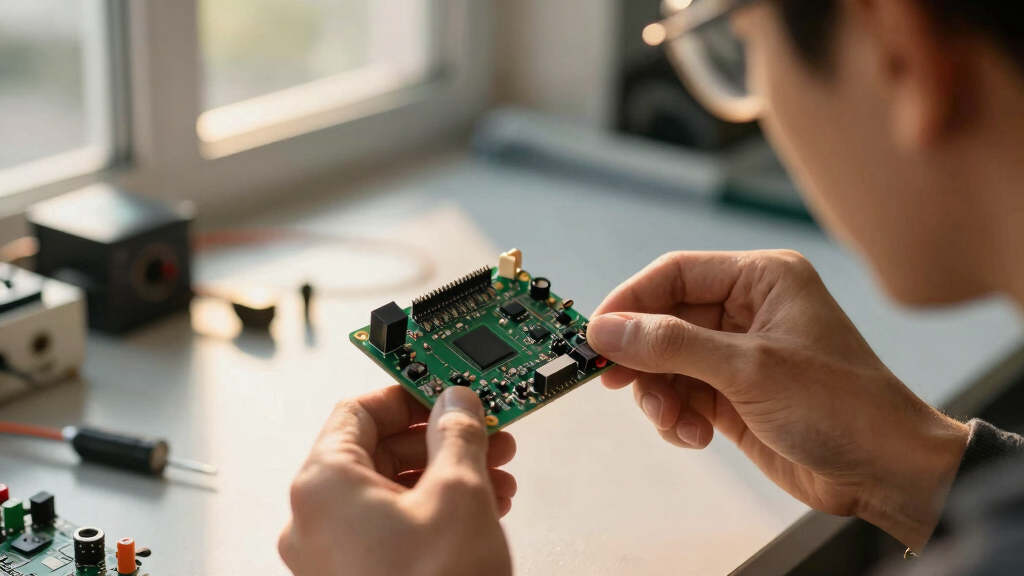

When searching for the best microcontroller boards, the key considerations are performance, ease of use, and connectivity options. The ELEGOO ESP-32 Development Board stands out for its dual-core processor and built-in Wi-Fi/Bluetooth, making it ideal for IoT projects. The Arduino Uno REV3 remains a favorite for beginners due to its simplicity and widespread support. However, the main tradeoffs include balancing processing power versus ease of programming and connectivity. Continue reading for a detailed breakdown of each option to find the best fit for your needs.
Key Takeaways
- The ESP32-based boards offer superior Wi-Fi and Bluetooth capabilities, making them better suited for connected projects.
- Starter kits like ELEGOO UNO provide a more guided, beginner-friendly experience with tutorials included.
- The latest Arduino models, such as the UNO R4 WiFi, combine traditional microcontroller features with modern connectivity, catering to versatile projects.
- Compact designs like the Arduino Nano ESP32 are ideal for space-constrained applications but may lack some advanced features of larger boards.
- Pricing varies widely, with value-packed kits offering great bang for the buck but often requiring more setup time.


More Details on Our Top Picks
ELEGOO ESP-32 Development Board (USB-C) with Dual-Core Processor and Wi-Fi/Bluetooth 4.2
This board stands out for its dual-core 32-bit processor running at up to 240 MHz, offering a significant performance boost over basic microcontrollers like the Arduino Uno R3. Its integrated Wi-Fi (802.11n) and Bluetooth 4.2 enable seamless wireless communication, making it ideal for IoT projects that require connectivity. Compared to the Arduino Nano Every, it provides more processing power and wireless capabilities, though it sacrifices some simplicity and has less RAM. Its low-power design supports battery-operated devices, but the limited RAM could constrain more complex applications. This pick makes the most sense for makers building connected devices who need performance and wireless features without resorting to high-end development boards.
Pros:- Dual-core 240 MHz processor offers robust performance
- Built-in Wi-Fi and Bluetooth for integrated wireless communication
- Low-power design suitable for battery-operated IoT devices
Cons:- Limited RAM (512 KB) may restrict complex or memory-intensive applications
- Basic design with minimal onboard components for advanced functionality
Best for: Developers creating IoT projects demanding wireless connectivity and moderate processing power.
Not ideal for: Beginners seeking simple, plug-and-play microcontrollers or those with limited experience in wireless programming.
- Processor:240 MHz dual-core
- RAM:512 KB
- Wireless Type:Wi-Fi 802.11n, Bluetooth 4.2
- Peripheral Interfaces:GPIO, UART, SPI, I2C
- Item Weight:1.76 ounces
Bottom line: This board is perfect for IoT developers needing reliable wireless connectivity and decent processing power without complex setup.
ELEGOO UNO Project Super Starter Kit with Tutorial and UNO R3 Board
This kit is ideal for newcomers to microcontrollers, offering a user-friendly introduction with a comprehensive PDF tutorial covering over 22 lessons. The UNO R3 board, based on the ATmega328P microcontroller, is a classic choice for learning basic electronics, prototyping, and simple projects. Compared to the Arduino Nano Every, it has less onboard memory and processing speed, which limits more advanced applications. Its no-solder design for the LCD1602 and included power supply make setup straightforward, but the 16 MHz processor may struggle with demanding tasks. This kit makes the most sense for beginners eager to grasp foundational concepts before moving to more complex boards.
Pros:- Extensive tutorial and lesson structure aid learning
- No-solder required for key components simplifies setup
- Includes all essential accessories like power supply and battery
Cons:- Limited processing speed (16 MHz) restricts complex or real-time applications
- Single USB port may limit connectivity options for advanced projects
Best for: Electronics beginners and educators seeking an all-in-one starter kit with guided lessons.
Not ideal for: Advanced hobbyists or professionals working on complex or high-speed projects needing more processing power.
- RAM Memory Installed:2 KB
- Processor Speed:16 MHz
- Connectivity Technology:USB
- Operating System:FreeRTOS
- Compatible Devices:Arduino boards and devices compatible with Arduino IDE
Bottom line: This kit is best suited for beginners learning microcontroller basics and initial prototyping tasks.
Arduino Uno REV3 [A000066] – ATmega328P Microcontroller for DIY Projects
– ATmega328P Microcontroller for DIY Projects” image=”https://m.media-amazon.com/images/I/71ok6q+8tEL._AC_SX300_SY300_QL70_FMwebp_.jpg” link=”0″]Best Reliable Classic for Education and Prototyping
View Latest PriceThe Arduino Uno REV3 remains a staple for educators and hobbyists, thanks to its proven ATmega328P microcontroller running at 16 MHz and 32KB of flash memory. It offers 14 digital I/O pins, including 6 PWM channels, and 6 analog inputs—enough for most basic projects. When compared to the Nano Every, which has more memory and a smaller footprint, the Uno REV3 prioritizes ease of use and widespread support. The single USB port makes programming straightforward, but the limited memory can be a bottleneck for more complex applications. Its durability and compatibility with countless shields make it an excellent choice for straightforward prototyping and learning.
Pros:- Reliable ATmega328P microcontroller with ample I/O options
- Widely supported with extensive community resources
- USB programming simplifies initial setup
Cons:- Limited flash memory (32 KB) for complex code
- No built-in wireless or advanced communication features
Best for: Students, educators, and hobbyists needing a dependable platform for simple electronics projects.
Not ideal for: Developers seeking high-speed processing or advanced features like wireless connectivity.
- Microcontroller:ATmega328P
- Clock Speed:16 MHz
- Flash Memory:32 KB
- Digital I/O Pins:14 (6 PWM)
- Analog Inputs:6
Bottom line: This board fits those looking for a dependable, easy-to-program microcontroller for fundamental projects and education.
Arduino Leonardo with Headers [A000057] – ATmega32U4 Microcontroller Board for Custom Projects
– ATmega32U4 Microcontroller Board for Custom Projects” image=”https://m.media-amazon.com/images/I/51MbegXTGTL._SX300_SY300_QL70_FMwebp_.jpg” link=”0″]Best for HID Projects and Custom Interfaces
View Latest PriceThe Arduino Leonardo is distinguished by its on-board ATmega32U4 microcontroller with built-in USB communication, making it uniquely suited for HID devices like keyboards or mice. Its 16 MHz clock speed and 20 digital I/O pins (7 PWM) provide versatility for custom electronics, but its limited memory (1 KB EEPROM) constrains larger programs. Compared to the Uno R3, it excels in projects that require direct USB HID support without additional components. However, lacking wireless features or extensive onboard memory, it’s less suited for IoT or data-heavy applications. This board is ideal for creators focused on custom user interfaces and direct USB device emulation.
Pros:- Built-in USB communication supports HID projects directly
- 20 digital I/O pins with 7 PWM channels for versatile hardware
- Compatible with Arduino IDE for ease of programming
Cons:- Limited EEPROM (1 KB) restricts stored data
- No onboard wireless or network capabilities
- Small memory size limits complex applications
Best for: Designers building custom HID devices or USB peripherals needing straightforward, integrated USB support.
Not ideal for: Users requiring wireless connectivity or large-scale data processing in their projects.
- Microcontroller:ATmega32U4
- Clock Speed:16MHz
- Digital I/O Pins:20 (7 PWM)
- USB Features:Built-in USB, HID support
- Dimensions:3″ x 2″ x 1″
Bottom line: This microcontroller suits projects centered on USB interface creation and HID device development, especially for embedded interface designers.
Arduino Nano Every – ATmega4809 Microcontroller with USB-C
The Arduino Nano Every provides a significant upgrade over older Nano models, with a 48KB Flash memory powered by the ATmega4809 microcontroller. Its ultra-compact size (45×18 mm) makes it perfect for embedded projects with limited space, like wearables or compact robots. Compared to the UNO R3, it offers more memory and a modern USB-C connection, simplifying connectivity. However, its small form factor can be challenging for beginners to handle, and it has fewer analog inputs (8) than some larger boards. The Nano Every is an excellent choice for those needing a high-performance, space-efficient board that stays compatible with the Arduino ecosystem.
Pros:- Enhanced performance with 48 KB flash memory and 6 KB SRAM
- Tiny footprint ideal for embedded projects
- Full Arduino IDE and shield compatibility
Cons:- Small size may complicate wiring and handling
- Limited analog input channels (8) compared to larger boards
Best for: Enthusiasts designing space-constrained embedded systems or IoT devices needing more memory than standard Nano boards.
Not ideal for: Beginners who prefer larger, easier-to-handle boards or projects requiring many analog inputs.
- Microcontroller:ATmega4809
- Flash Memory:48 KB
- SRAM:6 KB
- EEPROM:256 bytes
- USB Type:USB-C
- Digital I/O Pins:20
- Analog Inputs:8
Bottom line: This board is best for makers who need a compact, high-memory microcontroller for space-limited applications and are comfortable with its small size.
Arduino Nano ESP32 with Headers – ESP32-S3 Microcontroller for IoT & Embedded Projects
The Arduino Nano ESP32 stands out as the most well-rounded choice, combining high performance with extensive connectivity options. Its dual-core Xtensa processor running up to 240 MHz delivers enough power for complex edge computing tasks, surpassing the basic capabilities of the Arduino UNO R4 WiFi, which relies on a more straightforward ARM Cortex-M4. The integrated Wi-Fi and Bluetooth 5.0 ensure seamless wireless operation without external modules, yet its limited RAM (16 GB storage, SRAM) means it’s best suited for applications that don’t demand heavy memory use. The USB-C port enhances programming speed and power stability, making it ideal for rapid prototyping with MicroPython. However, the higher price might deter hobbyists on a budget, and its limited RAM could restrict more demanding projects. Best for developers seeking a powerful, Wi-Fi-enabled microcontroller with Python support.
Pros:- High-performance dual-core processor up to 240 MHz
- Integrated Wi-Fi and Bluetooth 5.0 for versatile wireless connectivity
- USB-C port for faster programming and stable power
- Supports MicroPython for rapid prototyping
Cons:- Limited SRAM compared to some microcontrollers
- Higher price point may be a barrier for beginners
Best for: Developers needing a high-performance IoT platform with easy connectivity and Python compatibility.
Not ideal for: Hobbyists on a tight budget or projects requiring extensive RAM for data processing.
- Processor:ESP32-S3 dual-core Xtensa 32-bit LX7
- Processor Speed:Up to 240 MHz
- Memory:16 GB Storage, SRAM
- Connectivity:Wi-Fi, Bluetooth 5.0, USB-C
- Compatibility:MicroPython, HID Profiles
Bottom line: This board is best suited for experienced developers seeking a capable, Wi-Fi-enabled microcontroller with Python support.
ESP-WROOM-32 ESP32 Development Board with 2.4GHz Dual-Mode WiFi/Bluetooth, Dual Cores (3PCS)
The ESP-WROOM-32 offers a compelling balance of performance and affordability, making it a popular choice for those who want dual-core processing with built-in wireless features. Compared with the Arduino Nano ESP32, it provides similar processing power—up to 240 MHz—but with a more accessible price point. Its 512 KB RAM supports a range of IoT applications, though it’s less suited for projects with intensive data handling. The inclusion of built-in sensors like hall effect and temperature broadens its potential use cases without extra components. It supports Arduino IDE, which eases development for those familiar with Arduino, but the limited RAM and need for technical expertise in advanced programming make it less ideal for complex or beginner projects. Best for those looking to get started with Wi-Fi/Bluetooth projects without overspending.
Pros:- Affordable dual-core processor up to 240 MHz
- Built-in Wi-Fi and Bluetooth for simplified wiring
- Supports Arduino IDE for easy programming
- Includes built-in sensors for quick prototyping
Cons:- Limited 512 KB RAM restricts complex projects
- Requires some technical skill for advanced programming
Best for: Hobbyists and developers seeking a cost-effective, dual-core Wi-Fi/Bluetooth solution with Arduino compatibility.
Not ideal for: Users requiring extensive RAM or advanced data processing capabilities for complex applications.
- RAM Memory Installed:512 KB
- Processor Speed:240 MHz
- Connectivity Technology:Bluetooth, Wi-Fi (802.11bgn)
- Wireless Compatibility:802.11bgn
- Compatible Devices:Computers, Arduino, Raspberry Pi
Bottom line: This board is ideal for entry-level IoT projects where budget and simplicity are priorities.
Elegoo ESP-32 Super Starter Kit with Tutorial and Development Board
This Elegoo ESP-32 Starter Kit offers a comprehensive package for newcomers eager to learn IoT development. Its dual-core ESP-32 processor, supporting Wi-Fi 4.2 and Bluetooth, makes it suitable for a variety of smart home or automation projects. Compared with more advanced boards like the Arduino UNO R4 WiFi, this kit provides over 35 components—including sensors, displays, motors—which facilitate hands-on experimentation. The included detailed tutorials make it accessible for beginners, even those with no prior electronics experience. However, the extensive component list and tutorial focus can overwhelm absolute novices, and additional tools may be necessary for soldering or assembly. It’s a great choice for educational environments and hobbyists ready to build multiple projects. Best for beginners seeking an all-in-one starter kit with guided learning.
Pros:- Includes over 35 components for versatile projects
- Detailed tutorials for all skill levels
- Full Arduino IDE compatibility for easy programming
- Supports advanced IoT applications like smart home devices
Cons:- Requires additional tools for soldering and assembly
- Steeper learning curve for absolute beginners without prior electronics knowledge
Best for: Beginner hobbyists and students who want an all-in-one IoT starter kit with structured tutorials.
Not ideal for: Advanced users or those seeking a compact, minimalistic microcontroller for specific projects.
- Processor:Dual-core ESP-32
- Connectivity:Wi-Fi 4.2, Bluetooth
- Compatibility:Arduino IDE
- Components Included:35+ modules (sensors, displays, motors)
- Tutorial Access:30+ projects with code and diagrams
Bottom line: This kit is perfect for newcomers eager to explore IoT with guided instructions and ample components.
Arduino UNO R4 WiFi – Dual-Core Board with Renesas RA4M1 + ESP32-S3, Wi-Fi/Bluetooth, USB-C, and 12-bit DAC
The Arduino UNO R4 WiFi combines the familiar Arduino ecosystem with cutting-edge dual-core processing, thanks to the Renesas RA4M1 and ESP32-S3 chips. Its high-performance architecture supports complex IoT functionalities, surpassing the simpler ESP32 boards by adding a 12-bit DAC with OP-AMP for high-precision analog output. This makes it suitable for projects like sensor calibration or audio interfacing. The inclusion of USB-C, Wi-Fi 5, and Bluetooth 5.0 ensures modern connectivity, but the complexity of its features can be daunting for beginners, and its size and feature set limit some compact or simple applications. Compared to the cheaper ESP-WROOM-32, it offers more processing power and analog capabilities but at a higher learning curve and cost. Best for experienced developers needing a powerful, multi-functional IoT platform.
Pros:- Dual-core architecture for demanding applications
- High-precision 12-bit DAC with OP-AMP
- Modern USB-C port and Wi-Fi 5 for fast connectivity
- Supports advanced analog and digital projects
Cons:- Steeper learning curve for newcomers
- Larger size may limit use in compact projects
Best for: Advanced hobbyists and professionals developing high-precision IoT or embedded systems.
Not ideal for: Beginners or hobbyists seeking a straightforward, low-cost microcontroller for simple projects.
- Connectivity:Wi-Fi, Bluetooth 5.0, USB-C, CAN
- Processor:Renesas RA4M1 (ARM Cortex-M4) + ESP32-S3
- RAM Type:SRAM
- USB Ports:1
- DAC Resolution:12-bit
- Dimensions:8″W x 1.57″H
Bottom line: This board is best suited for experienced users requiring high-performance, multi-functional IoT capabilities with analog precision.
How We Picked
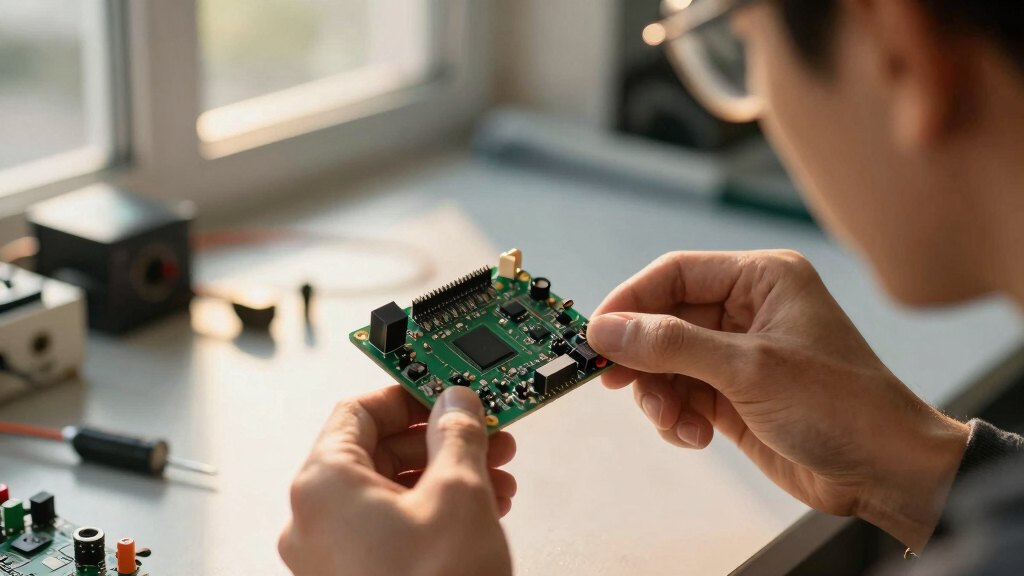
Our evaluation focused on performance, usability, build quality, and value for different types of projects. We prioritized boards with reliable connectivity, sufficient processing power, and good documentation. Boards were also assessed for their versatility—whether they suit beginners, hobbyists, or advanced developers—and for their long-term support and community backing. The ranking reflects a balance between feature set and cost, ensuring each option offers distinct advantages for specific use cases.Factors to Consider When Choosing Best Microcontroller Boards
Choosing the right microcontroller board depends on your project goals, experience level, and budget. Understanding key factors such as processing power, connectivity, and expandability can help you make an informed decision. Avoiding common pitfalls, like underestimating power needs or overpaying for features you won’t use, ensures your investment pays off.Processing Power and Performance
Evaluate whether your project requires a simple microcontroller or a more powerful processor like a dual-core or microcontroller with dedicated hardware acceleration. Boards like the ESP32 provide significant processing speed and multitasking ability, ideal for complex IoT or multimedia projects. Conversely, basic projects may only need simpler microcontrollers like the Arduino Uno, which are easier to program and more cost-effective.
Connectivity Options
Consider whether Wi-Fi, Bluetooth, or other communication protocols are necessary for your project. Boards with integrated Wi-Fi and Bluetooth, such as the ESP32 series, save space and complexity. If connectivity isn’t a priority, simpler boards without these features might reduce costs and complexity while still fulfilling project requirements.
Ease of Use and Support
For beginners, boards with extensive tutorials, large communities, and straightforward programming environments—like the Arduino Uno—are better choices. More advanced users may prefer boards with open-source hardware and more flexible development environments, such as the ESP32-based options. Good documentation and active communities reduce troubleshooting time and help accelerate project development.
Form Factor and Expansion
The physical size of your microcontroller matters if space is limited or if you need to embed it into a compact device. Smaller boards like the Arduino Nano ESP32 are perfect for constrained spaces but may have fewer pinouts. Larger boards tend to offer more I/O options and easier connectivity for complex projects.
Price and Value
Prices vary from budget-friendly starter kits to premium development boards. Consider whether features justify the cost—sometimes, paying more for a board with built-in Wi-Fi and more processing power makes sense for long-term scalability. Conversely, for simple projects or prototyping, affordable options can provide excellent value without unnecessary extras.
Frequently Asked Questions
Do I need a microcontroller with Wi-Fi for my project?
If your project involves remote control, data logging, or IoT integration, a microcontroller with Wi-Fi capabilities, like the ESP32 or Arduino Uno R4 WiFi, is highly beneficial. These boards reduce the need for additional modules, simplifying design and saving space. However, if your project doesn’t require internet connectivity, opting for a simpler microcontroller can cut costs and complexity.
Is it better to start with a beginner-friendly board or a more advanced one?
Beginners should prioritize boards like the Arduino Uno or ELEGOO UNO Starter Kit, which come with extensive tutorials and large communities. These options make learning easier and troubleshooting more straightforward. More advanced boards like the ESP32 are better suited once you have some experience, as they offer greater capabilities but also require a steeper learning curve.
How important is the community support for a microcontroller board?
Community support is vital, especially for troubleshooting, tutorials, and expanding project ideas. Well-supported boards like the Arduino Uno benefit from a vast ecosystem of resources, making development smoother. For newer or less common boards, limited community support can slow progress and increase frustration.
Should I choose a microcontroller with more I/O pins or fewer?
The number of I/O pins depends on your project complexity. If you plan to connect multiple sensors, actuators, or displays, a board with more I/O options is preferable. However, more pins can also mean a larger size and higher cost. For simple projects, fewer I/O pins are sufficient and can simplify design.
Is it worth investing in a development kit versus a standalone microcontroller?
Development kits often include additional components, tutorials, and accessories that accelerate learning and development. They are especially useful for beginners or quick prototyping. Standalone microcontrollers are more customizable and can be more cost-effective once you understand your needs, but they may require extra effort to set up and learn.
Conclusion
For most hobbyists and beginners, the Arduino Uno REV3 offers a straightforward entry point with abundant resources and community support. The ELEGOO ESP-32 Development Board stands out for enthusiasts needing robust Wi-Fi and Bluetooth features for IoT projects. Those looking for a premium experience and maximum flexibility should consider the Arduino UNO R4 WiFi for its modern connectivity combined with ease of use. Budget-conscious users will find great value in starter kits or smaller boards, while advanced developers benefit from high-performance options like the ESP32 series. Your choice should align with your project scope, experience level, and connectivity needs.