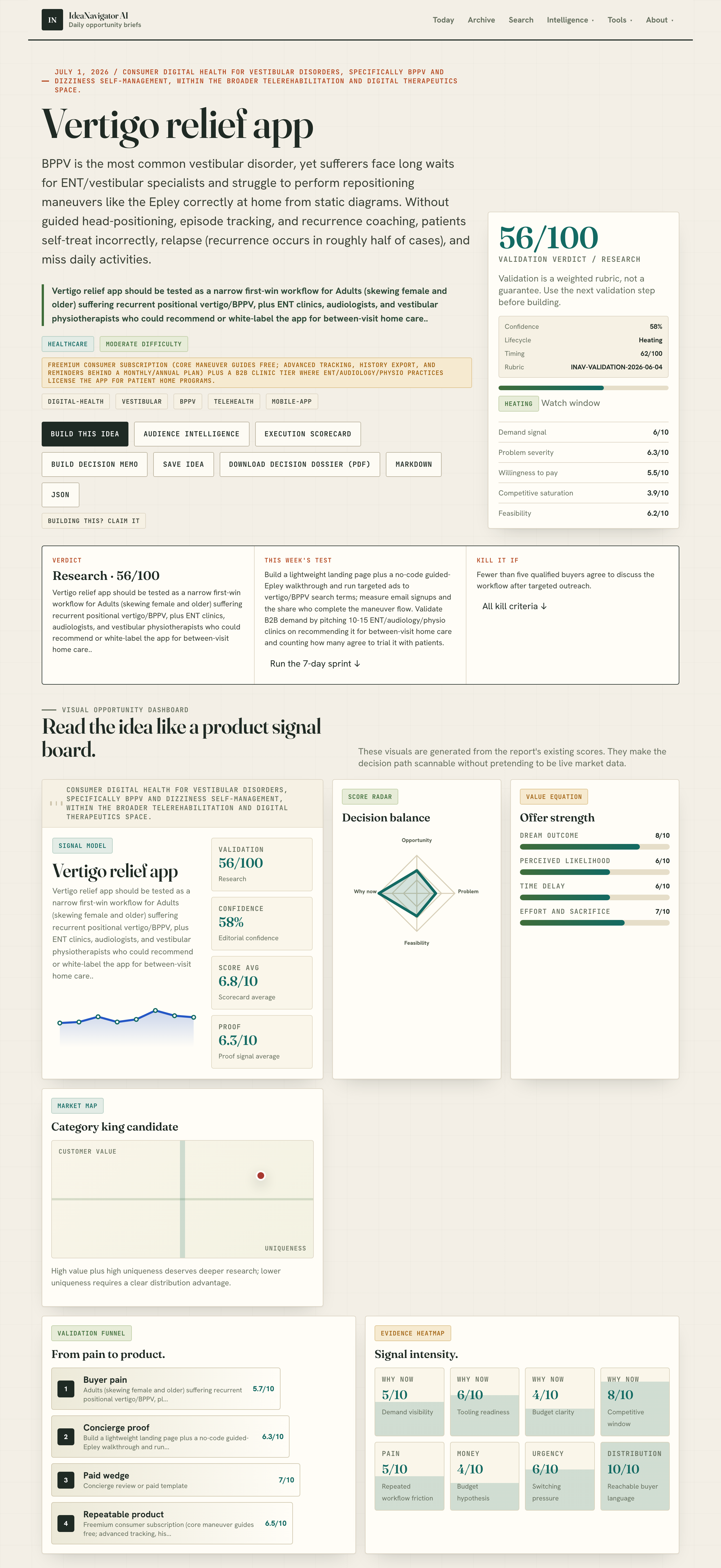
📊 Full opportunity report: Vertigo relief app on IdeaNavigator AI — validation score, market gap, and execution plan.
TL;DR
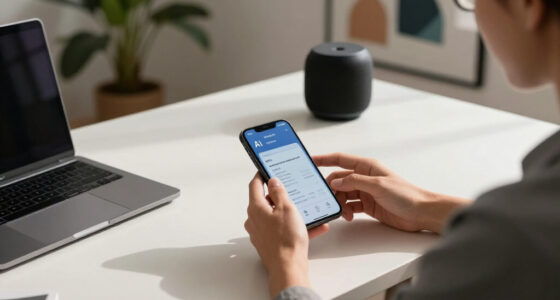
A new mobile app aimed at helping adults with benign paroxysmal positional vertigo (BPPV) perform self-treatment maneuvers is currently in testing. It targets patients and clinics, leveraging smartphone sensors for guided therapy and episode tracking.
A new vertigo relief app is being tested to assist adults suffering from recurrent positional vertigo, specifically BPPV, in performing repositioning maneuvers correctly at home. The app aims to address long wait times for specialist care and improve self-treatment accuracy, with potential adoption by ENT clinics, audiologists, and vestibular physiotherapists.
The app is designed for iOS and Android devices and will include features such as screening for BPPV candidacy through a safety survey and optional motion-sensor self-checks. It guides users through maneuvers like the Epley and Brandt-Daroff using animated steps, audio cues, and gyroscope-based feedback on head angles.
Patients will be able to log dizziness episodes, triggers, and symptom severity over time, aiding in recurrence monitoring. The app will carry a clear disclaimer stating it is not a substitute for medical advice and will prompt users to consult a healthcare professional if red-flag symptoms appear.
Developers plan to validate the app by launching a landing page, running targeted ads for vertigo/BPPV search terms, and measuring engagement, including signups and maneuver completion rates. They also aim to gauge B2B demand by pitching clinics to recommend the app for at-home care between visits.
Potential Impact on Vertigo Self-Management
This app could significantly improve the quality of life for adults with BPPV by enabling more accurate self-treatment and reducing recurrence rates. It also offers a scalable solution for clinics to extend care outside of visits, especially as telehealth adoption grows. The integration of motion sensors and guided therapy aligns with broader trends in digital health and home-based rehabilitation, addressing longstanding gaps in vertigo management.

Your Guide to BPPV: Understand and Overcome the Most Common Inner Ear Disorder
As an affiliate, we earn on qualifying purchases.
As an affiliate, we earn on qualifying purchases.
Growing Market for Digital Vestibular Therapies
Benign paroxysmal positional vertigo (BPPV) is the most common vestibular disorder, often requiring repositioning maneuvers like the Epley. Patients face challenges performing these maneuvers correctly at home, leading to high relapse rates—roughly 50% in some studies. The COVID-19 pandemic accelerated telehealth adoption, prompting interest in digital therapeutics for vestibular disorders.
Market estimates suggest the digital vestibular rehabilitation sector was valued near USD 498 million in 2024, with a projected compound annual growth rate of approximately 13.5% through 2033. This growth reflects increasing acceptance among healthcare providers and payers for remote, app-based management tools.
“The app aims to bridge the gap between clinic visits and daily self-care, helping patients perform maneuvers accurately at home.”
— an anonymous researcher

Halo Rejuvenator® Active Traction Cervical Rehabilitation Device, 1 lb, Neck Muscle Strengthening and Mobility, Improves Upper Body Posture via Sensorimotor Training
DESIGN: 1 lb proportionally balanced exercise tool for Active Traction neck muscle strengthening and increased neck mobility. Excellent…
As an affiliate, we earn on qualifying purchases.
As an affiliate, we earn on qualifying purchases.
Unconfirmed Details About App Deployment and Adoption
It is not yet clear when the app will be publicly available or how widely clinics and patients will adopt it. The effectiveness of the app in reducing relapse rates and improving self-treatment accuracy remains to be validated through clinical trials or user studies. Additionally, regulatory and reimbursement pathways are still being clarified.

Seizure Tracker Quick Access NFC Wristband (Black)
Time a seizure as it happens from any NFC enabled mobile device to include most Android and iPhones…
As an affiliate, we earn on qualifying purchases.
As an affiliate, we earn on qualifying purchases.
Next Steps for Validation and Market Entry
The development team plans to launch a lightweight landing page and run targeted advertising campaigns to assess interest and gather user feedback. They will also approach a select group of ENT, audiology, and physiotherapy clinics to test the app in real-world settings, aiming for initial deployment in early 2024. Further validation through clinical trials and integration with healthcare systems will follow.

Dioche Ons Tips Holder Magnetic Nail Tips Stand Holder – Versatile DIY Nail Practice Display Tool with Elegant Base for Home and Salon Use (#2)
stand for press ons tips holder practice display manicure tool Versatile Applications: This holder is not just for…
As an affiliate, we earn on qualifying purchases.
As an affiliate, we earn on qualifying purchases.
Key Questions
How does the app guide users through vertigo maneuvers?
The app provides animated step-by-step instructions, audio cues, and real-time gyroscope-based feedback on head angles to ensure proper execution of maneuvers like the Epley.
Is the app a replacement for seeing a healthcare professional?
No, the app is designed as a supplementary tool for home use and self-monitoring. It carries a disclaimer advising users to consult a healthcare provider if symptoms worsen or red-flag signs appear.
Will clinics be able to customize or white-label the app?
Yes, there are plans for a B2B licensing model where clinics and therapists can recommend or customize the app for patient use between visits.
What evidence supports the app’s effectiveness?
Effectiveness data is still being collected through planned user testing and clinical validation. The current focus is on usability and engagement metrics to inform future efficacy studies.
When might the app be available to the public?
A tentative timeline suggests early deployment could occur in 2024, pending successful validation and regulatory considerations.
Source: IdeaNavigator AI