
TL;DR

Get the latest gadgets delivered free with Prime
- Fast, free delivery on millions of items
- Prime Video, Amazon Music and more included
- Member-only deals all year
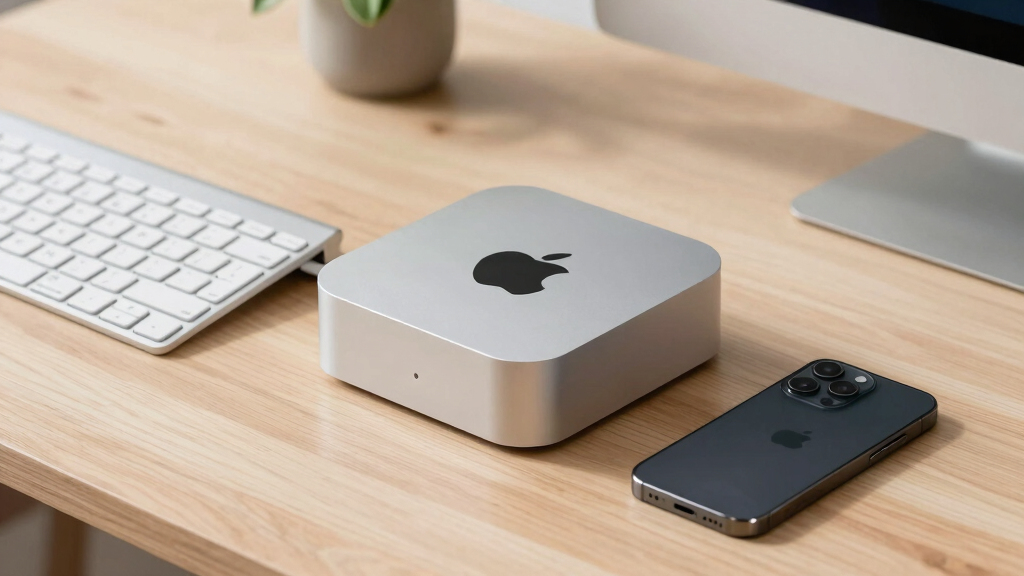
An Apple Silicon executive has outlined the increasing AI demand for the Mac Mini and highlighted the company’s focus on on-device AI processing. This signals Apple’s commitment to local AI solutions amid growing market interest.
An Apple Silicon executive has confirmed that demand for AI capabilities on the Mac Mini is significantly increasing, and that Apple is prioritizing on-device AI processing as part of its future product strategy. This development underscores Apple’s response to market trends and user expectations for local AI features.
According to the executive, Apple has observed a surge in AI feature adoption among Mac Mini users, driven by the broader shift toward AI-powered applications. The executive emphasized that Apple is investing heavily in integrating AI directly into hardware to improve privacy, performance, and user experience. The company’s approach aims to reduce reliance on cloud-based AI, aligning with its focus on on-device processing for future Macs.The executive also highlighted that Apple’s latest Silicon chips, including the M2 and upcoming M3 series, are designed with advanced AI acceleration capabilities. These chips enable Macs to perform complex AI tasks locally, such as image processing, voice recognition, and real-time data analysis, without needing constant internet connectivity.
While specific product timelines were not disclosed, the executive reaffirmed Apple’s commitment to enhancing AI features across its Mac lineup and hinted at upcoming software updates that will leverage these hardware improvements. The focus remains on delivering a seamless, privacy-focused AI experience directly on devices.
Why AI on Mac Mini and On-Device Processing Matter
This development is significant because it highlights Apple’s strategic shift toward local AI computation, which offers users enhanced privacy, faster performance, and reduced dependence on cloud services. As AI becomes a key feature for consumers and professionals alike, Apple’s emphasis on on-device processing could influence industry standards and user expectations. Furthermore, it signals that future Macs will likely feature more sophisticated AI capabilities, potentially impacting software development and competitive positioning in the PC market.
Apple Silicon Mac Mini with M2 chip
As an affiliate, we earn on qualifying purchases.
As an affiliate, we earn on qualifying purchases.
Market Trends and Apple’s AI Hardware Strategy
Over the past year, there has been a marked increase in AI adoption across consumer electronics, driven by advancements in hardware and software. Apple’s Silicon chips, starting with the M1 and evolving through M2, have been designed with integrated AI acceleration, setting the stage for more powerful local AI features. The Mac Mini, often positioned as a versatile and accessible desktop, has seen rising demand for AI-enabled applications, prompting Apple to focus on enhancing its hardware capabilities for AI processing.
Previous Apple announcements have hinted at ongoing investments in AI, but this is the first time an executive has explicitly linked market demand to hardware design and future product plans. The emphasis on on-device AI aligns with Apple’s broader privacy commitments and its strategy to differentiate from competitors relying heavily on cloud-based AI services.
“The demand for AI features on the Mac Mini is growing rapidly, and we see on-device processing as a key part of our future strategy.”
— Apple Silicon Executive
on-device AI processing Mac accessories
As an affiliate, we earn on qualifying purchases.
As an affiliate, we earn on qualifying purchases.
Details on Product Launches and Software Updates Still Unclear
While the executive confirmed increased AI demand and hardware focus, specific details about upcoming Mac Mini models, release dates, and software features remain undisclosed. It is not yet clear how quickly these AI enhancements will be integrated into consumer products or what new capabilities users can expect in the near term.
AI acceleration hardware for Mac Mini
As an affiliate, we earn on qualifying purchases.
As an affiliate, we earn on qualifying purchases.
Upcoming Software and Hardware Developments to Watch
Apple is expected to announce software updates that leverage the new AI hardware capabilities in the coming months. Additionally, future Mac Mini models featuring next-generation Silicon chips with enhanced AI acceleration are likely to be introduced, possibly during Apple’s annual product event later this year. Monitoring these developments will clarify how Apple’s AI strategy unfolds and how it impacts user experiences.
privacy-focused AI software for Mac
As an affiliate, we earn on qualifying purchases.
As an affiliate, we earn on qualifying purchases.
Key Questions
Will future Mac Minis have dedicated AI hardware?
Based on the executive’s comments, it is likely that upcoming Mac Mini models will include advanced AI acceleration features integrated into the Silicon chips, improving local AI processing capabilities.
How will on-device AI benefit Mac users?
On-device AI can enhance privacy by reducing reliance on cloud services, improve performance by enabling faster processing, and support new features like real-time image and voice recognition directly on the Mac.
When can consumers expect these AI features to be available?
While specific timelines are not confirmed, software updates and new hardware releases are anticipated later this year, possibly around Apple’s upcoming product events.
Will Apple’s focus on AI affect other product lines?
Yes, Apple is likely to extend AI hardware and software improvements across its entire product ecosystem, including iPads and future Macs, to deliver a consistent user experience.
Source: hn
Halloween Picks
halloween
As an affiliate, we earn on qualifying purchases.