🔍 Read the full analysis: Building Indic Language Models With 2.8 Trillion Tokens on ThorstenMeyerAI.com

Get the latest gadgets delivered free with Prime
- Fast, free delivery on millions of items
- Prime Video, Amazon Music and more included
- Member-only deals all year
TL;DR
NVIDIA and AI4Bharat at IIT Madras say they plan to release Nemotron-pretraining-Indic-v1, a corpus with about 2.8 trillion retained tokens across 22 Indian languages, alongside the GPU-accelerated pipeline used to create it. No release date, full licensing terms or independent performance results have been provided.
NVIDIA and AI4Bharat at IIT Madras plan to release Nemotron-pretraining-Indic-v1, a corpus of approximately 2.8 trillion retained tokens across 22 Indian languages, together with the GPU-accelerated pipeline used to generate it. The planned resource is intended for teams developing Indic-language models, but the announcement does not specify when it will be available or provide independent evidence of its effect on model performance.
The reported inventory contains 2,601.0 billion native-script tokens and 224.6 billion romanized tokens, counted with the Gemma-4 tokenizer. Native-script text is included for all 22 languages; Latin-script versions of Indic-language text are included for 12. The project describes these as 34 language-script configurations. It cautions that entries may include translations and script variants of shared source documents, so the token total does not represent a count of unique documents.
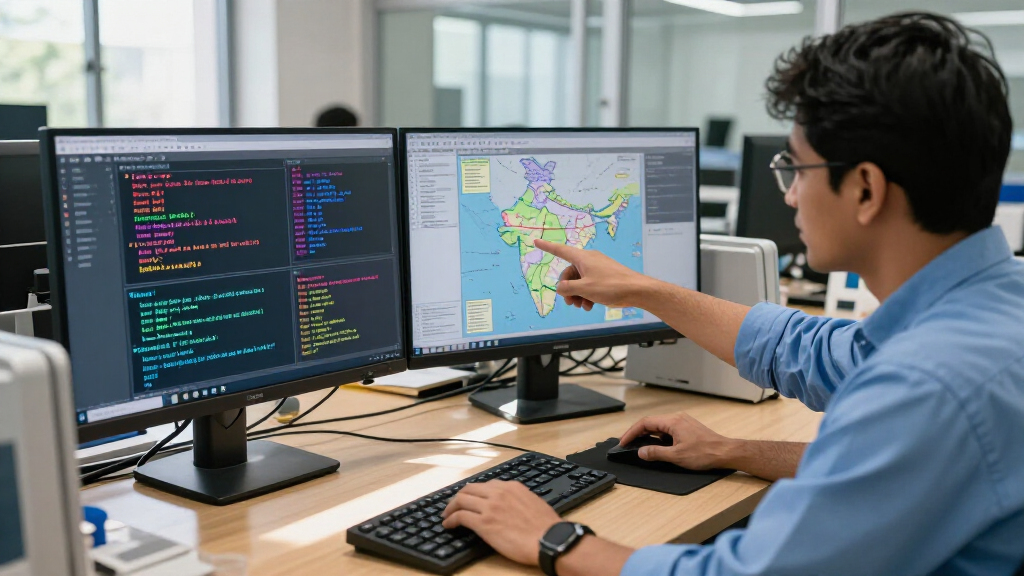
The described workflow begins with English documents from 15 Nemotron-CC-v2 subsets, including web text, question-and-answer material, mathematics and code. Using NVIDIA’s NeMo Data Designer framework, the pipeline translates documents, evaluates translation quality, repairs outputs that score poorly and converts some accepted translations into Latin script. The announcement says records retain source identifiers, outputs are checked against inputs, and the checks aim to preserve elements such as equations, tables and code.
The teams say developers will be able to use the corpus directly or adapt the prompts, workflows and quality checks for other source material. The project also reports that continued pretraining for Nemotron 3.5 Super VL used 10 billion Indic tokens from a 12-language subset of this corpus alongside naturally authored Indic text. That training figure is distinct from the full corpus inventory; the announcement does not say the model trained on all 2.8 trillion tokens.
A Larger Data Supply for Indic Models
A public corpus at the reported scale could give model developers a larger starting pool of text across languages that have had fewer training resources than English. The source mix includes technical material and question-and-answer content, which could be useful for building systems intended to handle subjects such as programming, mathematics and general queries in Indic languages. Those are potential applications, not demonstrated outcomes: the announcement provides no independent evaluations showing whether the data improves accuracy, coverage or other model measures.
Publishing the generation pipeline as well as the text could let researchers and developers examine or adapt the method instead of treating the corpus as a stand-alone product. Source identifiers and input-output checks are described as features of the workflow that may help with traceability and quality control. Their usefulness will depend on what the released code, documentation and evaluation results show.
The project also draws a boundary around the role of generated translations. Since the workflow starts from English material, it can expand the amount of available text but does not, by itself, supply the range of local knowledge or cultural framing in naturally authored writing. The announcement says naturally authored Indic data remains essential; the new corpus is not presented as a substitute for it.
GPU-accelerated data pipeline for AI training
As an affiliate, we earn on qualifying purchases.
As an affiliate, we earn on qualifying purchases.
Building on AI4Bharat’s Indic Data Work
AI4Bharat is an Indian-language research lab at IIT Madras focused on open datasets and models. The announcement points to Sangraha, its open pretraining corpus for 22 Indian languages, as part of the existing foundation for Indic-language research. Nemotron-pretraining-Indic-v1 adds translated material and a described process for generating more from curated English sources.
The project says its 22 languages are those listed in India’s Constitution and cites the 2011 Census figure that they are first languages for 97% of Indians, or nearly 1.2 billion people. That population figure is tied to the 2011 Census and should not be read as a current estimate. The announcement’s token figures, meanwhile, are counts made with the Gemma-4 tokenizer, not a measure of the number of people represented or of unique source documents.
The reported 10-billion-token use in continued pretraining is a separate detail from the corpus’s total inventory. The announcement says that training used a 12-language subset together with naturally authored Indic text, but does not provide a full account of the mixture or compare model results against a baseline.
“We do not have enough data for Indian languages.”
— Mitesh Khapra, head of AI4Bharat, as quoted in the announcement
Indic language model training datasets
As an affiliate, we earn on qualifying purchases.
As an affiliate, we earn on qualifying purchases.
Release Terms and Quality Metrics Pending
The corpus and pipeline are planned releases, not yet confirmed as publicly available. The announcement gives no release date, hosting location or complete licensing terms, so developers cannot yet determine precisely how the materials may be used, modified or redistributed.
It also does not publish per-language token breakdowns, detailed filtering and acceptance thresholds, translation-quality scores or independent assessments of translation fidelity. The reported totals include retained translations and script variants, and the project warns that records can derive from shared source documents. The totals therefore should not be treated as unique-document counts.
Finally, the announcement does not provide benchmark comparisons establishing that the corpus improves downstream models. It is not yet clear how much synthetic translated material will contribute to future training mixtures relative to naturally authored Indic text, or how performance may vary by language and task.
Natural language processing tools for Indian languages
As an affiliate, we earn on qualifying purchases.
As an affiliate, we earn on qualifying purchases.
Publication and Independent Evaluation
The next stated milestone is publication of the corpus and its generation pipeline. Once released, researchers and developers will be able to inspect the data, documentation, code and terms of use, and assess whether the described quality checks are reproducible. The announcement does not give a timetable for that step.
Further evaluation will be needed to establish how well translations preserve meaning across languages, how useful the data is for different tasks and whether training on it changes model performance. Per-language inventories, clear licensing and comparisons that separate synthetic data from naturally authored text would help users judge where the corpus is appropriate. Until those details are available, its scale and described workflow are confirmed project claims, while its practical effect remains unmeasured.
As an affiliate, we earn on qualifying purchases.
Key Questions
What is Nemotron-pretraining-Indic-v1?
It is a planned corpus of about 2.8 trillion retained tokens across 22 Indian languages, which NVIDIA and AI4Bharat at IIT Madras say they intend to release alongside the data-generation pipeline.
How many languages and scripts does it cover?
The announcement says native-script text covers all 22 languages, while Latin-script romanizations are included for 12. It describes the resulting inventory as 34 language-script configurations.
Is the corpus available now?
The source describes the release as planned and does not specify a publication date or hosting location. It does not establish that the corpus or pipeline is currently available.
Does the token total count unique documents?
No. The project says records can include translations and script variants of shared source documents. The approximately 2.8 trillion-token figure is a tokenizer-based corpus count, not a unique-document total.
Has the project shown that the corpus improves model performance?
The announcement reports that a 12-language subset contributed 10 billion Indic tokens to continued pretraining for Nemotron 3.5 Super VL, alongside naturally authored text. It provides no independent performance comparison showing the corpus’s effect.
Primary source: Hugging Face · via ThorstenMeyerAI.com
Halloween Picks
halloween
As an affiliate, we earn on qualifying purchases.