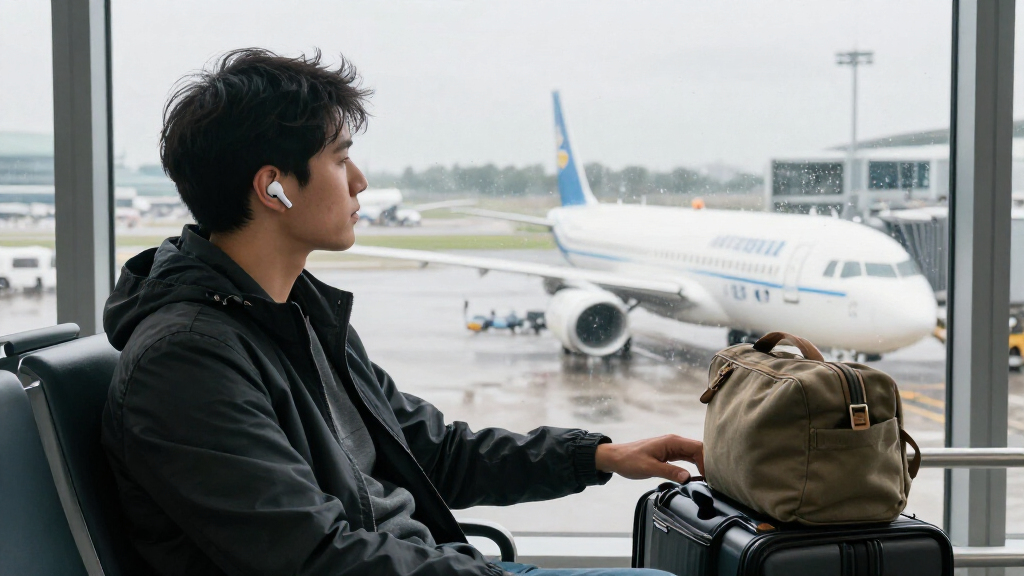
For travel earbuds, the real decision is whether you want the strongest available escape from cabin noise or a more balanced package that lasts longer between charges. Bose QuietComfort Ultra Earbuds and Sony WF-1000XM5 are both premium true wireless options with active noise cancellation, but their strengths land in different places. Bose has the edge when steady aircraft rumble and long listening sessions are the priority; Sony makes more sense if you value battery life, a compact case, and a lower price alongside capable noise cancellation. This comparison focuses on the differences that matter on planes, trains, and busy commutes.

Get the latest gadgets delivered free with Prime
- Fast, free delivery on millions of items
- Prime Video, Amazon Music and more included
- Member-only deals all year

JBL Vibe Beam – True Wireless Earbuds – Black
- ✔ Bluetooth: Bluetooth 5
- ✔ Stated earbud battery: Up to 8 hours
- ✔ Stated total battery: Up to 32 hours (8 hours earbuds + 24 hours case)

soundcore by Anker P20i True Wireless Earbuds, with Big Bass, 30H Playtime
- ✔ Bluetooth: Bluetooth 5.3
- ✔ Stated earbud battery: Up to 10 hours
- ✔ Stated total battery: Up to 30 hours with case

kurdene Wireless Earbuds Bluetooth 5.3 Light Weight in Ear Headphones
- ✔ Bluetooth: Bluetooth 5.3 is cited for pairing; listing also gives Bluetooth 5.2
- ✔ Stated total battery: Up to 30 hours with case
- ✔ Earbud-only battery: Not specified in supplied details
At a Glance
| Criteria | Bose QuietComfort Ultra Earbuds | Sony WF-1000XM5 | Winner |
|---|---|---|---|
| Noise cancellation | Class-leading cancellation, particularly effective against steady low-frequency noise | Very effective ANC, though Bose generally suppresses cabin rumble more strongly | A |
| Comfort and fit | Secure fit with multiple tip and stability band sizes; fit can feel bulky to some ears | Light, compact earbuds with foam-style tips; seal and comfort depend on ear shape | Depends |
| Battery life | Up to 6 hours per charge with ANC; case extends total listening time | Up to 8 hours per charge with ANC; case extends total listening time | B |
| Case portability | Larger case takes more space in a pocket or small travel pouch | Smaller, easier-to-pack case | B |
| Sound and call features | Enjoyable immersive sound and spatial audio; feature set varies by device and app support | Strong sound customization, multipoint connectivity, and useful adaptive features | B |
| Price and value | Usually costs more; premium is most defensible for frequent flyers who prize quiet | Often less expensive than Bose while offering a broader all-round feature set | B |
JBL Vibe Beam – True Wireless Earbuds – Black
The JBL Vibe Beam takes the top spot because it pairs the lineup’s longest stated case-supported runtime with features aimed at the interruptions that come with travel. JBL lists up to 32 hours total, split between eight hours in the earbuds and 24 in the case. That gives us a clear reference for planning a long journey, though real runtime depends on usage and the listing does not define test conditions. A 10-minute speed charge is stated to add two hours, useful when a short stop is all the charging time available.Its strongest point of difference from the soundcore P20i is Smart Ambient: TalkThru is intended for a quick chat, while Ambient Aware lets outside sound remain audible during listening. Those modes suit terminals and stations better than a sealed-off listening routine, but they are not a substitute for removing an earbud when safety or clear conversation calls for it. The closed stick-style fit is described as comfortable and secure; individual fit still varies. JBL mentions splash and dust resistance in its description, but the supplied details do not give a specific rating.There is a meaningful limitation: the product materials emphasize bass, isolation, and ambient listening, but do not clearly promise active noise cancellation that reduces aircraft cabin rumble. The soundcore offers more personalization through its app, and kurdene includes multiple tip sizes, so the JBL is not the automatic choice for every traveler. We would choose it for the strongest documented blend of battery reserve and situational awareness, while frequent flyers seeking proven cabin-noise reduction should look for a model with clearly specified ANC.
Pros:
- Up to 32 hours stated total battery life, including 24 hours in the case.
- TalkThru and Ambient Aware support quick conversations and awareness.
- A 10-minute charge is stated to add two hours of listening.
- Closed stick-style design is described as secure and comfortable.
Cons:
- Active noise cancellation for cabin noise is not clearly specified.
- Eight hours of stated earbud runtime per charge is less than the soundcore’s 10-hour figure.
- The supplied listing does not provide a specific water-resistance rating.
Best for: Travellers who want long stated battery reserves and quick ambient listening modes for conversations and announcements.
Not ideal for: People who specifically need clearly documented active noise cancellation for aircraft cabin noise or prefer sound customization through an app.
Bottom line: For travel, the JBL is our best balanced choice because its stated 32-hour total runtime and ambient modes address both long days and frequent interruptions.
“For travel, the JBL is our best balanced choice because its stated 32-hour total runtime and ambient modes address both long days and frequent interruptions.”
soundcore by Anker P20i True Wireless Earbuds, with Big Bass, 30H Playtime
For travellers who value a case that is easy to keep track of, the soundcore P20i is the most distinctive alternative to the JBL. Its case is described as compact and lightweight, with an attached lanyard that can clip to a bag or keys. That small practical detail may help when moving between a seat, a gate, and a pocket. The manufacturer states 10 hours from the earbuds and up to 30 hours with the case, so the single-charge figure leads this lineup while the total falls just short of JBL’s stated 32 hours.The P20i also provides the group’s most explicit sound and control customization. Through the soundcore app, we can choose among 22 EQ presets and change controls, making it easier to tailor bass-heavy listening or adjust how the earbuds work without relying on one fixed setup. Its 10 mm drivers and boosted bass are a fit for music listeners who like a fuller low end. Compared with kurdene, it offers a named companion app and a stated quick-charge benefit; compared with JBL, it gives up the listed ambient listening modes.That tradeoff matters on a trip. The description lists two microphones and an AI algorithm for calls, plus a feature that makes a lost earbud emit a sound, but it does not describe a transparency mode for hearing a boarding announcement while music continues. The listing calls the earbuds water resistant without giving a specific rating, so we should not assume a defined level of protection. Choose the P20i when easy packing, configurable controls, and longer per-charge listening matter most; skip it if ambient awareness is a priority.
Pros:
- Compact case with an attached lanyard for clipping to a bag or keys.
- Up to 10 hours stated per charge and 30 hours total with the case.
- Soundcore app offers 22 EQ presets and customizable controls.
- A 10-minute charge is stated to provide two hours of playtime.
Cons:
- No ambient awareness or transparency feature is specified.
- Total stated runtime is two hours below the JBL Vibe Beam figure.
- Water resistance is mentioned without a specific rating.
Best for: Travellers who want a small, clip-friendly case, app-based EQ options, and longer stated listening time per earbud charge.
Not ideal for: People who want JBL-style ambient listening modes or need a clearly specified water-resistance rating.
Bottom line: The P20i is the practical pick for compact packing and personalization, provided ambient listening is less important than case portability and app control.
“The P20i is the practical pick for compact packing and personalization, provided ambient listening is less important than case portability and app control.”
kurdene Wireless Earbuds Bluetooth 5.3 Light Weight in Ear Headphones
The kurdene wireless earbuds are the fit-focused option in this comparison. The listing describes a lightweight in-ear design and includes three silicone tip sizes, giving travellers a way to adjust the seal rather than relying on one supplied fit. A secure-feeling fit can be especially useful when walking through a station or wearing earbuds for an extended stretch, though comfort remains personal. The manufacturer states up to 30 hours with the case, matching the soundcore’s total figure but without a separately stated earbud-only runtime in the supplied information.Kurdene’s travel case is strongest for people who value simple Bluetooth pairing and touch controls over a companion-app feature set. Bluetooth 5.3 is cited for pairing, and the listing says the earbuds connect when the case opens. Its 8 mm drivers are described as bass-forward, while the soundcore uses larger 10 mm drivers and adds 22 EQ presets. We should not read driver size alone as a sound-quality guarantee; the practical distinction is that soundcore documents more ways to tune the sound, whereas kurdene puts more emphasis on fit and lightweight wear.Calls are supported by built-in microphones and an AI algorithm, but the supplied description does not give a mic count or clarify how well calls hold up in noisy travel settings. Likewise, it mentions call noise cancellation, which should not be confused with active noise cancellation for music or cabin noise. The listing explicitly says not water resistant, a drawback for rainy walks and accidental splashes compared with the other two descriptions. We would consider kurdene when tip choice and a light fit are priorities, but choose JBL for ambient modes or soundcore for better documented case portability and customization.
Pros:
- Three silicone tip sizes allow fit adjustment.
- Lightweight design is a central focus of the product description.
- Up to 30 hours of stated case-supported battery life.
- Bluetooth 5.3 pairing and touch controls are listed.
Cons:
- The listing says the earbuds are not water resistant.
- No separate earbud-only battery runtime is provided in the supplied details.
- Call noise cancellation is described, but music or cabin-noise ANC is not established.
Best for: Travellers who prioritize a lightweight in-ear style and want three tip sizes to adjust the fit.
Not ideal for: People who need water resistance, a stated per-charge battery figure, or clearly documented ambient listening and app controls.
Bottom line: Kurdene suits travellers who put a lightweight feel and adjustable tips first, but its missing per-charge figure and lack of water resistance make it a less complete trip companion.
“Kurdene suits travellers who put a lightweight feel and adjustable tips first, but its missing per-charge figure and lack of water resistance make it a less complete trip companion.”
As an Amazon Associate we earn from qualifying purchases.
Key Differences
The most meaningful travel difference is how much noise each pair removes. Bose QuietComfort Ultra Earbuds are especially persuasive on long flights, where continuous engine and ventilation noise can wear on you. Sony WF-1000XM5 also cancels noise effectively, but Bose tends to create the quieter cabin. The gain is real, though it matters most to people who fly often or are sensitive to background sound.
Sony counters with longer stated battery life, a smaller charging case, and a lower typical price. Those advantages matter when you pack light, travel through long days, or want one pair for both trips and daily use. Comfort is personal: Bose offers a stable fit system, while Sony’s smaller buds may suit some ears better, but its foam tips need a good seal. The better purchase depends on whether maximum quiet is worth paying more and carrying a larger case.
Detailed Comparison
Noise cancellation (Bose QuietComfort Ultra Earbuds wins — major)
Winner: Bose, with a major advantage for frequent flyers. Both pairs reduce outside noise well, but Bose is more effective at suppressing the steady low rumble of aircraft cabins. Sony remains a strong choice for trains, offices, and general travel, yet the difference becomes more noticeable during hours in the air. If quiet is your main reason for buying premium earbuds, Bose earns its higher cost.
Comfort and fit (moderate difference)
Winner: Depends on your ears. Bose includes different ear tips and stability bands to help keep the earbuds secure, an advantage when moving through an airport or settling in for a long flight. The buds and case are relatively substantial, however, and some users may find them tiring. Sony’s lighter, smaller earbuds can feel less intrusive, but the foam-style tips must seal comfortably to deliver good sound and cancellation. Try the fit if possible; there is no universal winner.
Battery life (Sony WF-1000XM5 wins — moderate)
Winner: Sony, with a moderate advantage. Sony rates the WF-1000XM5 for up to eight hours of listening with noise cancellation, compared with up to six hours for Bose. Actual runtime varies with volume, settings, calls, and battery age, but Sony leaves more margin for a long flight or a full travel day. Bose should still cover many trips, especially with charging breaks, though its shorter per-charge rating gives Sony the practical edge.
Case portability (Sony WF-1000XM5 wins — moderate)
Winner: Sony, with a moderate advantage. The WF-1000XM5 case is more compact and easier to slip into a pocket or small bag. Bose’s case is bulkier, so it takes up more room in already crowded carry-on storage. For travelers who keep earbuds in a jacket pocket between connections, Sony is the easier everyday carry; for those who leave the case in a backpack, the difference is minor.
Sound and useful features (Sony WF-1000XM5 wins — minor)
Winner: Sony, by a minor overall margin. Both deliver polished sound with app-based controls. Sony adds extensive equalizer adjustment, multipoint connectivity for switching between devices, and adaptive listening features that can suit mixed travel and work use. Bose offers immersive spatial audio and a straightforward premium listening experience. Choose based on which features you will use: Sony’s breadth is more practical for people juggling a laptop and phone, while Bose’s immersive mode is a preference rather than a travel necessity.
Price and value (Sony WF-1000XM5 wins — moderate)
Winner: Sony for most buyers; Bose for noise-sensitive frequent flyers. Sony is commonly priced below Bose while delivering strong ANC, longer runtime, and a compact case. That makes it the more balanced value. Paying the Bose premium is worthwhile if its stronger cancellation will improve many hours of flying each year. Occasional travelers are less likely to recover that extra cost through a difference they may notice only on a few trips.
Bose QuietComfort Ultra Earbuds: Pros and Cons
Pros:
- More effective cancellation of aircraft and other steady low-frequency noise
- Secure fit options can help keep the earbuds in place
- Immersive audio mode for listeners who enjoy spatial presentation
Cons:
- Shorter stated battery life per charge than Sony
- Larger case is less pocket-friendly
- Higher price is difficult to justify for occasional flyers
Sony WF-1000XM5: Pros and Cons
Pros:
- Longer stated listening time with ANC enabled
- Smaller case travels more easily
- Strong feature set and sound customization at a typically lower price
Cons:
- ANC is not quite as effective as Bose against cabin rumble
- Foam-style tips may not suit every ear or seal consistently
- Adaptive features and settings can take time to tune
Who Should Choose What
Choose Bose QuietComfort Ultra Earbuds if:
- You fly often and want the strongest noise reduction you can get in earbuds.
- Aircraft rumble or crowded transit makes travel tiring, and extra quiet is worth a premium.
- You have tried Bose’s fit system and find it more secure than smaller earbuds.
Choose Sony WF-1000XM5 if:
- You want a more affordable premium pair with effective ANC for varied everyday use.
- Long battery life and a small case matter more than the last step in noise reduction.
- You regularly switch between a phone and laptop and value multipoint connectivity.
Skip both if: Your budget is tight, you prefer over-ear headphones for long flights, or neither brand’s ear tips seal comfortably; a less expensive pair or travel headphones may fit better.
Value for Money
Sony is the better value for most travelers because it combines very good noise cancellation with longer rated battery life, a smaller case, and a typically lower price. Bose costs more, and that premium buys a meaningful but specific benefit: stronger quiet in noisy cabins. Pay extra for Bose if you fly frequently, are particularly sensitive to rumble, or expect to use the earbuds for many hours of travel each month. If you take a few trips a year and also want earbuds for commuting and work, Sony gives more practical advantages for the money.
Final Verdict
Choose Bose QuietComfort Ultra Earbuds if reducing cabin noise is your top priority and you travel often enough to value that improvement. They are the more convincing flight companion for people seeking a quieter seat. Choose Sony WF-1000XM5 if you want the smarter all-round purchase: it costs less in many markets, lasts longer per charge, and packs more easily. For most travelers, Sony is the recommendation; Bose is the upgrade for frequent flyers who put noise cancellation ahead of price and portability.
Frequently Asked Questions
Which earbuds are better for airplane noise?
Bose QuietComfort Ultra Earbuds generally cancel steady airplane rumble more effectively. Sony WF-1000XM5 is still capable, but Bose is the stronger pick if aircraft noise is the deciding factor.
Which pair lasts longer on a long flight?
Sony rates the WF-1000XM5 for up to eight hours per charge with ANC, while Bose rates its earbuds for up to six. Real runtime depends on settings and volume, but Sony offers more headroom before you need the case.
Is Bose worth paying more for?
It can be for frequent flyers or travelers who are especially bothered by engine noise. For occasional trips, Sony’s lower typical price, longer battery life, and compact case make it the better value.
Which earbuds are more comfortable for travel?
Comfort depends on ear shape and tip preference. Bose includes fit components for stability, while Sony is lighter and smaller but relies on foam-style tips for a proper seal. A comfortable seal matters for both sound and noise cancellation.
Black Friday Picks

Bose QuietComfort Headphones (2nd Gen) Wireless Noise-Cancelling Headphones, Black
As an affiliate, we earn on qualifying purchases.