
🔍 Read the full analysis: Grid Queues, Curtailment And Tariffs: Four Hard Capacity Questions For US Data Centers on Rymvard

Get the latest gadgets delivered free with Prime
- Fast, free delivery on millions of items
- Prime Video, Amazon Music and more included
- Member-only deals all year
TL;DR
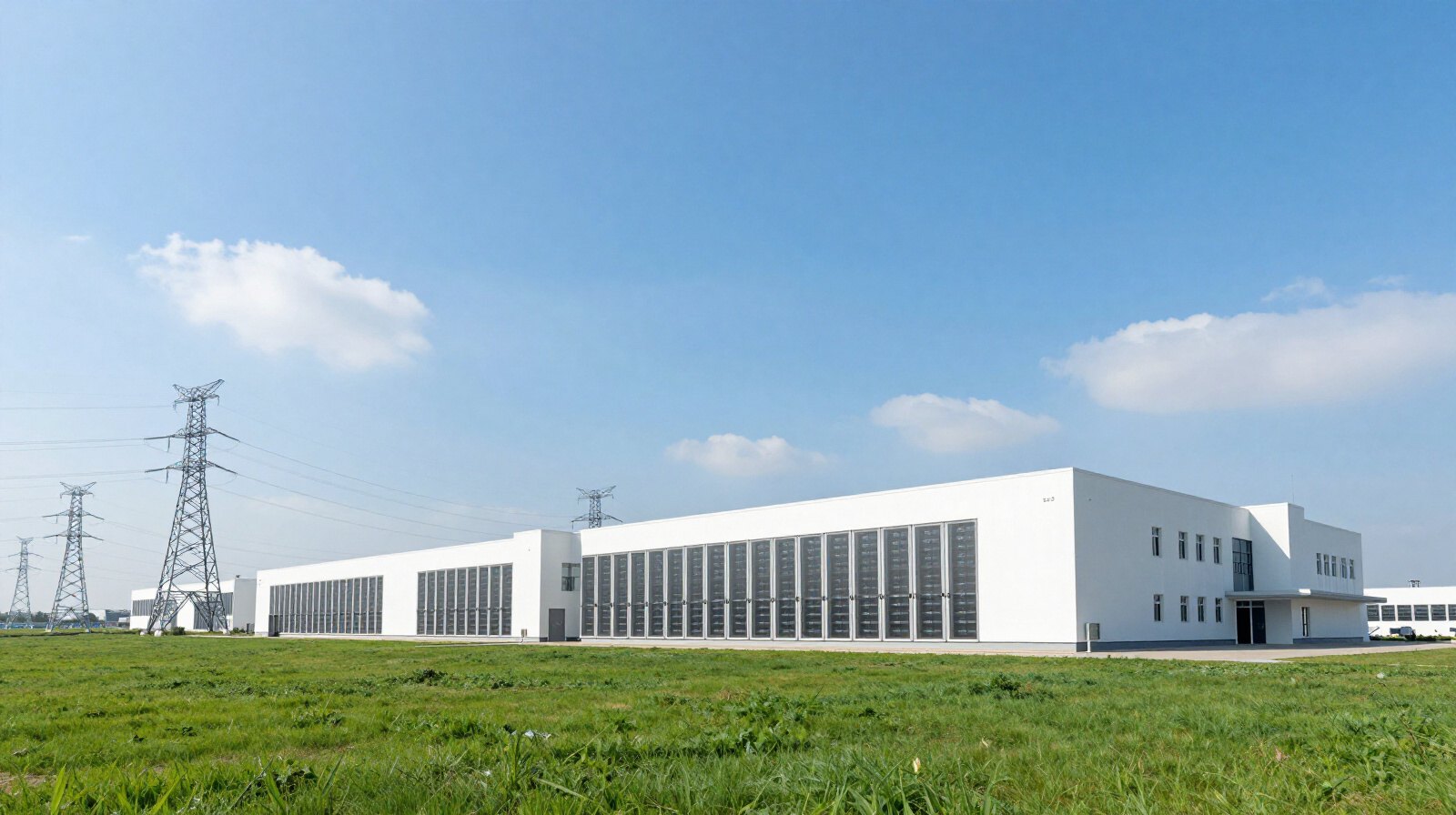
Rymvard published four illustrative data center capacity scenarios on October 3, 2026, covering Northern Virginia, Texas, Arizona and central Ohio. The early-access product brings power measurements, contracts, reservations, cooling and demand into one ledger; the scenarios are not customer cases or evidence of measured outcomes.
Rymvard published four illustrative scenarios on October 3, 2026, showing how data center capacity constraints differ across Northern Virginia, Texas, Arizona and central Ohio. The early-access company says its ledger combines measured power, contracts, recovery reservations, cooling and demand to help operators track capacity; the scenarios use an illustrative estate, not customer sites or outcomes.
The scenarios focus on distinct limits in each market. In Northern Virginia, new utility connections can take years, so capacity available for sale in the near term may be within an existing campus. Rymvard says this can include reserved power whose measured draw is below the amount customers have reserved. The gap between contracted or reserved capacity and actual use can affect how operators understand what remains available.
In Texas, Senate Bill 6, signed in June 2025, requires sites of 75 megawatts or more to accept curtailment when the grid operator sheds load. Rymvard’s scenario frames the operational question as identifying which racks support critical services and which loads could be reduced first. The material does not describe particular sites or specify how any operator would implement curtailment.
In Arizona, Rymvard says cooling, rather than power supply, often limits operations on the hottest afternoons. In central Ohio, an AEP Ohio data center tariff approved by the Public Utilities Commission of Ohio requires new data centers above 25 megawatts to pay for at least 85% of subscribed power for up to 12 years. The cited order is dated July 9, 2025, in case 24-508-EL-ATA.
U.S. Data Centers · Capacity Briefing
Grid Queues, Curtailment and Tariffs
Four hard capacity questions for data centers, across four markets where grid access, heat, curtailment rules and power commitments shape what operators can actually use.
Rymvard scenarios · Published October 3, 2026
01 / Local constraints
Four markets, different bottlenecks
Headline power capacity does not always reflect the load a site can run, sell, or reduce at a particular time.
Northern Virginia
New utility connections can take years. Near-term capacity for sale may sit inside existing campuses, including reserved power whose measured draw is lower than the amount customers reserved.
Texas
Senate Bill 6, signed in June 2025, requires sites of 75 MW or more to accept curtailment when the grid operator sheds load.
Arizona
Rymvard’s scenario says cooling, rather than power supply, often limits operations on the hottest afternoons.
Central Ohio
An AEP Ohio tariff requires new data centers above 25 MW to pay for at least 85% of subscribed power for up to 12 years.
02 / Capacity ledger
Measure the gap between promise and use
Connection delays, unused reservations, cooling limits and tariff obligations can all change the practical value of a site’s power.
Rymvard says its early-access product joins measured power, contracts, recovery reservations, cooling and demand. For operators, bringing these records together could clarify what is reserved, consumed and constrained when planning workloads or preparing for curtailment and peak heat.
Measure draw
Compare actual power use with the site’s operating envelope.
Check commitments
Map contracted and customer-reserved capacity.
Account for limits
Factor in grid rules, cooling conditions and tariffs.
Plan capacity
See what can run, what may be reduced and what it costs.
03 / Two hard thresholds
Rules can change the operating equation
Published figures describe specific requirements; they do not define the response of any particular facility.
75 MW and above
Sites at or above this threshold must accept curtailment when the grid operator sheds load, according to Rymvard’s summary. The scenario asks operators to identify racks supporting critical services and loads that could be reduced first.
At least 85% for up to 12 years
New data centers above 25 MW must pay for at least 85% of subscribed power under the tariff cited in PUCO case 24-508-EL-ATA. The order is dated July 9, 2025.
04 / Evidence and availability
Illustrative scenarios, early access
The published material frames operational questions. It does not report measured customer outcomes.
Four U.S. capacity scenarios
Published October 3, 2026, covering Northern Virginia, Texas, Arizona and central Ohio.
No customer, site or outcome is implied
Rymvard says the screens show a running product using an illustrative example estate, not customer sites.
No measured improvements reported
The announcement provides no evidence of operational improvements, cost reductions or deployments in the named locations.
Early access; prices not published
Pricing is agreed with early-access partners. No broader release date or participating customers have been announced.
Operator checklist
Four questions to take back to the site
Local constraints determine how much capacity is practical at a given moment.
Capacity Depends on Local Constraints
The scenarios underline that a data center’s headline power capacity does not necessarily show how much load it can run, sell or reduce at a particular time. Grid connection delays, reserved-but-unused capacity, cooling limits and tariff obligations can each change the practical value and cost of a site’s power.
For operators, bringing measurements and commercial commitments together could help expose differences between what is reserved, what is consumed and what is constrained. That distinction is relevant to planning new workloads and understanding exposure during curtailment or periods of peak heat. Rymvard presents its ledger as a way to join those records; the published scenarios do not establish that the product has produced savings or other customer results.
Products Worth Considering

LG 27GR83Q-B 27-inch Ultragear QHD IPS Gaming Monitor

Samsung 32 Odyssey G5 QHD Gaming Monitor

Jackery HomePower 3600 Plus Portable Power Station, 3584Wh, 3600W
As an affiliate, we earn on qualifying purchases.
Four Markets, Different Bottlenecks
The cases are not a single national capacity forecast. They illustrate how local conditions shape data center planning: connection queues in Northern Virginia, a state curtailment requirement in Texas, hot-weather cooling constraints in Arizona, and a minimum payment obligation in central Ohio.
Rymvard describes itself as a capacity ledger for data centers and says the product is in early access. It says the screens shown come from a running product using an illustrative example estate, rather than a customer deployment. The company has not published prices; it says pricing is agreed with early-access partners.
“The capacity ledger for data centers”
— Rymvard
No Customer Results Published
The four scenarios are illustrative, not customer case studies. Rymvard says its displayed screens use an example estate and that no customer, site or outcome is implied. It has not provided evidence in this announcement of measured operational improvements, cost reductions or deployments at the named locations.
Further details about the product’s capabilities, early-access partners and commercial terms remain limited. The announcement also does not specify which Texas facilities would be subject to the curtailment requirement, how the rule applies to individual operators, or what cooling thresholds its Arizona scenario uses. Rymvard does not publish prices.
Early Access and Operator Questions
Rymvard says the product is running and available through an early-access program, with pricing agreed individually with partners. The company has not announced a broader release date or named participating customers. Further validation will depend on whether operators use the ledger in live settings and what results they report.
For operators in the four markets, the immediate questions remain local: how much capacity is actually available despite connection delays, which loads could be curtailed, when cooling becomes the binding constraint, and how tariff commitments affect the cost of subscribed power. Rymvard lists contact@rymvard.com for inquiries.
Key Questions
What did Rymvard announce?
Rymvard published four illustrative scenarios on October 3, 2026, covering capacity constraints in Northern Virginia, Texas, Arizona and central Ohio.
Are the scenarios based on customer deployments?
No. Rymvard says the screens are from its running product using an illustrative example estate. It says no customer, site or outcome is implied.
What is the Texas curtailment requirement described?
Rymvard says Texas Senate Bill 6, signed in June 2025, requires sites of 75 MW or more to accept curtailment when the grid operator sheds load.
What is the central Ohio tariff requirement?
The AEP Ohio tariff cited by Rymvard requires new data centers above 25 MW to pay for at least 85% of subscribed power for up to 12 years. The cited PUCO order is dated July 9, 2025.
Is Rymvard’s product generally available, and what does it cost?
Rymvard says the product is in early access. It has not published prices and says terms are agreed with early-access partners.
Source: Rymvard