TL;DR
ATMs took over cash dispensing, but U.S. teller employment rose modestly from about 500,000 in 1980 to about 550,000 in 2010 as lower-cost branches spread. The later shift to mobile banking and branch closures coincided with a steep fall in teller jobs; the source uses this history to frame a potential parallel with AI, without presenting new evidence about AI’s effects on bank staffing.
A November 20, 2026 analysis of banking automation says the spread of ATMs did not initially eliminate U.S. teller jobs: teller employment rose modestly between 1980 and 2010 even as machines multiplied. The account points to later changes in mobile banking and branch numbers as the sharper pressure on teller employment, offering a historical comparison for debates about what AI may do to service work.

Get the latest gadgets delivered free with Prime
- Fast, free delivery on millions of items
- Prime Video, Amazon Music and more included
- Member-only deals all year
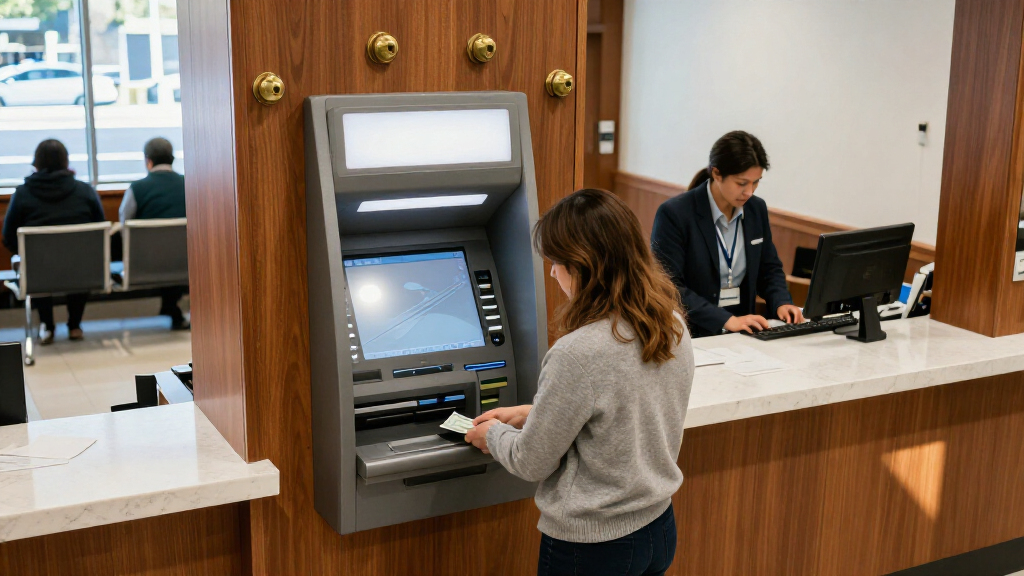
ATMs took on a teller’s central cash-handling tasks: dispensing money and accepting deposits. In the United States, the number of machines rose from about 100,000 in 1995 to 400,000 in 2010, according to Bank for International Settlements figures used in economist James Bessen’s analysis. Yet teller employment, as summarized by MIT economist David Autor in 2015, rose from about 500,000 in 1980 to 550,000 in 2010.
The analysis attributes that outcome partly to cheaper branches. Between 1988 and 2004, a typical urban branch went from needing about 20 tellers to about 13, while the number of bank branches in U.S. cities grew by 43%. The source says deregulation that allowed banks to open branches more freely also contributed. The FDIC’s nationwide count of commercial bank offices, including head offices and branches, increased from 58,937 at the end of 1988 to 77,302 at the end of 2004, then peaked at 88,522 in 2012.
The later trend was different. In 2023, 48.3% of U.S. households with a bank account mainly used mobile banking, while 15.1% mainly used a teller, according to figures cited in the source. Bureau of Labor Statistics data show U.S. teller jobs falling from about 600,500 in 2008 to 339,200 in 2025. In Germany, the number of bank branches dropped from 45,467 at the end of 2004 to 16,799 at the end of 2025.
How AI Brings a Paradox to ATMs and Bank Tellers
ATMs spread while U.S. teller employment rose modestly, then teller jobs fell as mobile banking grew and branches closed. This history offers context for AI debates, but does not show AI’s effect on bank staffing.
Automation did not decide the outcome
ATMs handled routine cash tasks, while branch economics shaped how banks staffed and expanded.
Cash work automated
A typical urban branch needed about 13 tellers in 2004, down from about 20 in 1988.
Branches expanded
U.S. city bank branches grew by 43% as lower costs and deregulation supported expansion.
Banking shifted toward mobile
In 2023, 15.1% of U.S. households with bank accounts mainly used a teller.
- Machines took on cash dispensing and deposits.
- Teller employment rose from about 500,000 in 1980 to 550,000 in 2010.
- Mobile banking became the main method for more households.
- Branch closures coincided with a steep fall in teller jobs.
What the comparison can show
The effects of automation depend on how banks reorganize services and where they invest.
Connect specific systems and tasks to changes in teller duties and staffing over time.
Opening or closing locations will shape how automation changes customer-facing work.
When Cheaper Branches Added Jobs
The ATM story shows why automating a task does not by itself settle what happens to a job. Machines reduced the number of tellers needed at each branch, but lower operating costs and branch expansion helped sustain employment for a time. The outcome depended on how banks reorganized their services and where they chose to invest.
The later figures point to a more difficult period for tellers as customers shifted to mobile services and banks closed branches. That history matters to current AI debates because a technology’s effects can change as adoption spreads and business models change. The source presents this as a comparison, however; it does not provide data showing that AI has caused a particular change in bank employment.
Products Worth Considering

Samsung 32 Odyssey G5 QHD Gaming Monitor

Amazon Kindle Scribe (16GB) with Premium Pen, Tungsten

LG 27GS60QC-B Ultragear 27-inch Curved Gaming Monitor (QHD, 180Hz, 1ms, 1000R)
As an affiliate, we earn on qualifying purchases.
From Cash Machines to Mobile Banking
The first Barclays cash machine opened in Enfield, north London, on June 27, 1967, according to the historical account. Actor Reg Varney demonstrated it by withdrawing up to £10 in one-pound notes. The machine used a special cheque marked with carbon-14 and a personal code; ordinary plastic bank cards were not yet in use. Before such machines, customers generally had to visit a bank during office hours to obtain cash.
Germany’s first cash machine opened at Kreissparkasse Tübingen on May 27, 1968, according to the source. Chemical Bank installed a Docutel cash dispenser in Rockville Centre, New York, in September 1969, a date also given by the Smithsonian. Over time, tellers’ work shifted toward customer advice and sales, while machines handled more routine cash transactions. In recent years, cash machines themselves have also begun to retreat in countries including Germany, China and Japan, though the source provides no comparable counts for those markets.
“actually rose modestly from 500,000 to approximately 550,000 over the 30-year period from 1980 to 2010”
— David Autor, summarizing James Bessen’s findings in 2015
What the ATM Analogy Cannot Show
The historical figures describe teller employment and banking changes; they do not establish what AI will do to bank staffing. The source offers no projections or measured effects of AI adoption on teller jobs, and it does not identify which AI systems or tasks would be involved. It also does not provide methodology for every figure, so readers should treat the counts as the reported estimates and agency totals cited in the account.
The relationship between branch closures, mobile banking and declining teller employment is presented as context, but the figures alone do not establish how much each factor caused the decline. The cited 2023 usage measure describes households’ main banking method, not the full range of their banking activity.
Track AI and Branch Decisions
The next meaningful evidence would be data linking AI adoption to specific changes in bank staffing, teller duties and branch operations over time. Banks’ decisions about opening or closing branches will also shape whether automation reduces staffing at each location, expands services or changes the mix of customer-facing work. The source does not name a forthcoming study, policy decision or industry milestone.
Key Questions
Did ATMs cause teller jobs to disappear?
The figures cited do not show that. U.S. teller employment rose from about 500,000 in 1980 to 550,000 in 2010, despite a large increase in ATMs. The source says banks needed fewer tellers per branch while the number of branches grew.
Why did teller employment rise while ATMs spread?
ATMs lowered the number of tellers needed at each branch, but cheaper branches helped banks expand. The source also cites deregulation that made it easier for banks to open branches.
When did U.S. teller employment begin to fall?
The figures cited show a decline from about 600,500 jobs in 2008 to 339,200 in 2025. They do not establish a single cause or pinpoint when the decline began.
Does the ATM history predict what AI will do to bank jobs?
No. It gives a historical comparison, not evidence of AI’s current effect on bank employment. The outcome will depend on how banks use AI and make decisions about staffing and branches.
Source: Thorsten Meyer AI