📊 Full opportunity report: How Facilities Are Using Phone Photos To Improve Gauge Reading Accuracy on IdeaNavigator AI — validation score, market gap, and execution plan.

Get the latest gadgets delivered free — and shop member deals
- Fast, free delivery on millions of items
- Access to Prime Big Deal Days deals on October 6–7
- Prime Video, Amazon Music and more included
TL;DR
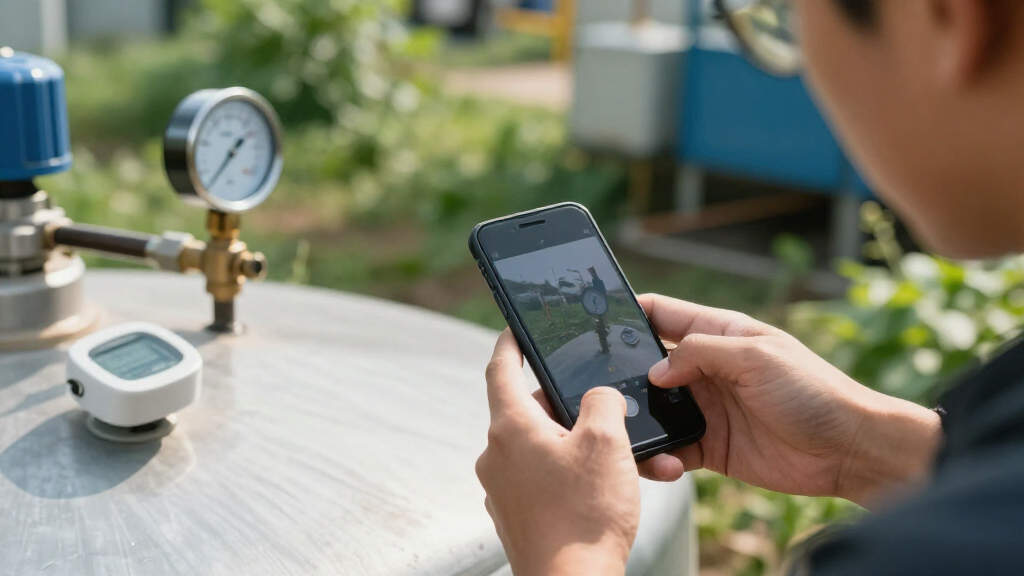
Facilities are pilot-testing a workflow where technicians photograph analog gauges, enabling AI to read, log, and flag anomalies automatically. This method aims to improve accuracy and reduce costs compared to traditional sensor upgrades.
Facilities are actively piloting a new workflow that uses phone photos to read analog gauges, replacing manual transcription and clipboard rounds. This approach leverages recent advances in sight recognition models to improve data accuracy, reduce errors, and enable real-time anomaly detection, which could significantly impact industrial maintenance practices.
Several industrial facilities are testing a workflow where technicians photograph gauges during their routine rounds. The AI-powered app then reads the gauge values directly from the photos, compares them against expected ranges, logs the data with timestamps and location, and flags any anomalies immediately. This process aims to replace traditional manual transcription of gauge readings onto paper, which often results in errors and untracked data that cannot be used for trend analysis.
The opportunity arises from recent improvements in computer vision models that reliably interpret analog dials, sight glasses, and counters from standard phone images. This technology enables legacy equipment, which lacks IoT sensors, to become a data source without costly retrofits. The initial pilot involves running parallel photo-based rounds alongside traditional clipboard methods at three facilities over a month to compare error rates and early anomaly detection capabilities. The goal is to validate whether this approach can deliver more accurate, timely, and actionable data, ultimately improving maintenance and operational decision-making.
Facilities plan to offer this as a subscription service tiered by gauge count, providing a low-cost, scalable alternative to sensor installation. Early feedback suggests that the workflow could streamline maintenance routines and reduce missed failures, but full validation results are still pending.
Potential Impact on Maintenance Data Quality
This development could transform how industrial facilities monitor their equipment, shifting from manual, error-prone transcription to automated, precise data collection. Improved gauge reading accuracy enhances early failure detection, reduces unplanned downtime, and supports better trend analysis, all at a fraction of the cost of installing IoT sensors. If successful, this approach could become a standard part of maintenance routines across various sectors, especially where legacy equipment dominates.
As an affiliate, we earn on qualifying purchases.
Legacy Equipment and the Cost of Modernization
Many industrial facilities rely on analog gauges for critical measurements, but these legacy systems lack digital connectivity. Retrofitting IoT sensors can be expensive and disruptive, often costing more than the equipment itself. As a result, manual rounds remain the norm, with technicians visually recording readings on paper or digital devices. These manual methods are susceptible to transcription errors, missed readings, and lack of data for trend analysis. Recent advances in AI and sight recognition models, however, now enable the extraction of gauge data from simple phone photos, offering a cost-effective alternative that leverages existing equipment without significant capital expenditure.
This approach aligns with broader industry trends toward digital transformation, but it is still in early testing phases. The initial pilot aims to demonstrate whether AI-driven photo reading can reliably replace manual transcription and improve operational insights.
As an affiliate, we earn on qualifying purchases.
Unverified Benefits and Implementation Challenges
While early pilot results are promising, it is not yet clear how consistently the AI system will perform across different gauges, lighting conditions, or in the presence of dirt and wear. The accuracy of gauge readings from photos and the system’s ability to flag true anomalies versus false positives remain under evaluation. Additionally, integration with existing maintenance management systems and workflows is still being developed, and user acceptance may vary. Long-term reliability and scalability are also yet to be confirmed as the pilot progresses.
analog gauge camera for industrial use
As an affiliate, we earn on qualifying purchases.
As an affiliate, we earn on qualifying purchases.
Next Steps in Validation and Broader Deployment
The ongoing pilot at three facilities will run for one month, with detailed comparison of error rates and anomaly detection effectiveness against traditional methods. Pending positive results, the provider plans to refine the app’s AI models, expand testing to more sites, and develop a commercial subscription model. Full deployment could follow within the next year if validation confirms improved accuracy and operational benefits. Further research will also explore integrating this workflow with existing digital maintenance systems to maximize data utility.
inspection camera for industrial gauges
As an affiliate, we earn on qualifying purchases.
As an affiliate, we earn on qualifying purchases.
Key Questions
How accurate are phone photos for reading gauges compared to manual transcription?
Initial tests indicate that AI can read gauge values from photos with accuracy comparable to or better than human transcription, especially when lighting and gauge conditions are optimal. However, ongoing validation is needed to confirm consistency across diverse conditions.
Will this system replace traditional maintenance routines entirely?
It is unlikely to replace manual rounds entirely in the near term. Instead, it aims to augment existing routines, reduce errors, and enable early detection of issues, making maintenance more proactive and data-driven.
What are the costs involved in implementing this photo-based gauge reading workflow?
The system is designed as a subscription service, with costs tiered by the number of gauges monitored. These costs are expected to be significantly lower than retrofitting IoT sensors across legacy equipment.
Are there limitations to using phone photos for gauge readings?
Yes, factors like poor lighting, dirty gauges, or damaged dials can affect reading accuracy. The system is still being tested to determine how well it performs under various real-world conditions.
When might this technology become widely available?
If pilot results are positive, wider deployment could occur within the next 12 months, with commercial offerings expanding as the system matures.
Source: IdeaNavigator AI
Fall Picks
fall essentials
As an affiliate, we earn on qualifying purchases.