📊 Full opportunity report: How To Coordinate Staff At Phone-Free Venues on IdeaNavigator AI — validation score, market gap, and execution plan.

Get the latest gadgets delivered free with Prime
- Fast, free delivery on millions of items
- Prime Video, Amazon Music and more included
- Member-only deals all year
TL;DR
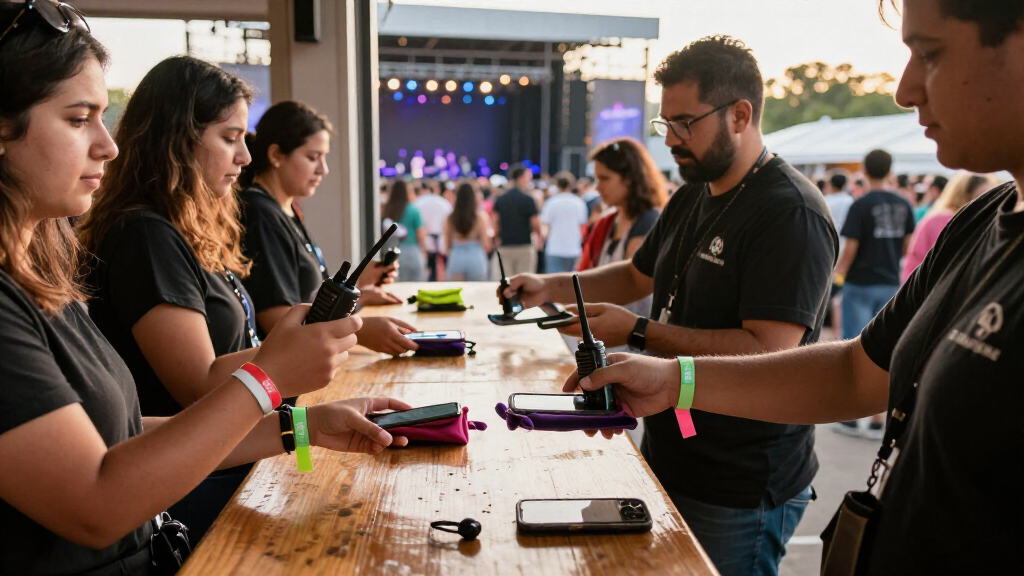
A proposal from IdeaNavigator AI outlines an operations tool for venues and schools that use phone-locking pouches. It recommends testing check-in, exception handling, pouch tracking and logged emergency unlocks at five venues and three schools; no pilot results or adoption have been reported.
IdeaNavigator AI has proposed a pilot of an operations tool for phone-free shows, comedy clubs, schools and courts that use locking pouches. The suggested software would coordinate check-in, exceptions, pouch inventory and emergency unlocks, addressing operational problems that the proposal says are often managed through improvised processes.
The proposed tool would work alongside existing pouch systems rather than require a specific hardware provider. Its suggested minimum product includes check-in flows, a registry for medical or on-call exceptions, and pouch inventory tracking. It would also provide designated stations for emergency unlocks, with reasons recorded, and post-event operations reports.
IdeaNavigator AI frames the opportunity around handling situations that can disrupt an event or school day: misplaced pouches, requests for exceptions, delays when someone needs a phone unlocked urgently, and re-entry lines. These are described as problems in current operations, but the proposal supplies no incident counts, venue interviews, or measured evidence of how often they occur.
The suggested business model is a per-event or per-site subscription. To test demand and performance, the proposal recommends pilots at five venues and three schools, comparing exception-handling time and incident-log completeness with each site’s existing process. No participating sites, software product, pricing, pilot schedule or results are identified.
Reducing Disruption at Phone-Free Sites
Phone-free policies depend on more than collecting devices: staff must manage exceptions, keep track of pouches and respond when a phone needs to be returned. A shared operations workflow could give staff a consistent way to record these tasks and coordinate handoffs, if testing shows it works in practice.
The proposal’s focus on hardware-agnostic software could matter to operators already using pouch systems, since it does not call for replacing those systems. But the operational gains remain a hypothesis. The proposed pilot metrics—exception-handling time and incident-log completeness—would measure only part of the experience; the outline does not specify how it would assess queue length, staff workload, privacy or attendee and student feedback.
As an affiliate, we earn on qualifying purchases.
Pouch Policies Create Staff Work
The proposal identifies phone-free shows, comedy clubs, schools and courts as potential settings for the tool. It says phone-free mandates are spreading across those environments, but provides no figures, jurisdictions, dates or policy examples to quantify that trend. The proposal should not be read as evidence that a particular mandate has recently taken effect.
Its central operational premise is that locking-pouch hardware does not by itself organize staff workflows. Check-in, exceptions and emergency access still require procedures at each site. The suggested product is intended to provide those processes in software, while operating alongside whichever pouch system a site uses.
As an affiliate, we earn on qualifying purchases.
Pilot Evidence Has Not Been Reported
The outline describes a product opportunity and a validation plan, not a launched service or a completed study. It does not identify a developer, participating venues or schools, a timeline, technical specifications, subscription prices or evidence that operators are prepared to buy the tool.
It also does not explain how emergency unlocks would be authorized, how medical and on-call information would be protected, or how records would be retained. Those details may affect whether the proposed system is workable across events, schools and courts, whose rules and staffing needs can differ. No comparison results are available to show whether the software would improve on current procedures.
As an affiliate, we earn on qualifying purchases.
Testing Would Measure Staff Workflows
The next step proposed by IdeaNavigator AI is to recruit five venues and three schools for pilots and compare the tool with each site’s current improvised process. The stated measures are time spent handling exceptions and how completely incidents are logged. The proposal does not give a timetable or confirm that any organization has agreed to participate.
If pilots proceed, reported results would help establish whether the workflow is practical and whether operators see enough value to pay per event or per site. Until a product, pilot participants and findings are disclosed, the idea remains a proposal rather than a confirmed change to phone-free venue operations.
Source: IdeaNavigator AI
hardware-agnostic pouch management tool
As an affiliate, we earn on qualifying purchases.
As an affiliate, we earn on qualifying purchases.
Key Questions
Has the phone-free venue operations tool launched?
No launch is reported. IdeaNavigator AI has outlined a proposed product and pilot plan, but does not identify a finished tool.
What would the proposed tool do?
It would coordinate check-in, medical or on-call exceptions, pouch inventory, logged emergency unlocks and post-event reports while working with existing pouch systems.
Which organizations would test it?
The proposal recommends pilots at five venues and three schools, but names no participants and does not say that testing has started.
How would the pilot be evaluated?
The suggested measures are exception-handling time and completeness of incident logs compared with each site’s current process. No results or additional evaluation measures are provided.
Source: IdeaNavigator AI
Fall Picks
fall essentials
As an affiliate, we earn on qualifying purchases.