📊 Full opportunity report: How To Handle Death Certificate Delays In Funeral Operations on IdeaNavigator AI — validation score, market gap, and execution plan.

Get the latest gadgets delivered free with Prime
- Fast, free delivery on millions of items
- Prime Video, Amazon Music and more included
- Member-only deals all year
TL;DR
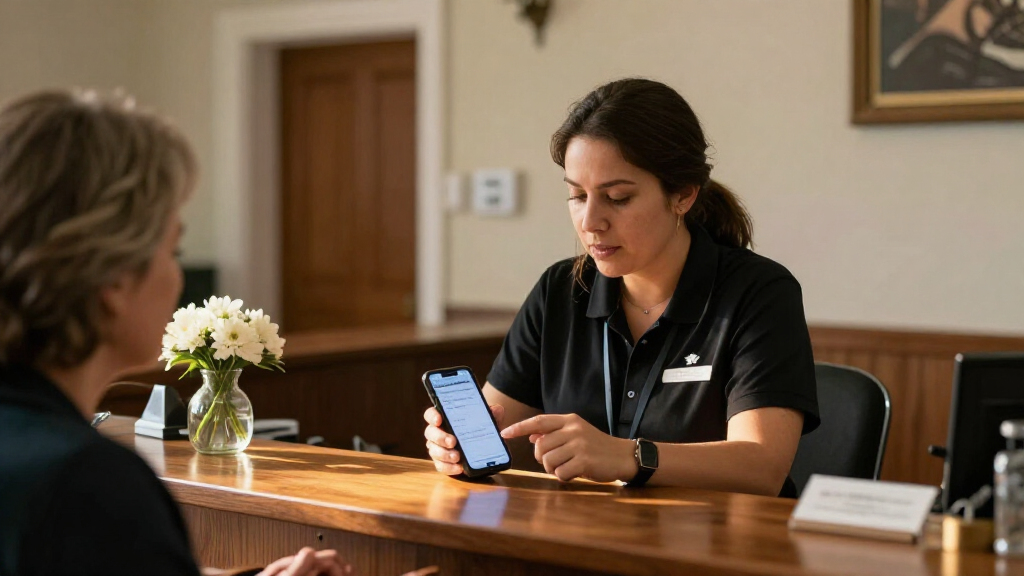
IdeaNavigator AI has proposed a case-tracking and reminder tool to help funeral homes follow up on unsigned death certificates. The proposal points to Michigan and Virginia laws enacted or passed in 2026, but it does not report a launched product, a pilot, or evidence that the tool reduces delays.
IdeaNavigator AI has proposed a case-tracking and reminder tool for funeral homes dealing with unsigned death certificates, citing new certification requirements in Michigan and Virginia as a reason to test the workflow. The proposal is an operational concept, not a report of a launched service or proven results; it targets independent funeral homes and small multi-location groups that manually follow up with certifiers.
The proposed tool would give funeral home staff a shared board showing each death record’s certification status. Staff could enter updates manually or use electronic death registration system data where a state makes that status available. The system would store certifiers’ office contacts and preferred communication channels, then send reminders by email, fax or text according to a schedule linked to the relevant state deadline.
The workflow would also record each contact attempt, flag cases approaching a legal deadline, provide families with plain-language status updates and generate monthly reports identifying slow certification patterns. IdeaNavigator AI describes a subscription priced per funeral home location, with possible discounted rates for state funeral directors’ associations that enroll members in bulk. No pricing, customer commitments or technical integrations are specified.
The proposal recommends a 60-day test at five funeral homes in Michigan or Virginia. It suggests comparing the time from death to medical certification and staff minutes spent on follow-up against each home’s preceding 60 days. These are proposed evaluation measures; no trial has been reported and no measured outcomes are available.
Handling Death Certificate Delays A proposed tracking workflow
IdeaNavigator AI proposes a tool to coordinate follow-ups on unsigned death certificates. No product launch, pilot, or proven results are reported.
What the tool would do
A shared case board would help staff coordinate status checks, reminders, and family updates.
Record certification status manually or use state system data where available.
Store certifier contacts, log attempts, and schedule reminders by email, fax, or text.
Flag approaching deadlines, share plain-language updates with families, and report slow patterns.
State rules differ
The proposal cites measures in Michigan and Virginia, but they set different requirements.
- HB 4077 and HB 4078 were signed March 17, 2026.
- The proposal says certification is required within 48 hours through the secure state system.
- The clock’s starting point and exceptions are not detailed.
- 2026 HB 156 concerns training for expected certifiers.
- Physicians, advanced practice registered nurses, and physician assistants must complete a state system tutorial as part of licensing.
- No certification deadline is stated in the proposal.
What the test would measure
The proposed five-home trial would compare each location with its preceding 60 days.
Time to certification
Track elapsed time from death to medical certification.
Follow-up minutes
Measure staff time spent pursuing signatures.
Why it matters
Unsigned certificates can hold up permits and leave families waiting on arrangements, insurance claims, or benefit payments.
Delays Can Hold Up Funeral Arrangements
Death certification is one step in a process with practical consequences for families and funeral providers. The proposal says a burial or cremation permit cannot be issued until a physician or medical examiner certifies the cause of death. When a certificate remains unsigned, funeral staff may have to spend time calling or faxing medical offices while arrangements await the required documentation.
Families may also be waiting on cremation arrangements, life-insurance claims or benefit payments. A shared record of which cases are pending, who has been contacted and when a deadline is approaching could make follow-up easier to coordinate. Whether reminders would shorten certification times, reduce staff work or improve family updates remains untested.
Legal deadlines could give funeral homes a clearer point for escalating a delayed case, but the proposal does not establish that software can compel a certifier to act. The relevant responsibility, reporting process and consequences for missed deadlines depend on state law and implementation. Funeral homes would also need to handle sensitive personal and medical information appropriately.
Products Worth Considering

DJI Mic 2 Wireless Microphone System (2 Transmitters, Receiver, Charging Case)

DJI Mic 3 Wireless Microphone Kit (2 Transmitters, 1 Receiver, Charging Case)

Logitech MX Keys Combo for Business Keyboard and Mouse – Graphite
As an affiliate, we earn on qualifying purchases.
Michigan and Virginia Set Different Requirements
The opportunity is tied to two state measures described in the proposal. Michigan’s HB 4077 and HB 4078 were signed on March 17, 2026; the proposal says they require death certificates to be certified within 48 hours through the state’s secure web-based system. The exact starting point for the 48-hour period and the rules for exceptions are not detailed here.
Virginia’s 2026 HB 156, as described in the proposal, requires physicians, advanced practice registered nurses and physician assistants who expect to sign death certificates to complete the state’s electronic death registration system tutorial as part of licensing. That requirement concerns training, rather than a stated certification deadline. The two measures therefore do not create identical rules, and a workflow would need to reflect the requirements of each jurisdiction.
The proposed buyer is an independent funeral director or office manager, or a small group operating several locations. The suggested test would measure actual certification times and staff follow-up work rather than treating the existence of new rules as proof that delays have already fallen.
Pilot Results and Legal Details Pending
No working product, pilot findings or customer adoption are reported. It remains unclear whether any state electronic death registration system offers access that would support automated status updates, or whether funeral homes would need to maintain records entirely by hand. The proposal does not describe privacy safeguards, data-retention practices, system security, consent procedures or how reminders would avoid sending sensitive information through unsuitable channels.
The account also gives limited detail about the Michigan measures’ application, including how the 48-hour clock is calculated and what happens when certification is delayed for reasons outside a certifier’s control. It does not state the penalties or enforcement process. Virginia’s tutorial requirement is described, but no evidence is provided about its implementation or effect on certification delays. These details should be checked against official state guidance before a funeral home relies on a software deadline or reporting feature.
A Five-Home Test Is Proposed
The next step proposed by IdeaNavigator AI is to recruit five funeral homes in Michigan or Virginia for a 60-day trial. Participating homes would record elapsed time from death to medical certification and staff minutes spent chasing signatures, then compare those measures with the prior 60 days at each location.
For the test to show whether the workflow helps, organizers would need to define how they count cases, account for differences in case volume and distinguish manual follow-up from any state-system data. No trial start date, participating homes, subscription price or results have been announced. Until those details emerge, the concept remains a proposed operational tool rather than a demonstrated solution.
Source: IdeaNavigator AI
Key Questions
Has the death-certificate tracking tool launched?
No launch is reported. IdeaNavigator AI describes a proposed workflow and a possible pilot, not an available product or completed trial.
What would the proposed tool do?
It would track certification status and follow-up attempts, send scheduled reminders, flag cases nearing a deadline, provide family updates and create reports on delayed cases.
What does the proposal say about Michigan’s deadline?
It says Michigan’s HB 4077 and HB 4078, signed March 17, 2026, require certification within 48 hours through the state’s secure web-based system. The proposal does not explain the deadline’s starting point or exceptions.
How would the proposed pilot measure results?
The suggested 60-day test at five funeral homes would track time from death to medical certification and staff minutes spent following up, then compare those figures with the previous 60 days at each home.
Would reminders guarantee faster certification?
No evidence establishes that. The proposal has no reported pilot results, and reminders cannot by themselves guarantee that a physician or other authorized certifier will complete a record by a deadline.
Source: IdeaNavigator AI