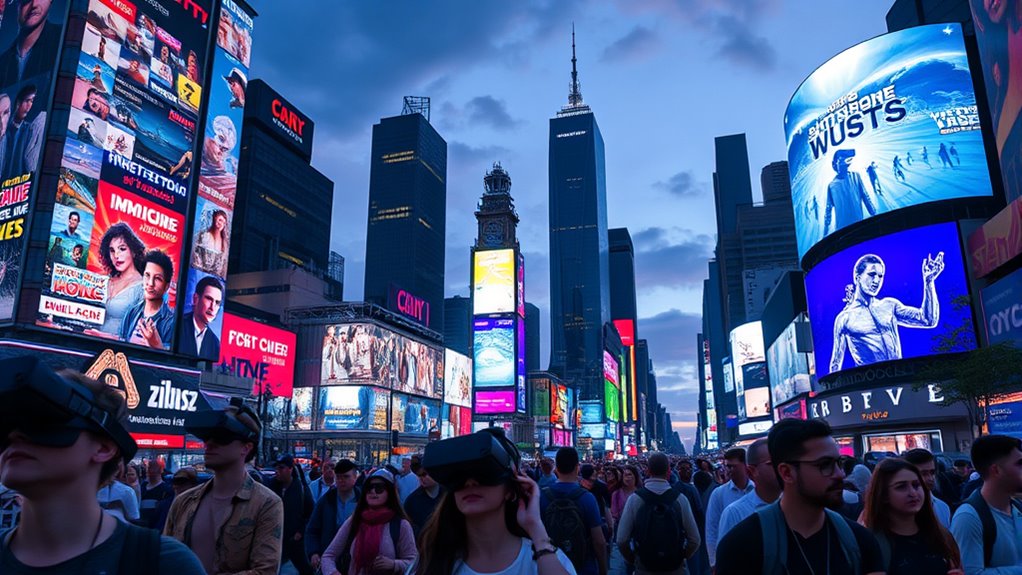

By 2025, the metaverse hype has cooled, revealing a more practical landscape. You’ll find limited virtual commerce and digital identity development, mainly in niche areas rather than across daily life. Major promises like seamless virtual worlds and immersive shopping haven’t fully materialized, partly due to infrastructure and trust issues. Instead, focus has shifted to more achievable innovations like virtual events. To understand how these changes shape the future, you’ll want to explore what’s really happening now.
Key Takeaways
- The initial hype of seamless virtual worlds and immersive shopping has largely faded, revealing a more practical and limited metaverse landscape.
- Virtual commerce persists mainly on niche platforms, with mainstream adoption remaining elusive due to technical and logistical barriers.
- Digital identities have become complex and fragmented, complicating unified presence and raising ongoing security and privacy concerns.
- Infrastructure challenges and regulatory issues have slowed widespread adoption, though niche experiences like virtual concerts still thrive.
- The focus has shifted from grand visions to tangible innovations, emphasizing visual fidelity and practical applications amidst real-world constraints.
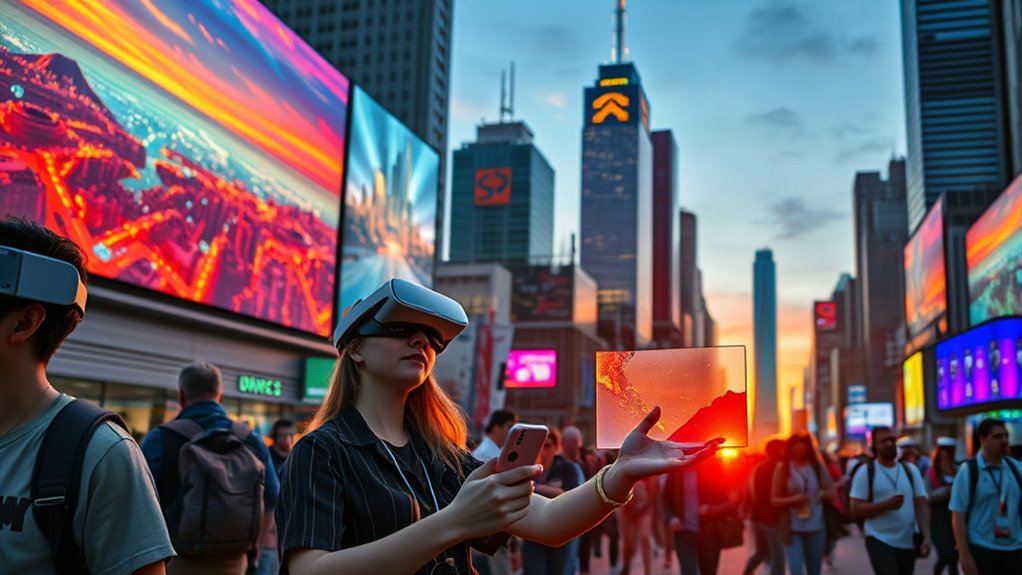
By 2025, the buzz surrounding the metaverse has cooled from its peak, revealing a stark contrast between hype and reality. While the initial excitement painted a picture of seamless virtual worlds transforming how we work, play, and shop, the current landscape shows a more nuanced picture. You’ve probably noticed that virtual commerce has become more integrated into daily life, but it hasn’t quite revolutionized retail the way early projections suggested. Instead of sprawling virtual malls, you find a handful of niche platforms where brands test the waters, often with limited success. The idea of shopping in immersive environments remains appealing, but many users still prefer traditional e-commerce for its convenience and familiarity. The metaverse’s promise of a new frontier for commerce has been tempered by technical limitations, user engagement challenges, and logistical hurdles like payment security.
Your digital identity, once thought to be a simple avatar or a set of online credentials, has evolved into a complex, layered construct. In the early days, many believed that establishing a consistent digital identity across various metaverse platforms would be straightforward. Today, you realize it’s more complicated. You may have multiple profiles, each tied to different services or communities, making it hard to maintain a unified presence. Identity verification remains a concern, especially with issues like identity theft and privacy breaches still prevalent. You’re aware that platforms are working to tighten security, but the balance between personalization and privacy is delicate. Your digital identity in the metaverse is now a mix of personal data, virtual assets, and social reputation, which makes managing it more critical—and more challenging—than ever. The importance of color accuracy and visual fidelity in virtual environments continues to grow as immersive experiences become more prevalent.
Additionally, you’ve seen how the metaverse’s initial promise of seamless virtual commerce and secure digital identities has been diluted by real-world constraints. Infrastructure upgrades, compatibility issues, and regulatory questions have slowed down mass adoption. Despite these hurdles, you still see pockets of innovation where virtual commerce thrives—like virtual concerts or branded experiences—offering a glimpse of what’s to come. Your digital identity remains central to your metaverse experience, shaping how you interact, buy, and participate. While the grand visions may have tempered, the core elements—virtual commerce and digital identity—continue to evolve, anchoring the metaverse’s reality in more tangible, practical terms than the initial hype suggested.
virtual reality headsets for immersive experiences
As an affiliate, we earn on qualifying purchases.
As an affiliate, we earn on qualifying purchases.
Frequently Asked Questions
What Are the Main Technological Barriers to Mainstream Metaverse Adoption?
You face key barriers to mainstream metaverse adoption, including hardware limitations that restrict seamless experiences and the lack of virtual interoperability between different platforms. These issues make it difficult for you to move effortlessly across virtual worlds and access consistent content. Until hardware becomes more powerful and standards for interoperability are established, widespread adoption remains challenging, preventing you from fully immersing in the metaverse’s potential.
How Will the Metaverse Impact Global Economic Inequality?
You might think the metaverse will bridge global gaps, but instead, it could deepen economic disparity. While it offers opportunities for remote work and education, those without access to high-speed internet or devices face a widening digital divide. This technology could empower some countries while leaving others behind, increasing economic inequality, unless deliberate efforts address infrastructure and affordability. The impact hinges on how equitably we develop and distribute metaverse resources.
What Privacy Concerns Are Associated With Metaverse Platforms?
You should be aware that metaverse platforms raise significant privacy concerns, especially around data privacy and user tracking. As you immerse yourself in these environments, your personal data can be collected and monitored extensively, often without clear consent. This means your behaviors, preferences, and interactions might be tracked across multiple platforms, risking misuse or breaches. Staying informed and practicing good privacy habits helps protect your information in this evolving digital space.
Will the Metaverse Replace Physical Social Interactions Entirely?
No, the metaverse won’t replace physical social interactions entirely. While it offers virtual intimacy and fosters digital authenticity, it can’t fully replicate the nuances of face-to-face contact. You’ll still crave real-world connections for emotional depth and sensory experiences. The metaverse enhances how you socialize but complements, rather than replaces, physical interactions, creating a blended experience that enriches your social life without eliminating traditional relationships.
How Sustainable Are the Current Metaverse Development Practices?
Think of metaverse development practices like planting a garden—you want it to thrive, not exhaust the soil. Right now, they’re moderately sustainable, with eco-friendly hardware and renewable energy efforts growing. But, if you don’t keep tending to these practices, they could wither. To stay sustainable, developers must prioritize energy-efficient servers and recyclable hardware, ensuring the metaverse remains vibrant without harming the environment.
VR accessories for virtual concerts
As an affiliate, we earn on qualifying purchases.
As an affiliate, we earn on qualifying purchases.
Conclusion
By 2025, the metaverse’s hype has cooled, but it still offers real potential. Over 60% of businesses are investing in virtual worlds, showing serious commitment. While mainstream adoption isn’t as rapid as some predicted, you’ll find innovative uses in education, work, and entertainment. The key is to stay adaptable and keep an eye on how these digital spaces evolve—because, despite the hype, the metaverse is slowly becoming a part of everyday life.
digital identity verification devices
As an affiliate, we earn on qualifying purchases.
As an affiliate, we earn on qualifying purchases.
high fidelity virtual environment displays
As an affiliate, we earn on qualifying purchases.
As an affiliate, we earn on qualifying purchases.