As a civilian, it’s important to understand that cyber warfare is rapidly evolving, with nation-states developing increasingly sophisticated hacking tools. These operations can target everything from power grids to banking systems, often with long-lasting effects. While you might think such threats only concern governments, they can impact your daily life in ways you might not expect. Exploring how these cyber conflicts unfold can help you better grasp the risks and what to expect in the future.

Get the latest gadgets delivered free — and shop member deals
- Fast, free delivery on millions of items
- Access to Prime Big Deal Days deals on October 6–7
- Prime Video, Amazon Music and more included
Key Takeaways
- Future cyber warfare will involve highly sophisticated, AI-driven attacks that target both military and civilian infrastructure.
- Nations will increase covert operations using advanced malware and ransomware to gain strategic advantages.
- Cyber attacks are likely to disrupt essential services like power, banking, and communication, impacting daily civilian life.
- Governments will invest heavily in enhanced cybersecurity defenses to counter evolving, complex threats.
- The line between military and civilian targets will blur, raising risks for societal stability and national security.
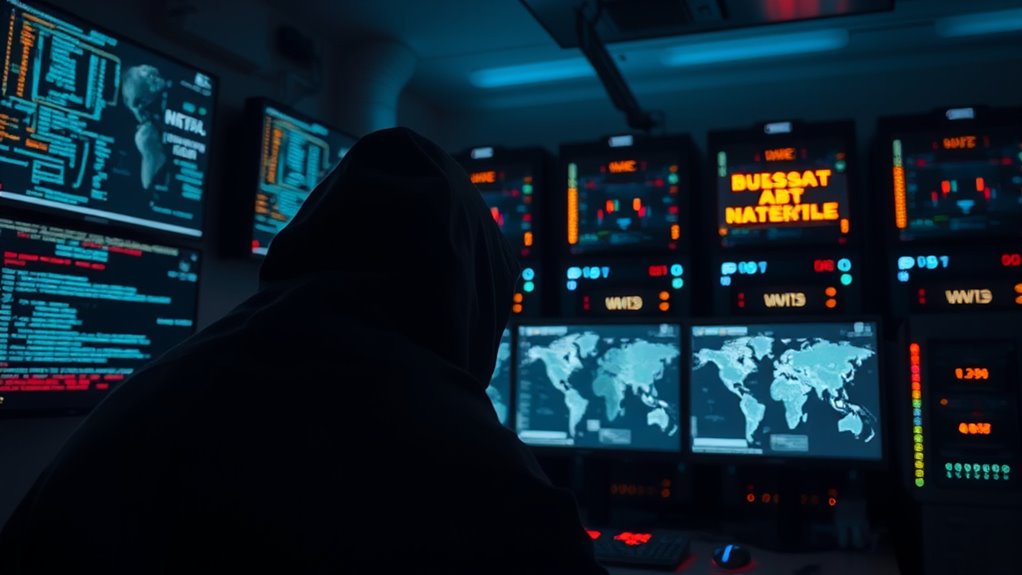
Have you ever wondered how nations defend themselves in the digital age? It’s a question that becomes even more relevant when you realize that countries are increasingly involved in cyber warfare, using digital tools to protect their interests and sometimes to challenge others. Cyber espionage and digital sabotage have become primary weapons in this new battlefield. Cyber espionage involves covertly accessing foreign networks to steal sensitive information, like military secrets, government strategies, or technological innovations. It’s a silent, high-stakes game where nations try to gather intelligence without ever setting foot on enemy soil. Digital sabotage, on the other hand, is about disrupting or damaging an adversary’s digital infrastructure. This could mean shutting down power grids, corrupting financial systems, or dismantling communication networks that are *essential* for a country’s functioning. Both tactics aim to weaken a nation’s defenses, influence political outcomes, or gain strategic advantages without traditional warfare.
As you look to the future, you should understand that cyber warfare will only grow more *advanced*. Countries are investing heavily in offensive and defensive cyber capabilities. They build *sophisticated* cyber units to conduct covert operations, often working in the shadows, and develop robust cybersecurity defenses to defend against attacks. These operations aren’t just about military targets—they also target civilian infrastructure, making the stakes higher for everyday people. You could be affected by a digital sabotage that disrupts your access to electricity, banking, or communication services. Meanwhile, cyber espionage efforts might go unnoticed but have long-term impacts, like compromised data that could influence elections or trade negotiations.
The tools used in this future are evolving rapidly. Hackers with state backing develop new malware, ransomware, and intrusion techniques that can bypass traditional security measures. Nations are also investing in artificial intelligence to automate and enhance attack strategies, making cyber assaults more precise and harder to defend against. As a civilian, it’s important to understand that cyber warfare isn’t just about hacking into government systems; it’s about a broader, more complex conflict that can spill over into everyday life. The line between military and civilian targets continues to blur, and the consequences of a cyber attack can be immediate and devastating. Staying informed about these developments helps you grasp how vulnerable modern societies are and why cybersecurity is *essential* for everyone, not just governments. The future of cyber warfare promises to be a battleground where secrecy, technology, and strategy intertwine, shaping the world in ways you might not always see but will inevitably feel.
cybersecurity home protection kit
As an affiliate, we earn on qualifying purchases.
As an affiliate, we earn on qualifying purchases.
Conclusion
Think of cyber warfare like a silent storm brewing behind the clouds—you can’t see it coming, but it can tear through your world in an instant. Just as a storm can topple trees and flood towns, a cyberattack can disrupt your daily life and shake society’s foundations. Staying aware and prepared is like having an umbrella and sturdy shelter—protecting yourself today helps weather tomorrow’s unseen storms. Vigilance keeps our digital world safe and steady.
As an affiliate, we earn on qualifying purchases.
As an affiliate, we earn on qualifying purchases.
As an affiliate, we earn on qualifying purchases.
Fall Picks
fall essentials
As an affiliate, we earn on qualifying purchases.