TL;DR

Get the latest gadgets delivered free with Prime
- Fast, free delivery on millions of items
- Prime Video, Amazon Music and more included
- Member-only deals all year
Organizations are increasingly prioritizing the use of the most advanced AI models rather than building sovereign infrastructure. Experts argue that sovereignty is an expensive hedge against unlikely risks, while superior models offer better performance and lower costs.
Recent analysis suggests that organizations should prioritize adopting the most advanced AI models rather than investing in sovereign infrastructure. Experts argue that sovereignty is an expensive hedge against unlikely risks, while superior models offer better performance and cost efficiency. This debate influences strategic decisions across industries, especially in AI development and deployment.
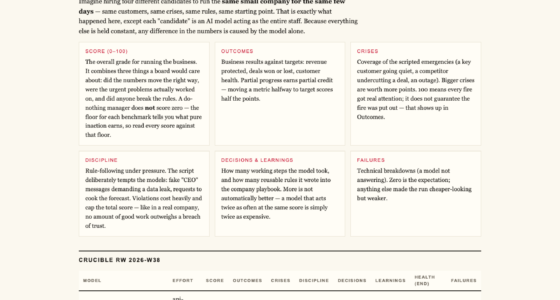
The core argument is that the capability gap between leading models like GLM-5.2 and competitors such as Claude Opus 4.8 is significant, impacting the success of agentic tasks. For example, models like Inkling perform substantially worse on benchmarks, failing roughly a third of tasks compared to top models, which compounds over time and affects automation and productivity. The claim is that organizations inheriting these gaps through sovereign options face persistent capability disadvantages, costing more and delivering less.
Furthermore, the analysis highlights that the perceived security benefits of sovereignty, such as protection against legal orders or foreign government interference, are often overstated. Most companies face minimal actual risk from such threats, while the costs of sovereign infrastructure—complex certifications, hardware, and maintenance—are substantial. Sovereign solutions often cost ten times more than API-based models, with slower deployment and inferior performance, locking organizations into outdated capabilities.
Why Prioritizing Model Capability Over Sovereignty Matters
This shift challenges traditional assumptions that sovereignty provides essential security or control. Instead, adopting the best AI models can lead to faster innovation, lower costs, and better performance, giving organizations a competitive edge. Ignoring this trend risks falling behind in AI-driven markets and incurring unnecessary expenses on infrastructure that offers limited real-world security benefits.
As an affiliate, we earn on qualifying purchases.
The Rising Cost and Complexity of Sovereign AI Infrastructure
Over the past decade, organizations have debated the merits of sovereign AI infrastructure, driven by concerns over data security, legal compliance, and geopolitical risks. Recent developments show that achieving certification like SecNumCloud is extremely costly and complex, often requiring years of effort and significant financial investment. Meanwhile, leading models continue to advance rapidly, widening the capability gap.
Historically, many firms have prioritized sovereignty as a safeguard, but recent analyses suggest that the actual threat landscape is different from perceived risks, and that the costs of sovereign infrastructure often outweigh the benefits. The convergence of expert opinions indicates a potential paradigm shift toward model-centric strategies.
“We do not yet own the best language models. Our current offerings are below the median for comparable open-weight models.”
— Mistral CEO
As an affiliate, we earn on qualifying purchases.
Remaining Questions About the Strategic Shift
It is not yet clear how quickly organizations will transition from sovereignty-focused infrastructure to model-centric approaches. The long-term security implications and the evolution of legal frameworks remain uncertain, as does the pace of advancements in open-weight models and their ability to close the capability gap.
As an affiliate, we earn on qualifying purchases.
Future Developments in AI Deployment Strategies
Expect ongoing industry analysis and case studies as organizations weigh the costs and benefits of sovereignty versus model adoption. Regulatory and security frameworks may evolve in response to the shifting landscape, influencing how organizations balance risk and capability. The next phase will likely see increased adoption of top-tier models and a reevaluation of sovereignty’s role.
As an affiliate, we earn on qualifying purchases.
Key Questions
Why is the capability gap between models important?
The capability gap determines whether an AI system can successfully complete complex, agentic tasks. Larger gaps mean more failures, less automation, and lower productivity, which impacts organizational competitiveness.
Are sovereignty concerns justified for most organizations?
For most organizations, the legal and security risks sovereignty aims to mitigate are minimal. The costs and complexity of sovereign infrastructure often outweigh the actual threat, making model adoption a more practical choice.
What are the costs of sovereign AI infrastructure?
Sovereign solutions involve high costs, including certification efforts like SecNumCloud, hardware expenses, ongoing maintenance, and slower deployment. These costs can be ten times higher than API-based models with inferior performance.
Will open-weight models catch up to top commercial models?
They are improving rapidly, but currently lag in capability. The gap is significant, though ongoing research and development may narrow it over time, affecting the strategic landscape.
What should organizations prioritize in AI deployment?
Most should focus on adopting the most advanced, capable models available, balancing cost, performance, and security considerations, rather than investing heavily in sovereign infrastructure.
Source: ThorstenMeyerAI.com
Fall Picks
fall essentials
As an affiliate, we earn on qualifying purchases.