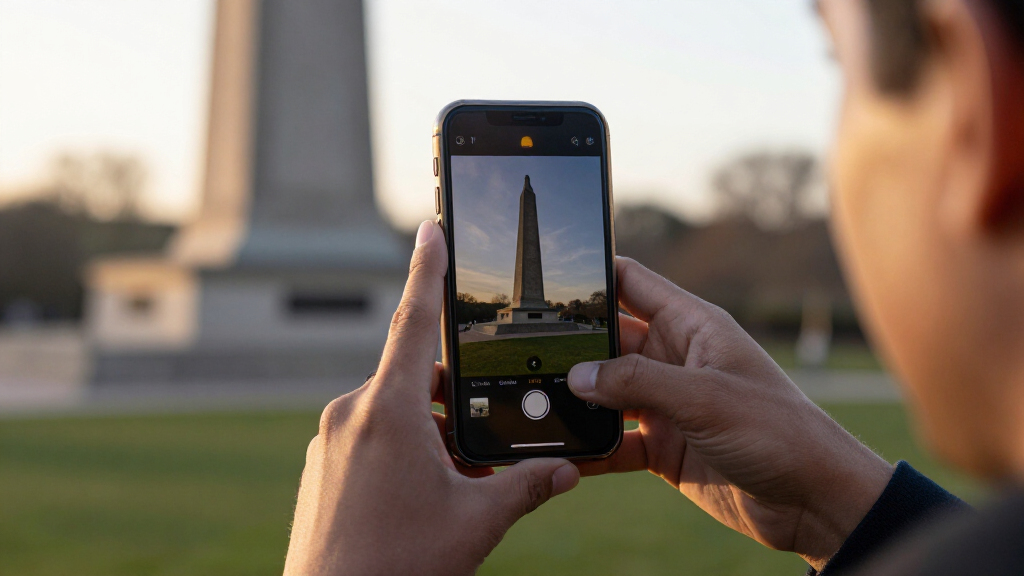

🔍 Read the full analysis: Steal This: The Signature Technique Behind “The Cenotaph At Night | A Two-Minute Vigil” on ThorstenMeyerAI.com

Get the latest gadgets delivered free — and shop member deals
- Fast, free delivery on millions of items
- Access to Prime Big Deal Days deals on October 6–7
- Prime Video, Amazon Music and more included
TL;DR
This article explores the unique design technique of ‘The Cenotaph at Night,’ a virtual memorial emphasizing stillness and timed silence. Its core method involves precise timing, static visuals, and minimal interaction, creating a contemplative space for remembrance.
The design of ‘The Cenotaph at Night | A Two-Minute’ employs a deliberate, disciplined restraint that transforms digital space into a quiet moment of remembrance. Its core technique involves static visuals, timed silence, and minimal interaction, creating a meditative memorial experience that emphasizes stillness over spectacle. This approach, confirmed by the project’s creators, is intended to evoke reflection and solemnity in a digital memorial setting.
The experience centers around a single, floodlit historic photograph of a war memorial, which remains static throughout the two-minute countdown to midnight. Visitors’ scrolling actions trigger a carefully choreographed sequence: the clock transitions from 23:58 to 00:00, then dims, pausing grain and petals, and revealing a wall of dynamically generated names and inscriptions. The design employs CSS techniques like monochrome grading, cover cropping, and precise sizing to maintain visual consistency across devices, while self-hosted fonts reinforce the timeless tone. Interaction is intentionally minimal; scrolling and optional sound effects at midnight deepen the contemplative atmosphere. Static states are enforced for users with reduced motion preferences, ensuring accessibility and focus on silence and materiality.
According to the project’s technical documentation, the core signature lies in this restrained approach—focusing on timed silence, static imagery, and subtle visual cues rather than animation or motion. The site’s code relies solely on HTML, CSS, and vanilla JavaScript, with no external assets or frameworks, emphasizing simplicity and control over the experience’s meditative tone. The design’s goal is to evoke reflection through materiality and deliberate pacing, making the experience distinct from typical digital memorials that often rely on motion or spectacle.
Steal This: The Signature Technique Behind “The Cenotaph at Night”
A two-minute vigil built on disciplined restraint — static imagery, timed silence, and minimal interaction. How a digital memorial swaps spectacle for stillness, and why the technique is worth borrowing.
What Scrolling Actually Does
Visitors’ scrolling drives a carefully timed sequence. Nothing moves until the visitor does — and then only the clock, the light, and the names.
The Floodlit Frame
A single historic photograph of the war memorial, monochrome-graded and static throughout.
23:58 → 00:00
The clock advances with scroll position, marking the two-minute approach to midnight.
The Dimming
At midnight the floodlight dims; film grain and falling petals pause mid-air.
The Wall of Names
Dynamically generated names and inscriptions are revealed in the stillness.
Three Pillars of the Technique
Static Visuals
One unchanging photograph replaces animation loops and video. Monochrome grading, cover cropping, and precise sizing keep the frame consistent across every device.
Timed Silence
The two-minute countdown gives visitors a shared, bounded moment. Optional sound at midnight deepens the atmosphere without disturbing the quiet.
Minimal Interaction
Scrolling is the only gesture. No buttons, no navigation chrome — just the visitor, the clock, and the memorial.
Restraint vs. Spectacle — By the Numbers
Relative emphasis across the design, contrasted with a typical spectacle-driven digital memorial.
Cenotaph vs. Conventional Digital Memorials
| Design Dimension | The Cenotaph at Night | Typical Digital Memorial |
|---|---|---|
| Primary imagery | ✓ Single static photograph | ~ Video & animated loops |
| Pacing control | ✓ Visitor scroll, two-minute arc | ✗ Auto-playing sequences |
| Frameworks | ✓ None — vanilla HTML/CSS/JS | ✗ External libraries & assets |
| Typography | ✓ Self-hosted, timeless tone | ~ Third-party webfonts |
| Reduced-motion support | ✓ Static states enforced | ~ Often partial |
| Screen reader names | ✓ Dynamically accessible | ✗ Frequently image-locked |
Discipline as Emotional Design
The Restraint Model
- Removes distraction to deepen reflection
- Materiality and pacing carry the emotion
- Feels like a physical space of remembrance
- Solemnity through silence and stillness
The Spectacle Model
- Relies on animation, video, dynamic content
- Risks distracting from the act of remembrance
- prioritises visual flourish over quiet impact
- Feels like a web experience, not a vigil
What Designers Keep Asking
How does the static visual deepen the impact?
Stillness emphasises timelessness, letting viewers reflect without distraction — exactly the meditative space the site set out to create.
Why does timed silence matter?
It asks visitors to pause, reinforcing solemnity and framing the passage of time as a shared, collective act of remembrance.
Is the experience accessible?
Yes. Static states are enforced for reduced-motion preferences, and names are generated with screen reader accessibility in mind.
Can the technique transfer elsewhere?
Potentially — restraint, timing, and materiality could shape other contemplative or ceremonial digital spaces built on emotional depth.
Why This Minimalist Approach Matters
The use of disciplined restraint in ‘The Cenotaph at Night’ demonstrates how digital memorials can foster deeper reflection by removing distraction. Its focus on static visuals, timed silence, and minimal interaction creates an environment of solemnity that contrasts with more animated or spectacle-driven memorials. This approach highlights the importance of materiality, timing, and silence in digital spaces dedicated to remembrance, offering a model for respectful, contemplative design that prioritizes emotional impact over visual flourish.
As an affiliate, we earn on qualifying purchases.
Design Philosophy and Development of the Memorial
The project was developed as part of a broader series of digital memorial sites, each built with a focus on simplicity and emotional resonance. The design brief emphasized creating a space of silence and stillness, inspired by traditional memorial practices but adapted for digital media. The site’s core concept was to use static imagery and timed interactions to evoke a shared moment of remembrance, emphasizing the passage of time and the collective act of reflection. This approach aligns with contemporary trends in digital memorials that seek to move away from spectacle and toward meditative experience.
Prior to this, many digital memorials relied heavily on animation, video, and dynamic content, which can distract from solemnity. The developers aimed to challenge this norm by enforcing stillness and timed silence, resulting in a site that feels more like a physical space of remembrance than a typical web experience. The project was executed through a rigorous, iterative process, emphasizing accessibility, visual consistency, and emotional depth.
As an affiliate, we earn on qualifying purchases.
What Aspects of the Technique Are Still Under Discussion
It is not yet clear how widely this approach will be adopted in future digital memorials or whether users will respond uniformly to the enforced silence and static visuals. Additionally, the long-term emotional impact of such disciplined restraint remains to be studied, and the effectiveness of timed silence as a memorial technique is still under exploration in broader digital memorial contexts.As an affiliate, we earn on qualifying purchases.
Future Developments and Broader Adoption of the Technique
Developers and memorial designers are expected to observe how audiences respond to this restrained approach, potentially influencing future digital memorials. Further research may explore the emotional and psychological effects of timed silence and static visuals in online remembrance spaces. Additionally, the project team plans to gather user feedback and conduct evaluations to refine this technique, possibly inspiring new standards for contemplative digital memorial design.
As an affiliate, we earn on qualifying purchases.
Key Questions
How does the static visual contribute to the memorial’s impact?
The static visual emphasizes stillness and timelessness, encouraging viewers to reflect without distraction, aligning with the site’s goal of creating a meditative space for remembrance.
Why is timed silence important in this experience?
Timed silence allows visitors to pause and reflect, reinforcing the solemnity of the memorial and emphasizing the passage of time as a shared, collective act.
Are there accessibility features incorporated into the design?
Yes, static states are enforced for users with reduced motion preferences, and names are dynamically generated with screen reader accessibility in mind, ensuring inclusive participation.
Could this technique be applied to other types of digital experiences?
Potentially, yes. The focus on restraint, timing, and materiality could inform other contemplative or ceremonial digital spaces, emphasizing emotional depth over visual spectacle.
Source: ThorstenMeyerAI.com
Fall Picks
fall essentials
As an affiliate, we earn on qualifying purchases.