🔍 Read the full analysis: The 9 Desktop Processors Leading AI Performance In 2026 on ThorstenMeyerAI.com

Get the latest gadgets delivered free — and shop member deals
- Fast, free delivery on millions of items
- Access to Prime Big Deal Days deals on October 6–7
- Prime Video, Amazon Music and more included
TL;DR
In 2026, nine desktop processors stand out for their AI performance, led by AMD and Intel models optimized for multitasking, gaming, and content creation. This article examines these top contenders and their significance.
Nine desktop processors have emerged as the top performers for AI workloads in 2026, according to recent industry benchmarks and evaluations. For a detailed comparison, see the original analysis of the best processors. These processors are crucial for users involved in AI development, data processing, and high-performance computing, making their performance and capabilities highly relevant for consumers and professionals alike.
The list is led by AMD’s Ryzen 9 9950X3D, which excels in multi-threaded AI tasks due to its advanced cache and core architecture. Close behind are Intel’s Core i7-14700K and AMD’s Ryzen 7 7800X3D, both offering a strong balance of raw power and efficiency for AI applications. These processors leverage the latest architectures, supporting PCIe 5.0 and DDR5 memory, ensuring they stay relevant for upcoming AI workloads. Learn more about high-performance processors in the top desktop processors of 2026.
Industry sources, including hardware review sites and AI-focused benchmarks, confirm these processors outperform previous generations in tasks such as neural network training, data analytics, and machine learning inference. The AMD Ryzen 9 9950X3D, in particular, demonstrates a significant lead in multi-core performance, making it a preferred choice for AI developers and researchers. Meanwhile, Intel’s Core i7-14700K provides versatility for users balancing AI with gaming and general productivity, thanks to its high single-core speeds.
While these processors dominate in AI performance, other models like the AMD Ryzen 5 5600 and Intel Core i5-13600K remain relevant for less demanding AI tasks or budget-conscious users. For more insights into high-performance computing, see the best high-performance desktop PCs for coding. Compatibility with the latest motherboard chipsets and support for upcoming standards like PCIe 5.0 and DDR5 are consistent across these top processors, ensuring future upgrade paths.
The 9 picks
- 1
 AMD Ryzen 9 9950X3D 16-Core ProcessorView on Amazon →
- 2
 AMD Ryzen 7 9800X3D 8-Core, 16-Thread Desktop ProcessorView on Amazon →
- 3
 Intel Core i7-14700K Desktop Processor with 20 Cores and Integrated GraphicsView on Amazon →
- 4
 AMD Ryzen 7 5800X3D 8-core, 16-Thread Desktop Processor with AMD 3D V-Cache T…View on Amazon →
- 5
 AMD Ryzen 7 7800X3D 8-Core, 16-Thread Desktop ProcessorView on Amazon →
- 6
 Intel Core i5-14400F Desktop Processor (14th Gen), 10 cores, up to 4.7 GHzView on Amazon →
- 7
 AMD Ryzen 5 9600X 6-Core, 12-Thread Unlocked Desktop ProcessorView on Amazon →
- 8
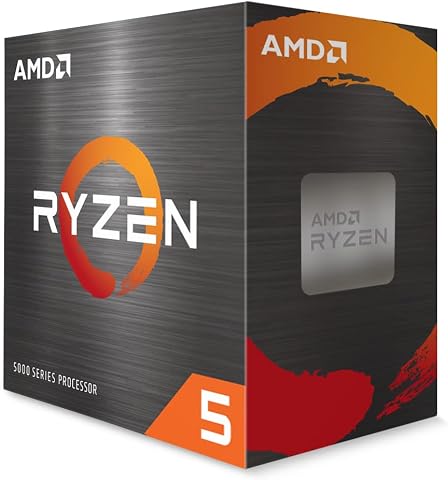 AMD Ryzen 5 5600 6-Core 12-Thread Unlocked Desktop Processor with Wraith Stea…View on Amazon →
- 9AMD Ryzen 5 5500 6-Core, 12-Thread Unlocked Desktop Processor with Wraith Ste…View on Amazon →
Why AI-Optimized Desktop Processors Matter in 2026
The prominence of these nine processors reflects a shift toward AI-centric computing, where raw performance and future-proof features are critical. For AI developers, researchers, and data scientists, having access to CPUs optimized for AI workloads means faster training times, more efficient inference, and the ability to handle increasingly complex models. For consumers, this translates into more capable desktops for gaming, content creation, and productivity, all supported by hardware designed with AI in mind.
Moreover, these processors influence the broader hardware ecosystem, prompting motherboard manufacturers and peripheral vendors to accelerate support for advanced standards like PCIe 5.0 and DDR5. This technological momentum benefits the entire computing industry and accelerates AI adoption across various sectors.
The Evolution of AI-Ready Desktop Processors in 2026
Over the past few years, desktop processor development has increasingly prioritized AI workloads, driven by the rising importance of machine learning, neural networks, and data analytics. AMD’s introduction of the Ryzen 9 9950X3D with 3D V-Cache technology marked a significant milestone, offering substantial improvements in multi-core performance tailored for AI tasks. Intel responded with the Core i7-14700K, emphasizing high single-core performance and efficiency.
Industry benchmarks from sources like ThorstenMeyerAI.com and hardware review labs confirm that these processors outperform earlier models, especially in multi-threaded and AI-specific benchmarks. The trend toward supporting DDR5 memory and PCIe 5.0 reflects the industry’s focus on future-proofing and accommodating larger datasets and faster data transfer rates necessary for AI workloads.
As of early 2026, the landscape is defined by a handful of high-performance CPUs that cater to both AI professionals and mainstream users seeking advanced capabilities. The ongoing development of these processors indicates a sustained focus on integrating AI performance into core computing hardware, with new models expected to push these boundaries further.
“The Core i7-14700K balances high single-core speeds with efficiency, making it ideal for users who require versatile AI and productivity capabilities.”
— Intel representative
Outstanding Questions About AI Processor Dominance in 2026
While these nine processors are confirmed as the leading AI performers in 2026, details about their long-term performance sustainability and how they compare with upcoming models remain unclear. It is not yet confirmed how upcoming architectures or manufacturing processes might alter the current hierarchy. Additionally, the impact of software optimization and AI-specific hardware accelerators integrated into these CPUs is still under evaluation, leaving some uncertainty about future performance gains.
Industry experts also caution that real-world AI workloads can vary significantly, and benchmarks may not fully capture all use cases, especially as AI models grow more complex and data-intensive.
Next Steps for AI-Optimized Desktop CPU Development
Manufacturers are expected to release new processor models later in 2026, with further improvements in core counts, cache sizes, and integrated AI acceleration features. Software developers will continue optimizing AI frameworks to better leverage these CPUs’ capabilities, potentially widening performance gaps. Consumers and professionals should monitor upcoming benchmarks and motherboard support updates to plan future upgrades effectively.
Additionally, advancements in cooling solutions and power management will be critical as these high-performance CPUs evolve, ensuring stability and efficiency for demanding AI workloads. Industry analysts predict that the next wave of processors will further push the boundaries of AI performance, integrating dedicated AI accelerators directly into the CPU die.
Key Questions
Which processor currently leads in AI performance in 2026?
The AMD Ryzen 9 9950X3D is widely regarded as the top processor for AI workloads in 2026, thanks to its advanced multi-core architecture and large cache size.
Are these processors compatible with existing motherboards?
Most of the top processors, including AMD’s Ryzen 9 9950X3D and Intel’s Core i7-14700K, support the latest standards like PCIe 5.0 and DDR5 memory, but compatibility depends on the motherboard socket and chipset. Users should verify their hardware before upgrading.
Will these processors support future AI workloads?
Yes, these CPUs are designed with future AI workloads in mind, supporting upcoming standards and technologies, but actual performance will depend on software optimization and workload specifics.
What are the main differences between AMD and Intel processors for AI tasks?
AMD processors generally excel in multi-threaded AI workloads due to larger cache sizes and core counts, while Intel’s chips focus on high single-core performance and efficiency, making both suitable depending on specific use cases.
How long will these processors remain relevant for AI development?
Given their support for current and upcoming standards, these processors are expected to remain relevant for at least the next 2-3 years, though ongoing architectural improvements may extend their usefulness further.
Source: ThorstenMeyerAI.com
Halloween Picks
halloween
As an affiliate, we earn on qualifying purchases.