
TL;DR

Get the latest gadgets delivered free with Prime
- Fast, free delivery on millions of items
- Prime Video, Amazon Music and more included
- Member-only deals all year
ThinkPad has been in continuous production since 1992, initially by IBM and now by Lenovo, maintaining design and engineering continuity. Today, it integrates AI workloads and advanced hardware, reflecting its evolution into an AI workstation platform.
Lenovo has announced new AI-optimized ThinkPad models in 2026, continuing the brand’s over three-decade legacy of durable, design-continuous laptops that originated with IBM in 1992.
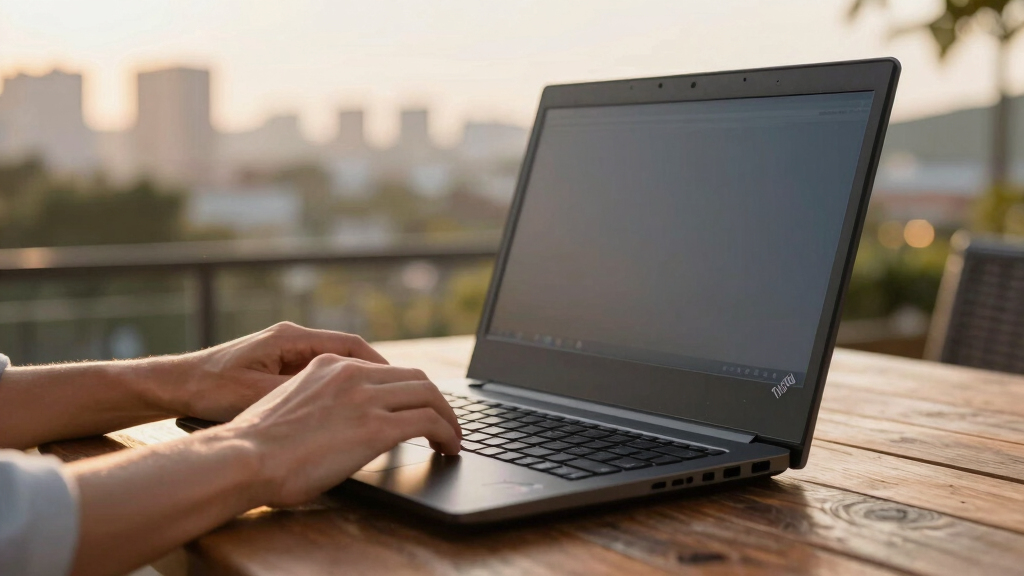
ThinkPad has been manufactured continuously since October 1992, first by IBM and since 2005 by Lenovo. Despite the corporate transition, the core design language—matte black chassis, TrackPoint, and keyboard—remained largely intact, reinforcing its visual and engineering continuity.
Recent models, such as the P14s Gen 6 and T14 Gen 7, incorporate advanced AI hardware, including dedicated neural processing units (NPUs) and support for large language model (LLM) workloads, marking a significant shift towards AI workstation capabilities.
Why It Matters
This evolution demonstrates how a longstanding enterprise laptop brand like ThinkPad adapts to emerging technological trends, such as AI and machine learning, while maintaining its core design philosophy. It underscores Lenovo’s strategic positioning in the high-end workstation and AI hardware markets, appealing to business users and AI researchers alike.
As an affiliate, we earn on qualifying purchases.
Background
Originally launched by IBM in 1992 with the 700C model, ThinkPad became renowned for its durability, keyboard quality, and security features. The IBM-to-Lenovo transition in 2005 did not disrupt its design continuity, allowing the brand to sustain a loyal customer base. Over the years, ThinkPads expanded into various segments, including the X-Series for mobility and the P-Series for workstations.
In recent years, the rise of AI workloads has prompted Lenovo to embed specialized hardware into ThinkPad models, transforming them into AI workstations capable of handling large language models and other demanding AI tasks, as seen in 2026 models.
“Our latest ThinkPad models exemplify the seamless integration of legacy design with cutting-edge AI hardware, ensuring users stay productive in an AI-driven era.”
— Lenovo spokesperson
“The transition of ThinkPad into AI workstations reflects a broader trend of enterprise laptops evolving into specialized AI hardware platforms.”
— Industry analyst
Lenovo ThinkPad P14s Gen 6 workstation
As an affiliate, we earn on qualifying purchases.
As an affiliate, we earn on qualifying purchases.
What Remains Unclear
Details about the full range of AI hardware integration and performance capabilities in upcoming models remain unclear. It is also uncertain how Lenovo will further evolve the design language or feature set in future generations.
ThinkPad with neural processing units
As an affiliate, we earn on qualifying purchases.
As an affiliate, we earn on qualifying purchases.
What’s Next
Next steps include the rollout of new AI-optimized ThinkPad models throughout 2026, with updates on hardware capabilities, software integration, and potential new design features expected in the coming months.
business laptop with large language model support
As an affiliate, we earn on qualifying purchases.
As an affiliate, we earn on qualifying purchases.
Key Questions
How has the design of ThinkPad remained consistent over the years?
Despite technological updates, the core design elements—matte black chassis, TrackPoint, and keyboard layout—have persisted since 1992, creating a recognizable and durable aesthetic.
What makes the 2026 ThinkPad models different from earlier versions?
They incorporate AI-specific hardware such as dedicated NPUs, support for large language models, and advanced security features tailored for AI workloads, marking a shift from traditional business laptops.
Why is the continuity of the ThinkPad brand important?
It maintains brand recognition and user loyalty, demonstrating that the core qualities of durability, security, and usability remain central despite hardware and market evolutions.
Will the traditional ThinkPad design change significantly in the future?
It is not yet clear, but current updates suggest that Lenovo aims to preserve the recognizable design language while integrating new AI hardware capabilities.
Halloween Picks
halloween
As an affiliate, we earn on qualifying purchases.