TL;DR
Apple has promoted the Mac mini as a desktop for always-on AI agents, while published specifications show that model size and memory determine what it can run locally. Smaller open models can fit on configurations with 16 GB or more, but context and other apps need additional memory, and models sized for 80 GB GPUs exceed the top Mac mini’s 64 GB. Local operation offers privacy and avoids per-token fees, with speed and capacity tradeoffs.
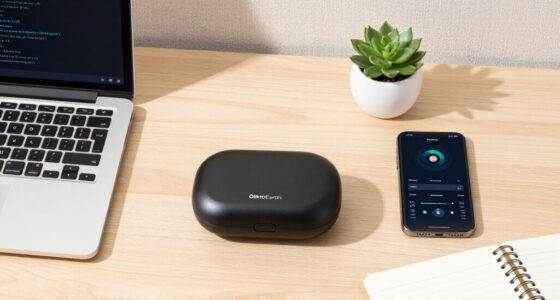
Apple’s August 25 announcement described the Mac mini as “the leading desktop for always-on agentic computing”, putting its compact desktop into the spotlight as a local AI machine. Its 16 GB to 64 GB of unified memory can accommodate some open models, but published model requirements show that larger systems may not fit, and local inference trades cloud fees and data transfer for lower memory bandwidth and more limited capacity.

Get the latest gadgets delivered free with Prime
- Fast, free delivery on millions of items
- Prime Video, Amazon Music and more included
- Member-only deals all year
Memory is the main constraint. Apple silicon lets the CPU, GPU and Neural Engine access a shared unified memory pool, according to Apple’s MLX documentation. That gives the GPU access to more memory than a typical PC graphics card with a separate pool, but macOS and other applications also use it. A model’s weights must fit alongside those processes, and context length requires additional memory.
Google’s published figures for Gemma 4 put the 31B model’s weights at 17.5 GB at 4-bit precision and 34.9 GB at 8-bit. Those are weight estimates, not total operating requirements. A 16 GB Mac mini cannot accommodate the 31B weights at either listed setting; a 64 GB configuration has more headroom, though the operating system, other apps and context still draw from the same pool. Smaller models can fit lower-memory configurations: Google lists 6.7 GB for Gemma 4 12B at 4-bit. OpenAI says gpt-oss-20b runs “within 16GB of memory.”
The capacity ceiling is clear for some larger models. OpenAI sizes gpt-oss-120b for a single 80 GB GPU, above the Mac mini’s maximum 64 GB. Speed also differs from data-center hardware: Apple lists the M5 Pro’s memory bandwidth at 307 GB/s, while Nvidia lists 3.35 TB/s for the H100. Those published bandwidth figures put the H100 at roughly 11 times the M5 Pro’s rate, though they do not by themselves predict how quickly a particular model or task will run.

Capacity Sets the Local AI Ceiling
For people considering a Mac mini as a private, always-available AI host, the practical question is whether a chosen model fits after accounting for the rest of the machine. More unified memory expands the set of usable models, but even 64 GB does not make the desktop equivalent to an 80 GB accelerator. A long document or conversation can also reduce the memory available for model weights.
Local use can keep prompts and files on the device, work without an internet connection and avoid cloud charges tied to each token. The source article reports an idle draw of 4 W while an agent waits; actual power use during inference depends on workload and configuration. These benefits matter for small, persistent tasks, but do not remove limits on model size, speed or local memory.
Price makes the choice consequential. U.S. list prices cited from Apple on November 16 range from $899 for a 16 GB M6 to $3,199 for a 64 GB M5 Pro with 1 TB storage. Buyers pay substantially more for the headroom that makes larger local models possible, while still accepting a lower bandwidth ceiling than data-center GPUs.
Products Worth Considering

Bose QuietComfort Headphones, White Smoke

Bose TV Speaker Compact Soundbar with Bluetooth and HDMI-ARC, Black

Amazon Kindle Scribe (32GB) with Premium Pen, Tungsten (Like-New)
As an affiliate, we earn on qualifying purchases.
Apple’s Shift Toward Agentic Desktops
The Mac mini’s AI positioning followed reported demand for Apple’s compact desktops. On the company’s April 30 earnings call, Tim Cook said customer recognition of the Mac mini and Mac Studio as platforms for AI and agentic tools was developing faster than Apple had predicted. MacRumors reported the remarks. The source article also says Apple had warned in April that it could not build enough units; the specific supply constraints and their duration are not detailed in the material provided.
Apple’s August 25 announcement framed the new Mac mini around “always-on agentic computing,” rather than focusing on conventional desktop tasks. The configurations cited for November 16 include M6 systems with 16–32 GB of memory and M5 Pro systems with 24–64 GB. Model sizes vary with precision: quantization stores weights using fewer bits, reducing memory needs, with possible effects on output quality. Google’s figures cover static weights only and caution that larger context windows require additional memory.
““the leading desktop for always-on agentic computing””
— Apple, in its August 25, 2026 Mac mini announcement
Workload Speed and Fit Remain Variable
Published memory requirements do not establish how fast a model will generate responses on a given Mac mini. The source material gives bandwidth specifications but no comparable, independently measured inference benchmarks across configurations, model sizes and context lengths. Actual performance will vary with quantization, software, prompt length and other system use.
It is also unclear how much memory a specific agent setup will reserve for its tools, operating system and concurrent applications. Google’s estimates cover weights and explicitly exclude extra memory for larger context windows. The cited 4 W idle figure is not accompanied by a measurement method or a comparable figure under active inference.
Match Memory to the Intended Model
Anyone evaluating the Mac mini for local AI should compare the exact model’s published memory requirement with the configuration’s total unified memory, then leave room for macOS, apps and the intended context window. Apple’s cited U.S. prices and configuration options are dated November 16, 2026, so availability and pricing may change. More direct performance comparisons across local and cloud systems would help buyers judge whether the privacy and operating-cost benefits offset slower or smaller workloads.
Key Questions
Can a 16 GB Mac mini run AI models locally?
Yes, some models can fit. Google lists 6.7 GB of weights for Gemma 4 12B at 4-bit, and OpenAI says gpt-oss-20b runs within 16 GB. The system and context also need memory, so fitting the weights does not guarantee every workload will run comfortably.
Can the 64 GB Mac mini run gpt-oss-120b?
OpenAI sizes gpt-oss-120b for a single 80 GB GPU. That is more memory than the Mac mini’s 64 GB maximum, before accounting for macOS, apps or context.
Why does unified memory help with local AI?
Apple says its CPU and GPU share access to the same memory pool. The GPU can use system memory for model weights instead of being limited to a separate graphics card pool, although the operating system and other applications use that memory too.
What are the tradeoffs of running AI locally?
Local operation can keep data on the device, work offline and avoid per-token cloud charges. The tradeoffs include the Mac’s memory ceiling and lower published bandwidth than high-end data-center GPUs; performance depends on the model and workload.
Source: Thorsten Meyer AI