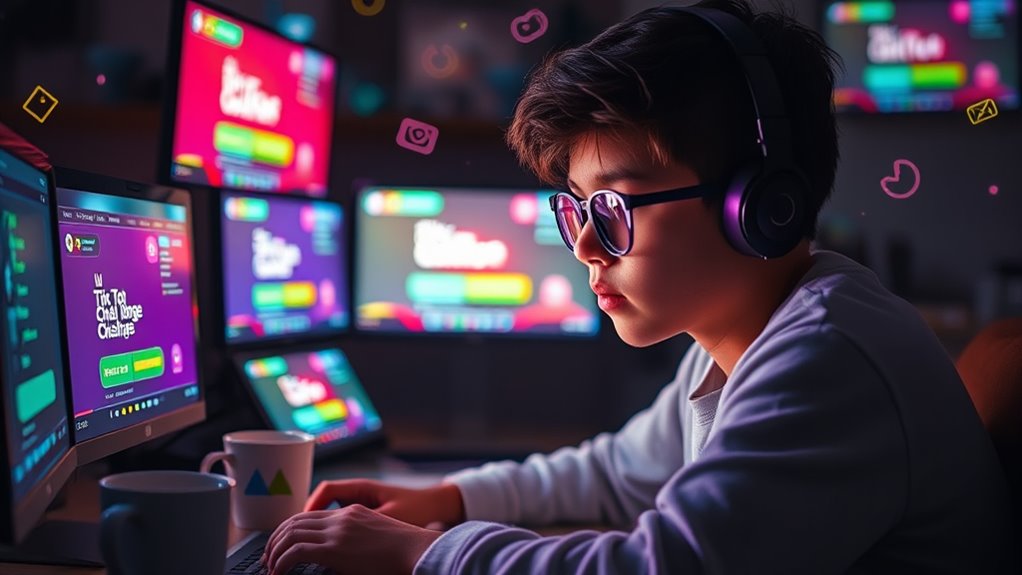

Did you know that the success of viral TikTok coding challenges isn’t just about the code itself, but about psychological triggers that motivate participation? These challenges tap into your desire for social validation, recognition, and belonging, often fueling a cycle of engagement that keeps people coming back. Understanding what drives this behavior can reveal why such trends spread so rapidly and why they matter beyond just entertainment. Curious about what makes these challenges so compelling?
Listen free for 30 days with Audible
Thousands of audiobooks and originals — cancel anytime.
As an affiliate, we earn on qualifying purchases.
Key Takeaways
- Social validation and peer recognition motivate participation by rewarding skills with likes, comments, and shares.
- Instant visual feedback reinforces confidence, encouraging continued effort and engagement in coding challenges.
- Collective achievement and community spirit foster a sense of belonging, increasing challenge appeal and virality.
- TikTok’s algorithm promotes content with high validation, creating a cycle that amplifies challenge visibility and participation.
- Recognition of competence boosts motivation, making coding challenges addictive through a sense of achievement and skill acknowledgment.
Have you ever wondered why certain TikTok coding challenges go viral while others fade away? It all comes down to the powerful psychological factors that drive user engagement, especially social validation and competence recognition. When you participate in these challenges, you’re not just showcasing your skills—you’re seeking approval from a community that values your abilities. This craving for social validation pushes you to share your work, comment on others’ submissions, and keep engaging, fueling a cycle that propels the challenge to viral status. It’s not just about the coding itself; it’s about the recognition you get from your peers, which boosts your confidence and sense of belonging. When your code impresses others, you experience a rush of competence recognition, affirming that you have valuable skills worth noticing. This recognition is especially potent on TikTok because the platform thrives on quick, visual validation—likes, comments, shares—that instantly affirm your effort. Consistent feedback and visual cues can further enhance learning and motivation within these challenges.
The more you see others appreciating a challenge, the more motivated you become to participate. You want your contribution to be seen, admired, and validated by the community. That desire for social validation makes you more likely to put effort into your submissions and share your progress. It’s a feedback loop: as your coding skills gain recognition, your motivation to improve and participate grows, increasing the challenge’s popularity. TikTok’s algorithm also reinforces this behavior by promoting content that already has social validation—more likes and comments make your video more visible, encouraging others to join in. This creates a sense of collective achievement, where everyone feels a part of something bigger.
Furthermore, the social validation and competence recognition that come from viral challenges aren’t just about individual praise; they tap into your innate desire to belong and be esteemed. When you see others succeeding, it amplifies your own motivation to improve, learn, and showcase your talents. This shared experience fosters a community spirit, making the challenge even more appealing. The thrill of recognition and validation becomes addictive, motivating you to keep participating and sharing your coding journey, fueling the challenge’s virality. In essence, viral TikTok coding challenges resonate because they tap into your deep-rooted need for validation and acknowledgment, turning simple coding tasks into a collective celebration of skill, effort, and community.
programming challenge LED display kit
As an affiliate, we earn on qualifying purchases.
As an affiliate, we earn on qualifying purchases.
Conclusion
As you immerse yourself in these TikTok coding challenges, remember they’re more than just fun puzzles—they’re like a shared fire that sparks community and confidence. The rush of likes and praise fuels your motivation, turning solo effort into a collective celebration. So keep participating, because every challenge you conquer adds another spark to this vibrant web of achievement and connection, making the journey through code feel like you’re part of something bigger—a glowing constellation of coders shining together.
coding challenge starter kit for beginners
As an affiliate, we earn on qualifying purchases.
As an affiliate, we earn on qualifying purchases.
As an affiliate, we earn on qualifying purchases.
interactive coding learning tools
As an affiliate, we earn on qualifying purchases.
As an affiliate, we earn on qualifying purchases.
Flea & tick season Picks
flea and tick prevention
As an affiliate, we earn on qualifying purchases.