
📊 Full opportunity report: Using Computer Vision For Accurate Food Safety Monitoring In Restaurants on IdeaNavigator AI — validation score, market gap, and execution plan.

Get the latest gadgets delivered free with Prime
- Fast, free delivery on millions of items
- Prime Video, Amazon Music and more included
- Member-only deals all year
TL;DR
Restaurants are piloting computer vision technology to automatically verify food safety compliance during daily walk-throughs. This approach aims to replace subjective checklists with objective, timestamped data, enhancing food safety monitoring across multiple locations.
Multiple restaurant operators are trialing a computer vision system that automatically detects food safety violations during routine kitchen walk-throughs, providing verifiable data to improve compliance and reduce human error. This development offers a new way to ensure food safety standards are consistently met, which is critical given ongoing regulatory and consumer safety concerns.
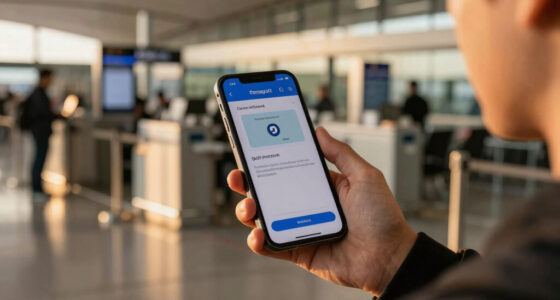
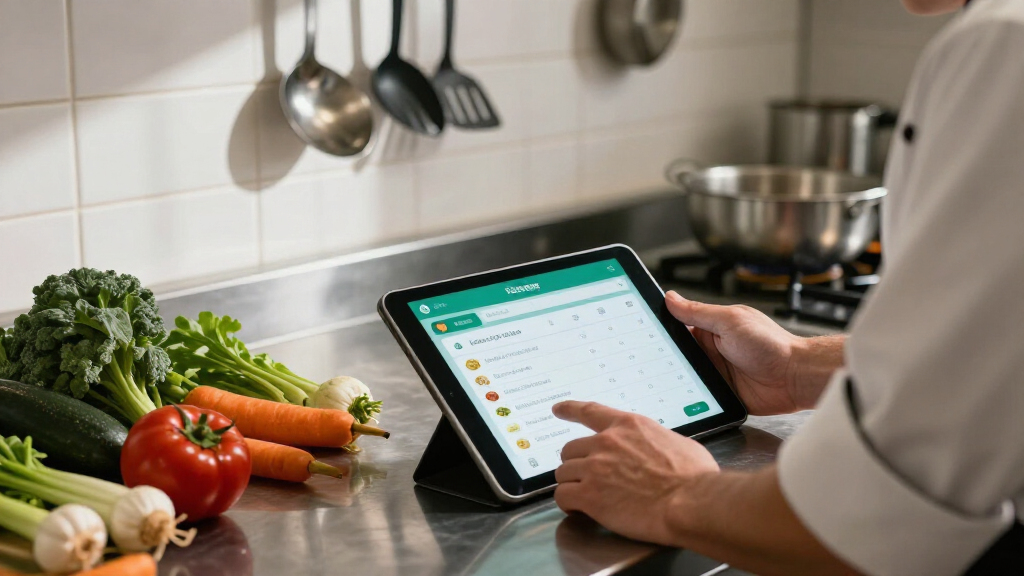
The system uses existing smartphone cameras to capture images during morning inspections of prep stations, storage areas, and handwash sinks. These photos are processed by a vision-model that flags violations such as uncovered containers, propped cooler doors, and missing date labels, assigning severity ratings and creating timestamped reports for each location. The pilot program, conducted by a multi-unit restaurant group, aims to replace subjective checklist recording with objective, verifiable data.
According to sources familiar with the project, the approach leverages recent advances in AI that reliably identify food safety violations from ordinary phone images. The group plans to compare flagged violations with findings from hired health-inspection consultants over the two-week trial period to validate the system’s accuracy. The solution is offered as a per-location monthly subscription, with a dashboard for group-wide monitoring and trend analysis.
Potential Impact on Food Safety Monitoring
This technology could significantly improve the accuracy and accountability of daily food safety checks, reducing reliance on subjective visual assessments. By providing timestamped, verifiable data, restaurants can demonstrate compliance more effectively and respond swiftly to violations. If validated, this approach may set a new standard in food safety operations, impacting regulatory practices and consumer trust.
smartphone food safety inspection camera
As an affiliate, we earn on qualifying purchases.
As an affiliate, we earn on qualifying purchases.
Current Methods and Technological Advancements in Food Safety
Traditionally, restaurant inspections rely on manual checklists completed by managers or inspectors, which are prone to oversight or intentional omission. Recent developments in AI, particularly in computer vision, have enabled automated analysis of images to identify violations in real-time. Pilot programs like this aim to integrate AI into routine operations, moving from subjective assessments to data-driven compliance monitoring.
“This system allows us to verify what was actually observed during inspections, reducing the chance of missed violations and providing a clear record for compliance.”
— an anonymous source involved in the pilot
As an affiliate, we earn on qualifying purchases.
Uncertainties About System Accuracy and Adoption
It is not yet clear how reliably the vision model will perform across diverse kitchen environments or how well it will scale beyond the pilot phase. The two-week trial will provide initial validation, but broader adoption depends on confirmed accuracy, ease of use, and cost-effectiveness. Further testing is needed to determine how the system handles complex scenarios or ambiguous violations.
restaurant food safety inspection tools
As an affiliate, we earn on qualifying purchases.
As an affiliate, we earn on qualifying purchases.
Next Steps for Validation and Broader Deployment
The restaurant group plans to analyze the two-week pilot results, comparing flagged violations with health inspector reports. If the system proves accurate, they will consider expanding the deployment across more locations and integrating it into their regular safety protocols. Ongoing development may include refining the AI to detect a wider range of violations and improving user interfaces for staff.
computer vision food safety scanner
As an affiliate, we earn on qualifying purchases.
As an affiliate, we earn on qualifying purchases.
Key Questions
How does the AI system identify food safety violations?
The system uses computer vision algorithms to analyze photos taken during inspections, flagging issues like uncovered food, open cooler doors, or missing labels based on trained pattern recognition.
Will this replace human inspectors entirely?
No, the current focus is on augmenting human inspections with verifiable data. It aims to improve accuracy and consistency rather than replace human judgment entirely.
What are the limitations of this AI-based approach?
Its accuracy depends on image quality and environmental conditions. Complex or ambiguous violations may still require human assessment, and further validation is needed for widespread adoption.
How much does the system cost per location?
The solution is offered as a monthly subscription fee per location, with details still being finalized during the pilot phase.
When could this technology become standard practice?
If the pilot proves successful, broader implementation could occur within the next year, depending on validation results and industry acceptance.
Source: IdeaNavigator AI
Fall Picks
fall essentials
As an affiliate, we earn on qualifying purchases.