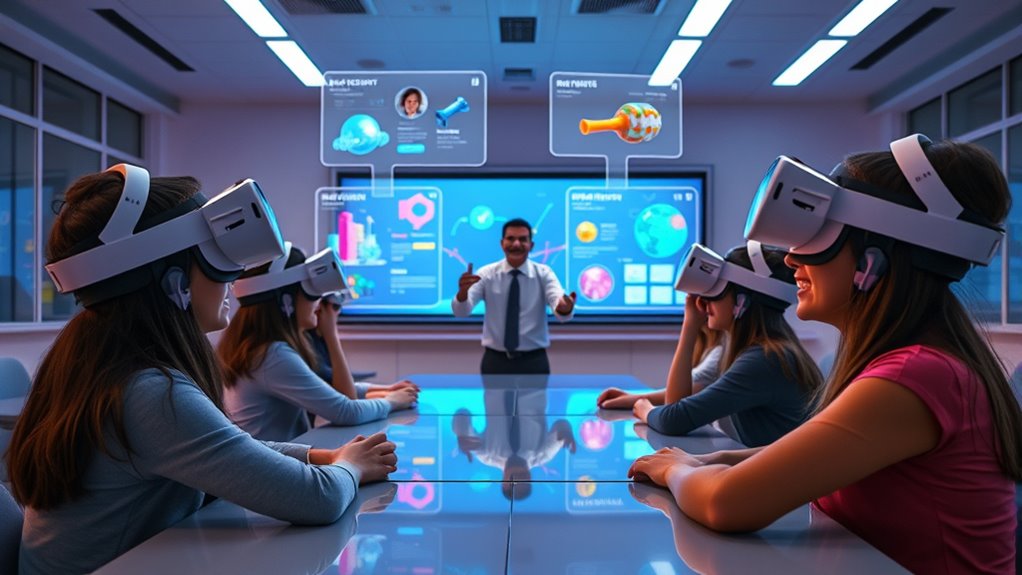

VR classrooms are transforming remote learning by offering immersive, interactive experiences that go beyond traditional lessons. With virtual field trips, students can explore distant landmarks, planets, or inside the human body from anywhere. These environments boost engagement, understanding, and memory while allowing safe skill practice through realistic simulations. As technology advances, collaboration and personalization become even more powerful, making education more accessible and exciting. Keep exploring to discover how VR is shaping the future of learning.
Key Takeaways
- VR classrooms break geographical barriers, enabling immersive, interactive learning experiences accessible from anywhere.
- Virtual field trips and simulations enhance engagement, understanding, and retention beyond traditional remote education.
- Immersive VR environments allow safe practice of real-world skills, promoting active participation and critical thinking.
- VR supports diverse learners by offering personalized, accessible, and cost-effective educational opportunities worldwide.
- Collaborative VR platforms foster teamwork and social interaction, enriching remote learning and preparing students for modern workplaces.

Virtual reality has transformed the way students learn by creating immersive, interactive classrooms that break down geographical barriers. With VR, you no longer need to be physically present in a specific location to explore the wonders of the world. Instead, you can take virtual field trips that transport you from your classroom to historic landmarks, distant planets, or deep inside the human body—all with a simple headset. These virtual excursions offer a level of engagement that traditional lessons struggle to match, making learning more memorable and exciting. As you experience these virtual field trips, you’ll find that they foster curiosity and deepen understanding by providing a firsthand view of complex concepts and environments that are otherwise inaccessible.
Immersive simulations are another powerful aspect of VR classrooms. They allow you to practice real-world skills in a safe, controlled setting. Whether you’re performing virtual science experiments, troubleshooting machinery, or exploring complex ecosystems, these simulations immerse you in scenarios that mimic real life. This hands-on approach enhances retention and helps you develop critical thinking and problem-solving skills. Unlike textbook diagrams or static videos, immersive simulations respond to your actions, providing immediate feedback and encouraging active participation. This level of interaction keeps you engaged and motivated, transforming traditional passive learning into an active exploration. Additionally, the ability to adapt simulations to different learning styles can further improve educational outcomes and cater to diverse student needs.
Immersive simulations offer safe, interactive experiences that boost retention, critical thinking, and problem-solving skills.
Using VR for virtual field trips and immersive simulations also offers practical benefits, especially for remote learners. You can access these experiences from anywhere with an internet connection, eliminating the need for costly travel or logistics. It democratizes education, giving students in underserved areas access to the same high-quality, experiential learning opportunities as those in well-funded schools. The technology also allows teachers to tailor lessons more effectively, creating customized simulations that meet specific curriculum goals or address individual student needs. As a result, your learning becomes more personalized and dynamic.
Furthermore, VR classrooms foster collaboration and social interaction. You can explore virtual environments alongside classmates, discuss observations, and solve problems together—just like you would in a physical classroom. This shared experience helps build a sense of community and teamwork, essential skills in today’s interconnected world. As VR technology continues to evolve, expect even more sophisticated virtual field trips and simulations that will challenge, inspire, and prepare you for the future. This next step in remote learning isn’t just about replacing traditional methods; it’s about enriching education with immersive, experiential opportunities that make learning more effective and enjoyable.

Abacus Brands Virtual Reality History! – Illustrated Interactive VR Book and STEM Learning Activity Set – for Ages 8 and Up
THE ULTIMATE HISTORY EXPERIENCE – Travel Through Time in VR! Embark on a historical journey with VR HISTORY!…
As an affiliate, we earn on qualifying purchases.
As an affiliate, we earn on qualifying purchases.
Frequently Asked Questions
How Affordable Are VR Classroom Setups for Schools?
VR classroom setups can be affordable if you conduct a thorough cost analysis and explore funding opportunities. While initial costs may seem high, you can find grants, partnerships, and government programs to offset expenses. Focus on affordable headsets and scalable technology options. With careful planning and leveraging available funding, creating a VR classroom becomes a realistic goal, making immersive remote learning accessible for your school community.
What Are the Technical Requirements for Students?
You’ll need a VR headset compatible with your device, ensuring hardware compatibility for seamless use. A stable internet connection is essential to access content smoothly, and a compatible computer or smartphone may be required to run the necessary applications. Make sure the content is accessible on your device, and check if any specific software or updates are needed. These requirements help you fully engage in the immersive learning experience.
How Do VR Classrooms Ensure Student Privacy and Data Security?
You can trust VR classrooms to protect your privacy through data encryption and strict user authentication. These measures guarantee your personal information stays secure, preventing unauthorized access. Developers implement secure login processes and encrypt data during transmission and storage, so your learning experience remains private. By prioritizing these security protocols, VR classrooms create a safe environment where your data stays protected as you explore immersive learning.
Can VR Classrooms Accommodate Students With Disabilities?
You can see VR classrooms as a bridge over accessibility barriers, opening doors for students with disabilities. They adapt with technologies like customizable avatars and voice commands, ensuring everyone can participate fully. You’ll find that these adaptive tools turn virtual spaces into inclusive environments, allowing students with diverse needs to learn comfortably and confidently. VR isn’t just a new way to learn; it’s a way to make everyone feel seen and supported.
What Training Is Needed for Teachers to Effectively Use VR Technology?
You need extensive teacher training focused on VR technology and curriculum integration. This includes hands-on workshops to familiarize you with VR hardware and software, as well as strategies to seamlessly incorporate VR into lessons. Ongoing support helps you troubleshoot issues and adapt lessons for different learning styles. By mastering these skills, you’ll confidently leverage VR to enhance engagement and make remote learning more immersive and effective.

GAME DESIGN FOR EDUCATIONAL AND SIMULATION SYSTEMS: Serious games VR learning and immersive training tools
As an affiliate, we earn on qualifying purchases.
As an affiliate, we earn on qualifying purchases.
Conclusion
Imagine stepping into a VR classroom where you can explore ancient Egypt or perform complex science experiments from your living room. With VR classrooms, this becomes possible, transforming remote learning into an immersive experience. Schools already experimenting with this tech report higher engagement and better understanding. As you embrace this evolution, you’ll see education become more interactive and accessible, opening doors to endless learning adventures right at your fingertips. The future of learning is truly in your hands.

Meta Quest Pro Headset with Virtual Reality Field Trips 1-Month Subscription
Your purchase of this item includes a new Meta Quest Pro 256 GB VR headset and a 12-month…
As an affiliate, we earn on qualifying purchases.
As an affiliate, we earn on qualifying purchases.

Abacus Brands Virtual Reality Dinosaurs Gift Box – Illustrated Interactive VR Book and STEM Learning Activity Set – for Ages 8 and Up
THE ULTIMATE GIFT EXPERIENCE! Discover dinosaurs like never before, with over 80 pages of interactive content that is…
As an affiliate, we earn on qualifying purchases.
As an affiliate, we earn on qualifying purchases.