🔍 Read the full analysis: Why AI Belongs In The Conversation About Supermarket Refrigeration Attacks on ThorstenMeyerAI.com

Get the latest gadgets delivered free with Prime
- Fast, free delivery on millions of items
- Prime Video, Amazon Music and more included
- Member-only deals all year
TL;DR
Supermarkets and other food businesses in at least six European countries reported refrigeration disruptions overnight on Nov. 1–2, 2026. Reports link the incidents to internet-accessible refrigeration controllers switched into defrost or heating modes, but investigators have not identified the attacker or confirmed any role for AI.
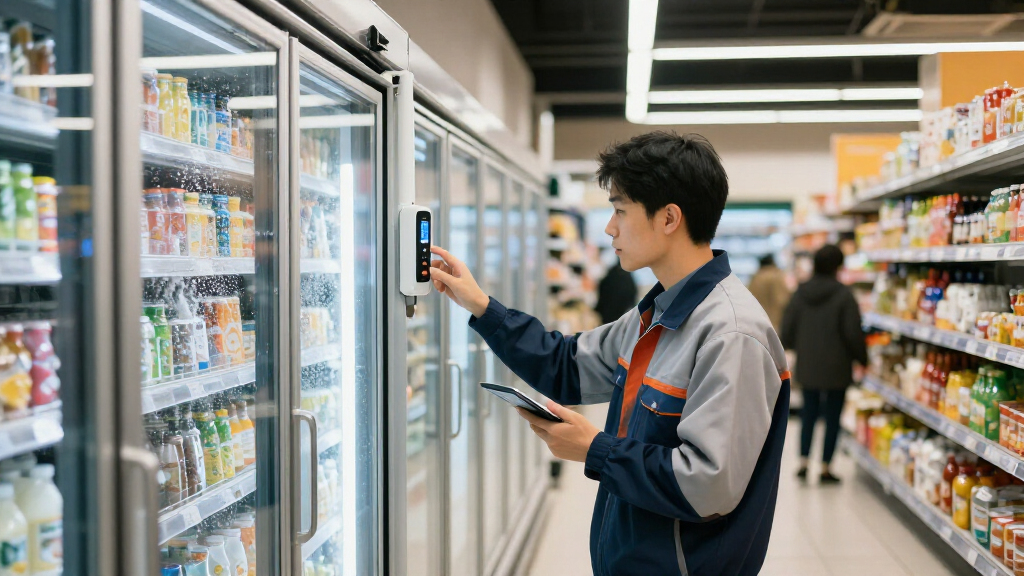
Refrigeration systems at more than 115 food businesses in at least six European countries were disrupted overnight on Nov. 1–2, according to reports compiled by BleepingComputer, in a second wave of incidents resembling attacks on French supermarkets in October. Reports from retailers, installers and authorities point to internet-accessible refrigeration controllers being switched into defrost or heating modes; who was responsible remains unknown, and no source has confirmed that AI was used.
In Belgium, refrigeration installer Sabcobel chief executive Stephan Moelans told Belgian media that technicians began disconnecting affected installations at about 1 a.m. He said Sabcobel itself was not hacked and that attackers reached controllers directly through the internet. About 20 of the several hundred installations his company manages in Belgium were affected, he told The Record. The Belgian installer described the mechanism as the same as in France, where the Paris prosecutor’s office counted about 700 victims after the Oct. 11–12 incidents.
Reports indicate widely varying disruption and losses. VRT NWS said freezers at a Delhaize store in Eeklo reached 50 °C. A Proxy Delhaize in Hoepertingen reported freezers at 15 °C instead of about minus 22 °C and estimated at least €60,000 in discarded food, according to the regional newspaper Het Belang van Limburg, as cited by VRT. A butcher in Antwerp noticed tampering around 3 a.m. and shut its systems down in time, VRT reported.
Retailers gave different counts and descriptions. Ahold Delhaize said it had identified an IT incident affecting refrigeration in several dozen stores; BleepingComputer put the figure at about 40 in Belgium and Luxembourg. Carrefour Belgium said 15 of its 700 stores were affected, involving a few refrigeration units, mainly freezers. Coop Sweden reported seven affected stores, while ICA said at least four stores outside its central network were hit. Reports also identified affected businesses in the Netherlands, Ireland, Estonia, Luxembourg and Finland.
Risks to Food and Store Operations
The immediate consequences are spoiled food, disrupted sales and emergency repair work. The reported €60,000 loss at one Belgian store illustrates the possible cost to a single business, though the available reports do not provide a verified total for losses across all affected locations. Refrigeration failures can also disrupt food supply and force shops to close or discard stock while temperatures are checked.
The reported pattern draws attention to building systems connected to the internet, not only the networks used for payment or customer data. Refrigeration controls are operational technology: altering their settings can affect equipment and inventory even without a reported break-in. The incidents also show why smaller or independently operated stores may face distinct risks when their equipment is outside a retailer’s central network or uses older systems. That is a relevant security concern, but the reports do not establish that every affected store had the same setup or weakness.
AI belongs in the discussion as a question, not a finding. Belgium’s cyber centre has warned of a general increase in attacks partly involving AI, according to the source material, but no authority or company cited in these reports has said AI was used in the refrigeration incidents. The confirmed account so far concerns access to controllers and changes to their operating modes; the method used to find or access them is not established in the material.
Products Worth Considering

DJI Mic 3 Wireless Microphone System (2 Transmitters, 1 Receiver, Charging Case)

Samsung 27-inch Odyssey QD-OLED G8 4K 240Hz Gaming Monitor

LG UltraGear 32GX850A-B 32-inch 4K UHD Glossy OLED Gaming Monitor
As an affiliate, we earn on qualifying purchases.
From France to a Second Wave
The incidents follow a wave of attacks on French supermarkets overnight on Oct. 11–12, 2026. France’s national cybersecurity agency, CERT-FR, warned on Oct. 12 that remote management interfaces for refrigeration controllers were exposed online contrary to good practice, and said campaigns were probably still ongoing. The Paris prosecutor’s office later counted about 700 victims in France, according to the source material.
In the latest incidents, the Belgian installer Sabcobel said evaporators were remotely switched into defrost mode, matching the reported French mechanism. Finnish authorities and retailer Kesko also reported temperature anomalies at a few smaller K stores. Finland’s National Cyber Security Centre said the attacks in Finland and elsewhere targeted specific Danfoss models, according to Finnish news agency STT. These reports support a connection in the technical pattern, but they do not identify a common operator.
The reported totals remain provisional. BleepingComputer counted more than 115 stores across six countries, while other outlets supplied different national or company figures. Some reports include food businesses beyond supermarkets, and local counts may differ as checks continue. The figures should be read as reported incidents, not a final, independently reconciled total.
““We have identified an IT incident affecting the refrigeration systems in several dozen stores.””
— Ahold Delhaize
Attacker and AI Use Unconfirmed
No suspect or motive has been publicly identified in the information provided, and there has been no claim of responsibility. Belgium’s federal prosecutor has opened a criminal investigation. Belgium’s cyber centre has cautioned that the attacker may never be identified.
It is also not clear exactly how the operators reached the controllers, whether the same person or group was behind both the French and later incidents, or how many businesses were affected in total. Reported store counts vary, and information about damage is incomplete. Most importantly for the AI angle, there is no confirmed evidence that AI played a role; general warnings about AI-related cyber activity do not establish its use in this case.
Investigations and Store Checks Continue
Belgian authorities are investigating, while retailers and refrigeration specialists have been checking systems, isolating affected installations and assessing damaged stock. The next useful updates would clarify the number of affected sites, the extent of losses, and whether investigators can establish how the controllers were accessed.
Businesses with connected refrigeration equipment may also review remote access and update practices in light of CERT-FR’s October warning. The reports do not say what steps have been taken at each affected site or whether all relevant controllers have been secured. Attribution and any confirmed role for AI remain open questions as the investigation develops.
Key Questions
How many stores were affected?
BleepingComputer reported more than 115 stores in at least six countries. Counts differ between reports, and the total is not yet a reconciled final figure.
What happened to the refrigeration systems?
Reports say controllers were switched into defrost or heating modes, causing freezers and refrigerators to warm or stop working. The precise access method has not been publicly established in the material provided.
Has anyone confirmed that AI was used?
No. Authorities have discussed AI as part of broader cyberattack trends, but no source cited here has confirmed AI use in these incidents.
Who carried out the attacks?
The attacker has not been identified, and no group has claimed responsibility. Belgium’s federal prosecutor has opened a criminal investigation.
Are these incidents linked to the attacks in France?
The Belgian installer Sabcobel said the refrigeration mechanism was the same as in France in October. That similarity does not by itself prove that the same person or group was responsible.
Source: ThorstenMeyerAI.com