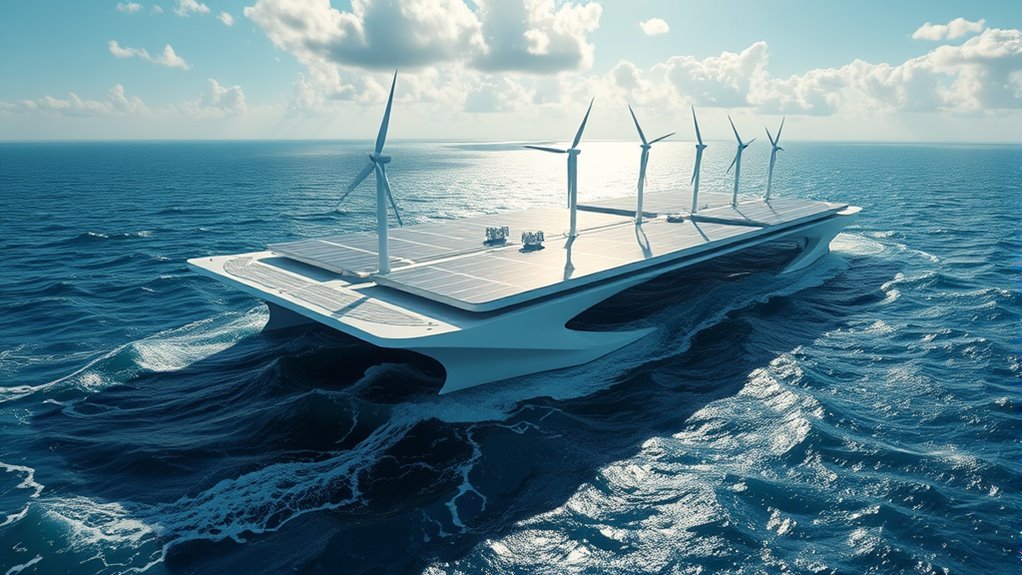

Imagine a data center located on a coastal site that powers its operations entirely through wave energy. This approach could considerably reduce carbon footprints and improve energy resilience. As technology advances, the potential for ocean-powered facilities grows, but questions remain about their practicality and scalability. Exploring how these centers operate and the benefits they offer might just change how we think about sustainable digital infrastructure.
Key Takeaways
- Ocean-powered data centers utilize wave energy converters to generate renewable electricity, reducing reliance on fossil fuels.
- They offer a consistent, sustainable power source ideal for large-scale data processing needs.
- Integration involves smart grids to ensure stability during periods of low wave activity.
- These facilities demonstrate environmental responsibility, lowering carbon footprints and combating climate change.
- Advances in scalable ocean energy tech promote resilient, eco-friendly infrastructure for future data center growth.
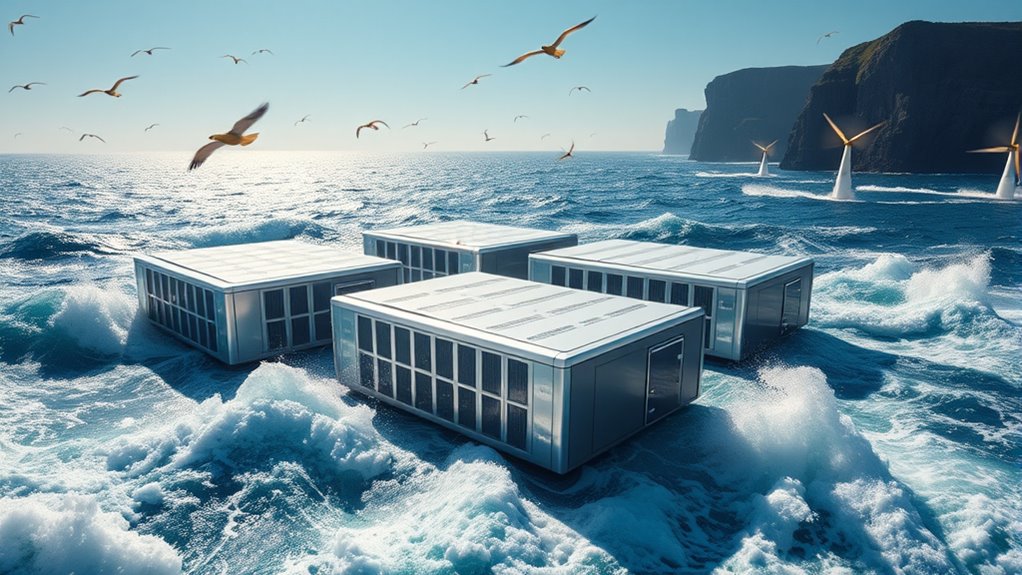
As the demand for data processing skyrockets, traditional data centers face increasing energy costs and environmental concerns. These facilities consume vast amounts of electricity, much of which comes from non-renewable sources, contributing to climate change. To address this, innovative solutions are emerging that leverage marine energy, harnessing the power of ocean waves to create sustainable infrastructure for data centers. By tapping into the ocean’s natural energy, you can build facilities that are not only more eco-friendly but also potentially more reliable, as waves provide a consistent energy source compared to traditional renewables like solar and wind.
Marine energy offers a promising avenue for powering data centers sustainably. Unlike solar panels or wind turbines, wave energy devices capture the up-and-down motion of ocean waves, converting it into electricity with minimal environmental impact. This form of renewable energy is abundant, especially in coastal regions where data centers are increasingly being located to reduce latency and improve connectivity. Incorporating marine energy into your data center infrastructure means reducing dependence on fossil fuels and lowering your carbon footprint. It’s a strategic move toward sustainability that aligns with global efforts to combat climate change.
Harness ocean waves for sustainable data centers, reducing reliance on fossil fuels and lowering your carbon footprint.
Developing sustainable infrastructure that uses marine energy requires innovative engineering and collaboration. You’ll need specialized wave energy converters that can withstand harsh ocean conditions while efficiently generating power. These devices are often designed to be scalable, allowing you to expand capacity as your data processing needs grow. Integrating these systems with existing power supplies involves smart grid solutions that optimize energy flow, ensuring your data center remains operational even during periods of low wave activity. This approach not only enhances energy resilience but also promotes greener operations. Additionally, advancements in high-efficiency projectors demonstrate how integrating innovative technology can further optimize performance and sustainability in modern infrastructure.
Furthermore, investing in ocean-powered data centers positions you as a leader in environmental responsibility. As public awareness about climate change increases, companies that adopt renewable energy solutions stand to benefit from enhanced reputation and customer trust. Using marine energy to power your data centers supports the development of sustainable infrastructure, demonstrating a commitment to reducing environmental impact without sacrificing technological advancement. It transforms the way data centers operate, turning the ocean’s natural power into a reliable, eco-friendly backbone for your digital infrastructure.
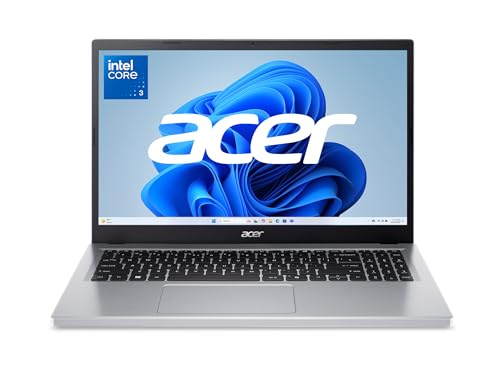
acer Aspire Go 15 AI Ready Laptop | 15.6" FHD (1920 x 1080) IPS Display | Intel Core 3 Processor N355 | Intel Graphics | 8GB DDR5 | 128GB UFS | Wi-Fi 6 | Windows 11 Home in S Mode | AG15-32P-39R2
Exceptional Performance and Productivity: Experience smooth and responsive performance powered by a new, more powerful 8-Core Intel Core...
As an affiliate, we earn on qualifying purchases.
Conclusion
By choosing ocean-powered data centers, you’re tapping into a sustainable energy source that can reduce carbon emissions by up to 90%. With wave energy being one of the most reliable renewables, these centers offer a stable, eco-friendly solution for your digital infrastructure. Embracing this innovation not only helps combat climate change but also positions you as a leader in green technology—proving that harnessing ocean waves truly is the future of sustainable computing.
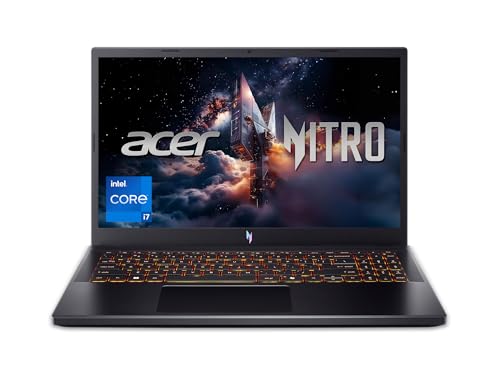
acer Nitro V Gaming Laptop | Intel Core i7-13620H Processor | NVIDIA GeForce RTX 4050 Laptop GPU | 15.6" FHD IPS 165Hz Display | 16GB DDR5 | 1TB Gen 4 SSD | Wi-Fi 6 | Backlit KB | ANV15-52-76NK
Beyond Performance: The Intel Core i7-13620H processor goes beyond performance to let your PC do even more at...
As an affiliate, we earn on qualifying purchases.

Lenovo V-Series V15 Business Laptop, 15.6" FHD Display, AMD Ryzen 7 7730U, 40GB RAM, 1TB SSD, Numeric Keypad, HDMI, RJ45, Webcam, Wi-Fi, Windows 11 Pro, Black
[High Speed RAM And Enormous Space] 40GB high-bandwidth RAM to smoothly run multiple applications and browser tabs all...
As an affiliate, we earn on qualifying purchases.

Samsung 16” Galaxy Book5 Pro 360 Copilot+ PC, AI Computer, Intel Core 7 Ultra Processor, 3K AMOLED (2880x1800) Touchscreen, S Pen,120Hz, Dolby Atmos, Student Laptop, Lightweight, All-Day Battery Life
AI BRINGS THE POWER. YOU BRING THE CREATIVITY: Smoothly juggle tasks with a powerful AI chipset that keeps...
As an affiliate, we earn on qualifying purchases.