
🔍 Read the full analysis: Who Can Try Google’s Genie 4, And What Can It Create? on ThorstenMeyerAI.com

Get the latest gadgets delivered free with Prime
- Fast, free delivery on millions of items
- Prime Video, Amazon Music and more included
- Member-only deals all year
TL;DR
Google DeepMind announced Genie 4 on October 27, 2026, describing it as a real-time world model that generates interactive scenes with sound and accepts text changes as they run. Access is limited to trusted testers for now, with Google AI Ultra subscribers and selected Gemini API partners expected to get access later; no launch date has been given. The demonstrations are company-selected, and DeepMind says scenes can drift and support only a few minutes of interaction.
Google DeepMind announced Genie 4 on October 27, presenting it as an AI system that generates an interactive scene while a user moves through it and changes it with text. The model is not broadly available: DeepMind says trusted testers can try it now, with access planned for Google AI Ultra subscribers through Project Genie and early Gemini API partners.
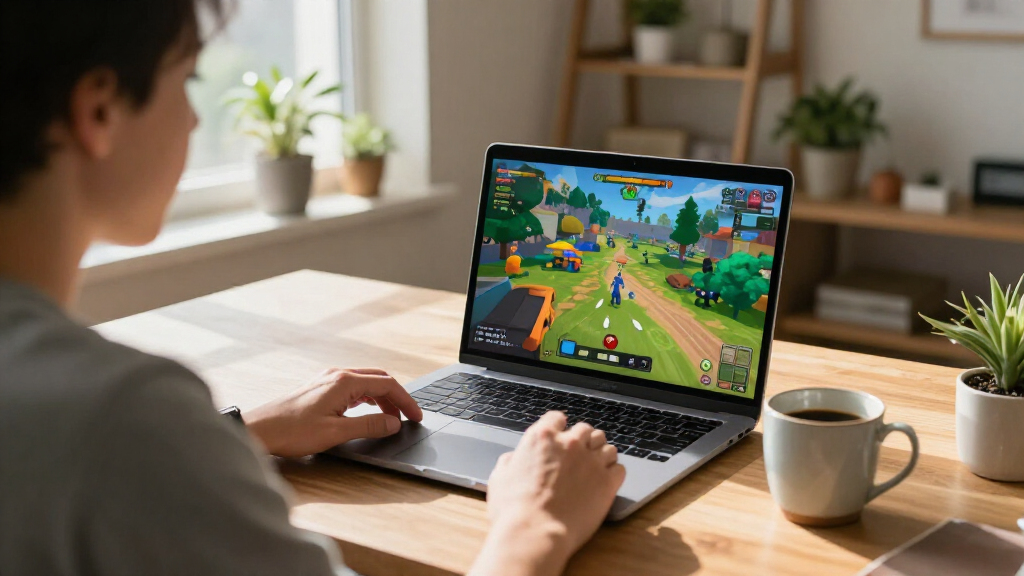
DeepMind describes Genie 4 as a real-time world model. Rather than rendering a finished video from a prompt, it predicts new frames as a user acts, using keyboard or mouse controls and instructions such as changing the weather or adding an object. The company says it can generate sound alongside the scene, including environmental audio, music and character dialogue, and can simulate events involving collisions and aerodynamics.
The company also says Gemini 3.8 Flash can interpret goals, break them into steps and guide what happens in Genie 4’s generated world. DeepMind’s announcement includes a robotics research demonstration in which a simulated Apptronik Apollo humanoid plays checkers. The Decoder reported that this was a simulation, not a physical robot carrying out the task.
Access is the main practical limit for people hoping to try it. DeepMind says Genie 4 is available to trusted testers and is “coming soon” to Google AI Ultra subscribers through Project Genie and early Gemini API partners. The supplied source identifies the Ultra plan as $200 a month, but DeepMind has not announced an access date or an API price.
Infographic 01 · How Genie grew up
From flat sketches to worlds with sound, in under three years.
Each step as Google DeepMind described it. Session limits and consistency are different measures, so read the labels.
- Feb 2024
Genie 1Simple 2D worlds11 billion parameters, learned from unlabelled internet videos - Dec 2024
Genie 23D worlds from a single imageConsistent “for up to a minute”; real time only as a slimmed-down, lower-quality version - Aug 2025
Genie 3First real-time Genie720p at 24 frames per second, consistent “for a few minutes”, memory about one minute back - Jan 2026
Project GenieUS AI Ultra subscribers can play60 seconds per world, partly because of compute costs - May 2026Project Genie goes globalIn the $200 AI Ultra tier, for users 18 and older
- 27 Oct 2026
Genie 4Sound, live steering, more realismResearch preview for trusted testers; Ultra subscribers and API partners “coming soon”
Genie 3 vs. Genie 4
As described by Google DeepMind. Genie 4 column = vendor claims unless marked.
| Feature | Genie 3 (Aug 2025) | Genie 4 (Oct 2026) |
|---|---|---|
| Sound | Genie 3: None | Genie 4: Generated with the picture: ambient noise, music, dialogue |
| Steering | Genie 3: Keys, plus “promptable world events” | Genie 4: Free-form text changes while it runs; Gemini adapts and checks them |
| Look | Genie 3: 720p, 24 fps | Genie 4: “Unprecedented realism”; no resolution or frame rate published |
| How long | Genie 3: “A few minutes”; Project Genie capped at 60 s | Genie 4: “A few minutes” (DeepMind); up to ~2 min consistent scene reported |
| Access | Genie 3: Small preview, then Project Genie | Genie 4: Trusted testers; Ultra and API partners “coming soon” |
Sources: Genie paper, arXiv, 23 Feb 2024; Genie 2 blog, 4 Dec 2024; Genie 3 blog, 5 Aug 2025; TechCrunch, 29 Jan 2026; Google, 19 May 2026; Google DeepMind, Genie 4 blog, 27 Oct 2026; Genie 4 model page (limitations, disclaimer); TechCrunch, 27 Oct 2026. Table wording: Thorsten Meyer.
Powered by Thorsten Meyer AI
What Interactive Worlds Could Enable
If the demonstrations hold up in broader use, Genie 4 could give game and film teams a way to explore scene ideas interactively rather than building every environment in a conventional game engine. DeepMind says testers have used it for film previsualization and game prototypes; those are reported tester uses, not independently verified productivity results or proof that the system is ready for production.
The system also matters to research involving simulated environments. DeepMind’s robotics example illustrates a possible way to test task sequences in generated scenes, but it does not show that a real robot can reliably learn or act from those simulations. Google’s Waymo already uses the earlier Genie 3 in its driving simulator, according to the source material; that is separate from evidence that Genie 4 is being used for real-world vehicle training.
More realistic generated video and audio may also make it harder for viewers to judge whether a clip is synthetic by appearance alone. DeepMind says Genie 4’s video and audio outputs include an invisible SynthID watermark. The announcement does not provide independent testing of how reliably that watermark can be detected after files are edited or shared.
Products Worth Considering

Logitech MX Mechanical Wireless Illuminated Keyboard Tactile (Graphite)

Logitech MX Brio Ultra HD 4K Webcam, Graphite

LG UltraGear 27-Inch QHD OLED Gaming Monitor, 240Hz, 0.03ms, G-SYNC Compatible, FreeSync Premium Pro, HDMI 2.1
As an affiliate, we earn on qualifying purchases.
How Genie Reached Real-Time Scenes
Google’s Genie systems have developed from generating simpler scenes toward interactive environments. The first Genie, introduced in February 2024, made simple 2D worlds; its research paper described an 11-billion-parameter model trained on unlabeled internet videos. Genie 2 followed in December 2024, generating 3D worlds from a single image and maintaining them for up to a minute, although real-time use required a reduced-quality version.
In August 2025, DeepMind introduced Genie 3 as a real-time model, reporting 720p output at 24 frames per second and consistency for a few minutes, with visual memory reaching back about a minute. Google later made Genie 3 available to paying U.S. subscribers through Project Genie, according to the source material. Genie 4’s announced additions are more realistic scenes, generated audio, and live text-directed changes; DeepMind has not provided benchmark figures in the material supplied for this report.
“Details and objects “can shift or drift over time.””
— Google DeepMind, describing Genie 4’s limitations
Access, Limits and Evidence Gaps
DeepMind has not announced when wider access will begin, which regions will be included, how many testers will participate, or what Gemini API access will cost. The source says TechCrunch and Bloomberg, as cited by heise, reported scenes lasting up to about two minutes; that figure is not in DeepMind’s own announcement, so it should not be treated as the company’s stated limit.
The performance claims also remain difficult to compare. DeepMind’s demonstrations are selected by the company, and the supplied material gives no benchmark numbers for realism, physical accuracy, reliability or audio quality. It is not clear how well a scene holds together across different prompts, how often objects drift, or whether the system’s reported minutes of interaction apply consistently across users and settings.
Claims about practical use are similarly early. Film previsualization and game prototypes are described as feedback from testers, while the Apollo checkers example is a research simulation. The announcement does not establish that Genie 4 is ready for commercial production or that simulations generated by it reliably transfer to physical robots.
The Next Access Milestones
The next confirmed step is access for Google AI Ultra subscribers through Project Genie and early partners using the Gemini API. DeepMind has not provided dates, geographic availability, eligibility rules or pricing for API partners, so prospective users will need to wait for further details from Google.
Further evidence will depend on access beyond company demonstrations. Details on session limits, performance tests and how SynthID works across commonly shared or edited files would help users judge the system’s capabilities and constraints. Until those details are released, Genie 4’s announced features and limits should be understood as DeepMind’s descriptions, not independent verification.
Key Questions
Who can try Google Genie 4?
Trusted testers can access it now, according to DeepMind. Google says it plans to bring Genie 4 to Google AI Ultra subscribers through Project Genie and to early Gemini API partners, but has not announced dates or eligibility details.
What can Genie 4 create?
DeepMind says Genie 4 can generate interactive scenes with video and audio, respond to keyboard and mouse movement, and make live changes based on text instructions. Examples in the company’s demonstrations include changing weather and generating environmental sound or dialogue.
Can users try it for free?
The announced broader access is for Google AI Ultra subscribers and selected API partners. The source material identifies Ultra as a $200-a-month plan, but DeepMind has not announced a free public version or separate API pricing.
How long can a Genie 4 scene run?
DeepMind says Genie 4 supports a few minutes of continuous interaction and warns that details and objects can drift. Reports of scenes lasting about two minutes are attributed to TechCrunch and Bloomberg via heise, not stated in DeepMind’s own text.
Does Genie 4 control real robots?
The announced Apollo checkers example is a simulation, not a real robot performing the task. DeepMind’s demonstration does not establish that Genie 4 can train robots for reliable real-world use.
Source: ThorstenMeyerAI.com