
TL;DR
The FCC on Nov. 25 authorized SpaceX to deploy up to 1 million proposed data centre satellites, which the company calls Starmind. The authorization covers radio links and sets deployment deadlines; it does not establish that orbital data centres are technically workable or economically viable. SpaceX has not launched satellites under the permission, and the FCC deferred a disposal request for satellites above 600 km.
The FCC’s Space Bureau granted most of SpaceX’s application, according to its Nov. 25 order. The permission covers backup and emergency control links using two radio bands. SpaceX says the satellites would carry data mainly through laser links between spacecraft, with radio available as a spare channel. The agency licenses spectrum use; its order does not amount to approval of the computers or services SpaceX proposes to operate.

Get the latest gadgets delivered free with Prime
- Fast, free delivery on millions of items
- Prime Video, Amazon Music and more included
- Member-only deals all year
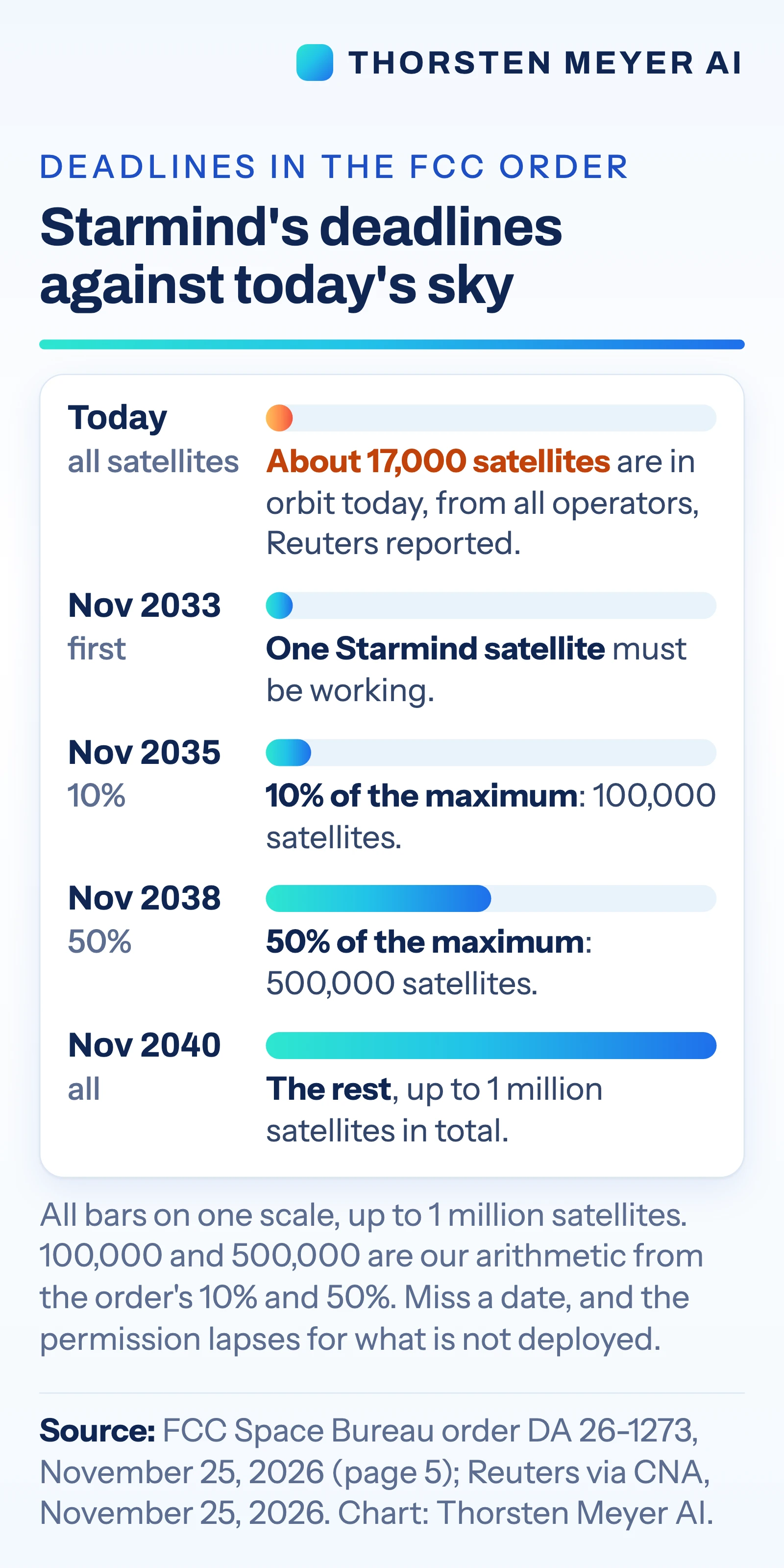
The authorized satellites would occupy orbital shells between 500 and 1,002 kilometres above Earth, each 50 kilometres thick, according to the order. The authorization sets milestones: SpaceX must have at least one satellite operating by Nov. 25, 2033, half the authorized fleet by 2038 and the full fleet by 2040. The permission can lapse if the milestones are missed.
The FCC deferred part of the application concerning disposal of satellites above 600 kilometres. SpaceX must provide more information before it can send satellites at those higher altitudes to disposal orbits, according to the source material. The FCC also rejected petitions seeking denial of the plan from Amazon’s satellite unit, Viasat and the American Astronomical Society.
A Spectrum Permit, Not an AI Service
The decision gives SpaceX a regulatory path to develop a large orbital system, but it does not mean customers can buy computing capacity in space. There is no operating constellation under this authorization, and the first deployment milestone is in 2033. The deadlines make the licence consequential while leaving years for engineering, financing and deployment work.
SpaceX argues that solar power in orbit could help address the energy needs of AI computing. The company told the FCC its satellites could use near-constant solar power with little operating or maintenance cost, Reuters reported. That is a company claim, not a finding by the commission. The FCC said questions about whether data centres in space are feasible or economically worthwhile fall outside its role in this licensing decision.
The proposal also has implications beyond SpaceX’s business plans. The American Astronomical Society raised concerns about the effects of a large satellite fleet on astronomy, while Amazon’s satellite unit and Viasat also challenged the application. The FCC denied their petitions; the authorization does not resolve the underlying technical and observational questions.
Products Worth Considering

LG UltraGear 32-inch QHD Curved Gaming Monitor, 180Hz, 1ms, FreeSync

Sony WH-1000XM4C (M4 2nd Gen) Wireless Noise-Cancelling Headphones, Black

Sony WH-1000XM6 Wireless Noise-Canceling Headphones, Black
As an affiliate, we earn on qualifying purchases.
How the FCC Drew the Licence
The FCC regulates radio use by satellites, rather than licensing the computers they may carry. That distinction shapes the order: it authorizes radio control links for backup and emergencies, while SpaceX says laser links would carry most data between satellites. The laser network and proposed AI computing system are part of SpaceX’s plan, not services validated by the FCC order.
SpaceX’s stated rationale is that AI data centres on Earth require substantial electricity and cooling, while satellites could collect solar energy in orbit. The company has also described using that energy to power AI computing for use on Earth, with data returned through laser connections to Starlink, according to reporting by The Verge. These descriptions outline the proposal; they do not show that the system has been built or tested.
The authorization specifies orbital shells from 500 to 1,002 kilometres and ties continued permission to deployment milestones. The FCC described its action as the first U.S. authorization for a constellation of data centres in space. That description concerns the regulatory authorization, not a functioning space-based data centre.
““the first authorization in U.S. history for a constellation of data centers in space””
— Federal Communications Commission
Technical and Disposal Questions Remain
No satellite has been launched under the permission, and the source material provides no operating results, customer commitments or cost figures for Starmind. It remains unclear whether SpaceX can build and maintain data centres in orbit, connect them reliably to users on Earth, or make the system financially viable.
The FCC’s authorization does not settle concerns raised by opponents about effects on astronomy, nor does the available material detail what conditions, if any, address those concerns. The agency deferred SpaceX’s request related to disposal orbits above 600 kilometres; what further information will be required and when the FCC will decide that part are not specified here.
Deployment Milestones Begin in 2033
The first stated deadline is Nov. 25, 2033, when at least one satellite must be operating under the authorization. SpaceX then faces milestones to deploy half the authorized fleet by 2038 and the full fleet by 2040, or risk the permission lapsing.
Before satellites at altitudes above 600 kilometres can be sent to disposal orbits, SpaceX must provide additional information on that issue, according to the FCC order as described in the source material. The next evidence of progress will be whether the company launches and operates a satellite under the authorization and whether the FCC resolves the deferred disposal request.
Key Questions
What did the FCC authorize SpaceX to do?
The FCC granted most of SpaceX’s application to deploy up to 1 million proposed data centre satellites. Its authorization covers specified backup and emergency radio links and sets deployment milestones. SpaceX says the system would use laser links mainly for data transmission.
Are SpaceX’s data centre satellites in orbit now?
No. The source material says none has been launched under this permission. The first operating satellite is due by Nov. 25, 2033.
Did the FCC confirm that orbital data centres will work?
No. The FCC said whether space data centres are feasible or economically worthwhile is outside the scope of its radio licensing role. SpaceX’s statements about solar power and costs remain company claims.
What did the FCC defer?
The FCC deferred SpaceX’s request concerning disposal orbits for satellites above 600 kilometres. SpaceX must provide more information before it can send satellites at those higher altitudes to disposal orbits.
When must SpaceX deploy the constellation?
The authorization calls for at least one operating satellite by 2033, half the fleet by 2038 and the full fleet by 2040. The permission can lapse if SpaceX misses the deadlines.
Source: Thorsten Meyer AI