TL;DR

Get the latest gadgets delivered free with Prime
- Fast, free delivery on millions of items
- Prime Video, Amazon Music and more included
- Member-only deals all year
OpenAI has launched ChatGPT Health, a new feature allowing users to link health data for personalized medical advice. Access is limited to early users, with broader rollout planned. Privacy protections are emphasized, but regulatory and accuracy questions remain.
OpenAI has launched ChatGPT Health, a dedicated health feature within its chatbot that allows users to connect medical records and wellness apps for more personalized health answers. The company announced the feature in January 2026, marking its most direct move into consumer health data integration.
ChatGPT Health is accessible through a separate section of the app and on the web, enabling users to link data from services like Apple Health, MyFitnessPal, Peloton, and others. In the U.S., a partnership with health data connectivity firm b.well allows pulling in medical records, including lab results and visit history. According to OpenAI, this aims to provide answers reflecting individual health data rather than generic advice.
OpenAI states that health-related conversations are stored separately, encrypted with purpose-built security, and are not used for training its AI models. The feature was developed over two years with input from over 260 physicians across 60 countries and evaluated using its HealthBench framework released in 2025. Currently, access is limited to a small group of early users on web and iOS, with plans for wider availability via a waitlist. The feature is not yet available in Europe, Switzerland, or the UK, due to stricter data protection laws.
Implications of AI-Driven Personal Health Integration
This development signifies a step toward integrating AI into personal healthcare management, potentially transforming how individuals access medical insights and prepare for doctor visits. It also raises important questions about data privacy, accuracy, and regulatory oversight, especially as competitors explore similar capabilities. The move positions OpenAI at the forefront of AI-enabled health tools, with the potential to influence both consumer behavior and healthcare practices.
Products Worth Considering
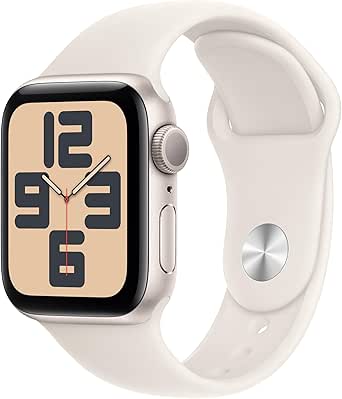
Apple Watch SE (2nd Gen) GPS 40mm with Starlight Aluminum Case and Sport Band (S/M)

Apple Watch Series 12 GPS 46mm Smartwatch

Apple Watch Series 8 GPS, 41mm, Midnight Aluminum Case with Midnight Sport Band (S/M)
As an affiliate, we earn on qualifying purchases.
Background on AI and Health Data Integration
OpenAI has been expanding its use of AI in various domains, with ChatGPT already handling over 230 million weekly health-related queries. The company’s development of ChatGPT Health follows two years of collaboration with medical professionals and the release of its HealthBench evaluation framework in 2025. While other AI firms like Anthropic are also pursuing health-focused features, OpenAI’s approach emphasizes privacy and clinical input to enhance answer reliability.
Regulators have largely maintained a hands-off stance toward general-purpose chatbots, framing them as wellness tools rather than medical devices. However, as AI tools become more capable of interpreting lab results and medical records, regulatory scrutiny may increase, especially in regions with strict data laws such as the EU and UK.
Unanswered Questions About Safety and Regulation
It is not yet clear how accurately ChatGPT Health will interpret complex medical data outside controlled evaluations. The timeline for broader availability, especially outside the U.S., remains unspecified. Regulatory responses, particularly in Europe and the UK, are still uncertain, and how data from connected third-party apps is governed after leaving those services is unclear.
Next Steps in Deployment and Oversight
OpenAI plans to expand access gradually, moving from early users to a wider audience via the waitlist. Future updates may include additional app integrations, broader regional availability, and independent assessments of answer quality. Monitoring regulatory responses and user feedback will be crucial in shaping the product’s evolution.
Key Questions
Will ChatGPT Health replace my doctor?
No, OpenAI emphasizes that ChatGPT Health is a wellness tool and not a substitute for professional medical advice or diagnosis.
Is my health data safe with ChatGPT Health?
OpenAI states that health conversations are stored separately, encrypted, and not used for training models, but users should remain cautious about sharing sensitive information.
Will this feature be available outside the U.S.?
OpenAI has not announced plans for immediate expansion outside the U.S., and regulatory considerations are likely to influence future availability.
Can I connect my medical records from any healthcare provider?
Currently, in the U.S., users can connect with b.well to import medical records. Support for other providers and regions is still under development.
How accurate are the health insights provided by ChatGPT?
While trained with physician input and evaluated with HealthBench, the accuracy outside controlled testing remains unverified, and OpenAI recommends consulting healthcare professionals for medical decisions.
Source: ThorstenMeyerAI.com