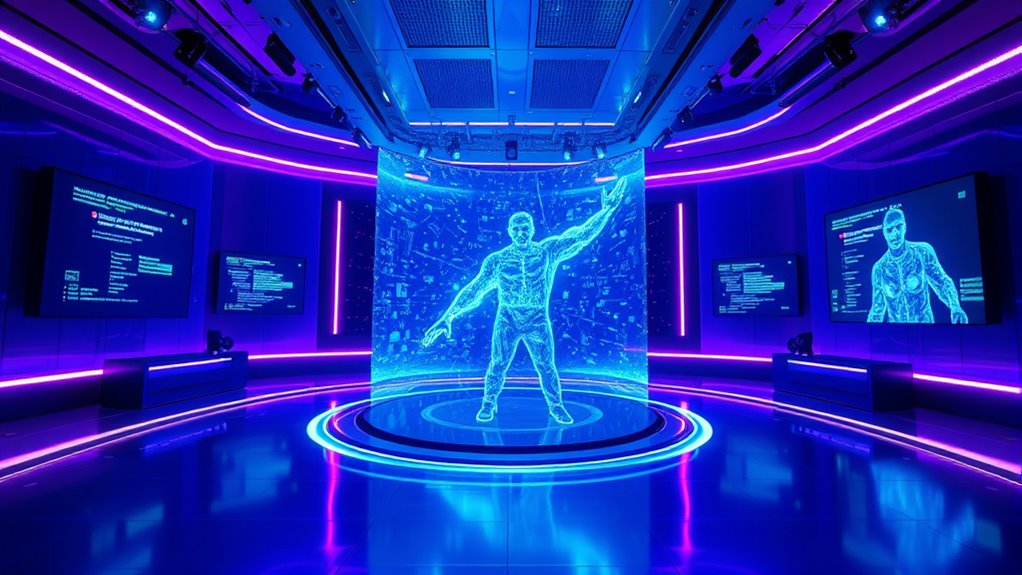

Synthetic media powered by AI is revolutionizing entertainment by allowing you to experience hyper-realistic virtual performances and personalized content. This technology expands creative options, enabling the creation of virtual actors and immersive stories previously limited by budgets and logistics. However, it also raises ethical concerns like deepfake misuse and authenticity issues. As these innovations grow, you’ll discover how they shape future entertainment and the importance of responsible use. Stay with us to explore the full picture.
Key Takeaways
- Synthetic media enables immersive storytelling and virtual performances, expanding creative possibilities in entertainment.
- AI-generated content democratizes media production, empowering emerging creators with innovative tools.
- Deepfake technology raises ethical concerns around authenticity, consent, and misinformation in entertainment.
- Advancements facilitate personalized experiences and virtual casts, transforming traditional media formats.
- Responsible use and regulation are essential to balance technological innovation with societal trust and integrity.

Synthetic media, powered by advancements in artificial intelligence, is revolutionizing how content is created and consumed. This means you might soon watch a concert performed by an AI-created artist or see a film scene brought to life entirely through synthetic actors. These innovations open new creative possibilities, allowing creators to craft performances that were previously impossible due to budget or logistical constraints. However, this progress isn’t without controversy. Deepfake controversies have emerged as a major concern, as convincing synthetic videos can be used to spread misinformation or manipulate public perception. The line between reality and artificiality blurs when you see a celebrity appear to say or do something they never actually did, raising questions about authenticity and consent. The ethical implications are significant: who owns the rights to an AI-generated performance, and how do we protect individuals from being misrepresented? As AI technology becomes more sophisticated, it’s easier to create seamless deepfakes that are difficult to distinguish from real footage. This can lead to serious issues, such as fake news, defamation, or even political manipulation, which impact both creators and audiences alike. But it’s also important to recognize the potential benefits. Synthetic media can democratize entertainment, giving emerging artists and storytellers tools they once lacked. Imagine being able to produce a film with a virtual cast or creating personalized content tailored to individual preferences. These innovations could make entertainment more accessible and immersive, pushing the boundaries of traditional storytelling. Still, the industry is grappling with establishing regulations and standards to prevent misuse. As a consumer, you should stay informed about deepfake controversies and AI-generated performances to better understand what’s real and what’s artificially created. The rapid pace of technological advancement means that synthetic media will only become more prevalent in entertainment, shaping the future in ways we’re just beginning to comprehend. While it offers exciting opportunities for creativity and innovation, it also demands a cautious approach, emphasizing ethical boundaries and responsible use. By staying aware of these issues, you can enjoy the benefits of synthetic media while remaining vigilant about its potential pitfalls. The ongoing dialogue around AI-generated content and deepfake controversies highlights the importance of balancing technological progress with moral responsibility, ensuring that entertainment remains both mesmerizing and trustworthy. Additionally, understanding the legal frameworks surrounding asset division can help creators and stakeholders navigate intellectual property rights and ownership concerns.

AI Filmmaking: The Future of Cinema from Script to Screen — A Complete Guide to AI Tools, Story Development, Production, Post-Production, and Global Distribution for Filmmakers
As an affiliate, we earn on qualifying purchases.
As an affiliate, we earn on qualifying purchases.
Frequently Asked Questions
How Do Synthetic Media Creators Ensure Ethical Use?
You guarantee ethical use of synthetic media by implementing strict consent protocols, making sure all participants agree to their likeness being used. You also utilize deepfake detection tools to identify and prevent malicious or deceptive content. Staying transparent with your audience about how synthetic media is created and used builds trust. By prioritizing consent and leveraging detection technology, you promote responsible and ethical practices in synthetic media creation.
What Are the Legal Implications of Synthetic Media in Entertainment?
You’re walking a tightrope with synthetic media, as legal implications hinge on intellectual property rights and regulatory challenges. You need to guarantee proper licensing to avoid infringement and stay compliant with evolving laws. Failure to do so could land you in hot water, facing lawsuits or fines. Keeping abreast of legal standards and securing rights proactively helps you navigate this complex landscape and protect your creations from potential legal pitfalls.
How Does Synthetic Media Impact Traditional Actors and Performers?
Synthetic media transforms how you experience performances by enabling virtual performances that can feature your favorite actors and performers. It also helps with talent preservation, allowing studios to recreate performances even after an artist’s retirement or passing. However, this shift challenges traditional actors and performers by raising concerns over job security, creative control, and fair compensation. As technology advances, you’ll need to navigate these changes to protect your interests.
What Are the Costs Associated With Producing Synthetic Media Content?
You’ll find that producing synthetic media involves significant costs. A thorough cost analysis reveals high production expenses, including advanced software, powerful hardware, and skilled specialists. Additionally, licensing fees for AI models and ongoing updates add to the expenses. While synthetic media can reduce some costs over time, initial investments are substantial, making budget planning essential to manage the financial risks and maximize the benefits of this innovative content creation.
How Might Synthetic Media Influence Future Entertainment Industry Jobs?
Synthetic media will transform your future entertainment jobs by enabling virtual casting, allowing you to create digital actors and customize performances easily. You’ll also craft personalized experiences for audiences, making content more engaging and tailored. This shift means you’ll need to develop skills in AI and digital tools, opening new opportunities while potentially reducing traditional roles. Embracing these changes helps you stay relevant and innovative in a rapidly evolving industry.

A Practical Guide to Detect GenAI Content
As an affiliate, we earn on qualifying purchases.
As an affiliate, we earn on qualifying purchases.
Conclusion
As you explore the rise of synthetic media, you realize it’s almost uncanny how technology and creativity intertwine. Just when you think you’ve seen it all, a new digital artist or AI-generated masterpiece appears, blurring the lines between reality and imagination. It’s as if the future has been quietly shaping itself behind the scenes, waiting to surprise you. Embracing these innovations might just be the next unexpected chapter in your entertainment journey.
![Express Rip Free CD Ripper Software - Extract Audio in Perfect Digital Quality [PC Download]](https://m.media-amazon.com/images/I/41xx28xHa+L._SL500_.jpg)
Express Rip Free CD Ripper Software – Extract Audio in Perfect Digital Quality [PC Download]
Perfect quality CD digital audio extraction (ripping)
As an affiliate, we earn on qualifying purchases.
As an affiliate, we earn on qualifying purchases.

Gaming the System: Deconstructing Video Games, Games Studies, and Virtual Worlds (Digital Game Studies)
As an affiliate, we earn on qualifying purchases.
As an affiliate, we earn on qualifying purchases.