
TL;DR

Get the latest gadgets delivered free with Prime
- Fast, free delivery on millions of items
- Prime Video, Amazon Music and more included
- Member-only deals all year
A researcher built a $48,000 GPU server to advance AI experiments, saving approximately $17,000 compared to cloud costs so far. The decision was driven by a desire for control and capability, not just cost savings.
A researcher who invested $48,000 in a custom GPU server has concluded that the machine has already saved him around $17,000 compared to cloud rental costs, with ongoing daily savings of approximately $90 to $105.
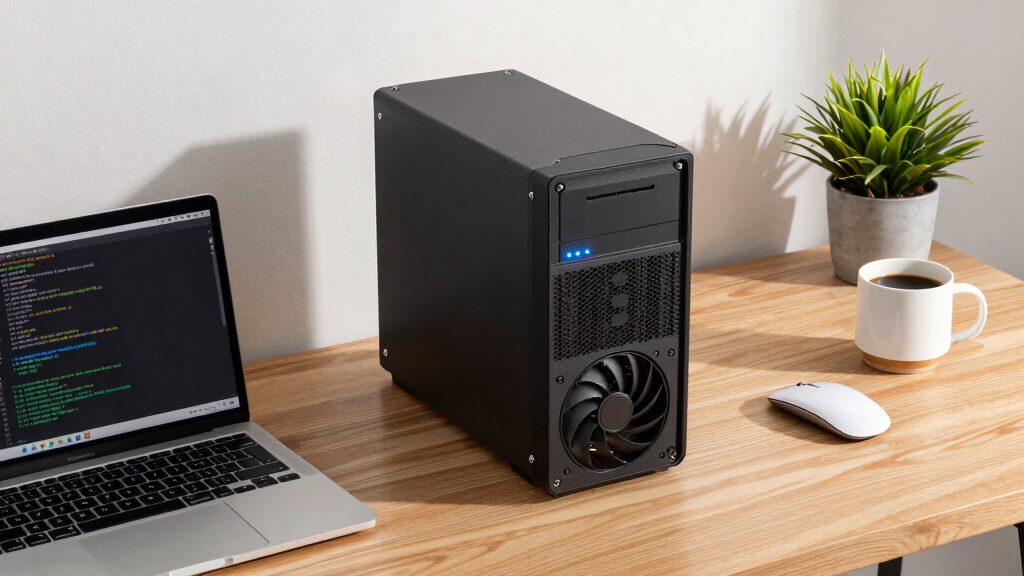
The researcher built a six-GPU server using Nvidia RTX 6000 Ada GPUs to support AI experiments, particularly reinforcement learning inference tasks. The total cost was $48,000, which included specialized power supplies and professional setup due to apartment electrical constraints. He compared the costs of running this server against on-demand cloud GPU rentals, estimating that it would take about a year of 85% utilization to break even.
Usage logs showed an average GPU utilization of 76%, increasing to 85% since January 2025, with notable downtime during maintenance. Electricity costs were approximately $3,000 over the period. Based on estimated cloud rental prices, the researcher calculated that the equivalent compute would have cost around $68,000, resulting in a net saving of about $17,000 so far. He continues to save roughly $90-$105 daily, making the investment financially justifiable.
Why It Matters
This case illustrates how a high upfront investment in a custom GPU server can be cost-effective for dedicated AI research, especially for those who need continuous, high-performance compute without relying solely on cloud providers. It also highlights the trade-offs between control, flexibility, and cost savings versus the challenges of hardware setup and maintenance.
As an affiliate, we earn on qualifying purchases.
Background
In 2024, a researcher left a FAANG company to pursue independent AI research, necessitating powerful hardware. He chose Nvidia RTX 6000 Ada GPUs for their performance and cost efficiency, building a custom server to avoid cloud rental expenses. Prior to this, cloud GPU costs were rising, prompting the decision to buy a dedicated GPU server. The project involved navigating apartment electrical constraints and ensuring safety, which added complexity and cost. The analysis is based on usage logs and estimated cloud prices, with ongoing monitoring to evaluate long-term savings.
“Building my own GPU server was a costly investment, but it has already paid off in savings and control over my experiments.”
— the researcher
“High upfront hardware costs can be justified for dedicated AI research, especially when cloud prices are high or unpredictable.”
— industry analyst
As an affiliate, we earn on qualifying purchases.
What Remains Unclear
It remains unclear whether the ongoing savings will continue at the current rate as GPU prices and cloud rental rates fluctuate. Long-term hardware reliability and maintenance costs are also uncertain, and the researcher’s actual productivity gains from the setup are not fully quantified.
high performance GPU power supply
As an affiliate, we earn on qualifying purchases.
As an affiliate, we earn on qualifying purchases.
What’s Next
The researcher plans to continue monitoring GPU utilization and electricity costs, with an eye toward further optimizing the setup. He may also explore expanding hardware or transitioning some workloads back to cloud if costs or needs change.
As an affiliate, we earn on qualifying purchases.
Key Questions
Was building the GPU server more cost-effective than renting cloud GPUs?
Based on current usage and estimated cloud rental rates, the researcher has saved approximately $17,000 so far, with ongoing daily savings. However, this depends on sustained high utilization and stable hardware performance.
What were the main challenges in building the server?
Managing apartment electrical constraints, ensuring safety with multiple power supplies, and physically assembling and maintaining the hardware were key challenges faced by the researcher.
Will the investment pay off in the long run?
It appears so for this researcher, given the current savings rate and continued high utilization. Long-term benefits depend on hardware durability, electricity costs, and evolving cloud prices.
Could this setup be scaled or improved?
Yes, potential improvements include hardware upgrades, better power management, or moving to a dedicated data center environment for more consistent power and cooling.
Source: Hacker News
Halloween Picks
halloween
As an affiliate, we earn on qualifying purchases.