
📊 Full opportunity report: The Real Cost Of A Local-Inference Rig In 2026 on ThorstenMeyerAI.com — validation score, market gap, and execution plan.
TL;DR
In 2026, running large language models locally involves significant hardware costs driven by VRAM needs. Buyers should focus on VRAM-per-dollar, not just raw GPU speed, with used GPUs offering better value. The choice of hardware depends heavily on model size and intended use.
In 2026, the cost of building a local inference rig for AI models is primarily dictated by VRAM capacity and model size, not raw GPU speed, making hardware choice more nuanced than ever.
Recent community benchmarks reveal that the key to effective local AI inference is fitting models into GPU VRAM, with the VRAM cliff causing a dramatic performance drop if models spill into system RAM. You can learn more about AI’s real cost problem and how it impacts hardware choices. For example, an RTX 5090 with 32GB VRAM can run a 70B model entirely in VRAM, achieving 40–50 tokens per second, but spilling into RAM drops performance to 1–2 tokens/sec — effectively unusable for real work.
Model size directly correlates with VRAM needs: a 7–8B model requires about 6–8GB, a 26–32B model needs roughly 18–20GB, and a 70B model demands more than 40GB, often requiring multiple GPUs or large memory Macs. Notably, older used GPUs like the RTX 3090 (24GB) offer better VRAM-per-dollar ratios than newer flagship cards, with used 3090s costing around $600–850 and providing excellent value, especially when pooled via NVLink for larger models.
Hardware selection should prioritize VRAM-per-dollar rather than outright speed. For example, a used 3090 combined with NVLink can pool 48GB VRAM at a fraction of the cost of a new flagship card, enabling models up to 70B at high quality. The high-end RTX 5090 remains the only single consumer card capable of fitting a 70B model entirely in VRAM at a reasonable speed, but its high price and power consumption often make multi-3090 setups more cost-effective.
The real cost of a local-inference rig
Owning beats renting for steady AI work — so what does a local rig cost in 2026? The unintuitive, good news: the most expensive build is almost never the smartest one. It all comes down to one rule.
The difference is only whether the weights fit. LLM inference is memory-bandwidth-bound — VRAM capacity is the hard limit you build around. Compute specs are mostly noise.
The squeeze reframes the rig like everything else in this series: discipline beats maximalism. VRAM is exactly the memory under most pressure, so over-buying it is the 128GB-“to-be-safe” trap, only worse per gigabyte. Take the cheap, high-value step to 24GB (the gateway to the 30B class), reach for used 3090s and MoE models, and use quantization to climb a tier without buying silicon. Sized right, the rig pays for itself against the cloud’s ever-rising hidden bill. Next: Apple Silicon’s quiet memory advantage.
Implications of VRAM-Centric Hardware Choices in 2026
Understanding the true costs and hardware strategies for local AI inference in 2026 is crucial for organizations and individuals seeking privacy, cost control, or independence from cloud providers. Prioritizing VRAM capacity and value over raw GPU speed can significantly reduce expenses and improve performance for large models, making local inference more accessible and practical.

NVIDIA GeForce RTX 3090 Founders Edition Graphics Card (Renewed)
Item Package Dimension – 15.0L x 12.25W x 4.25H inches
As an affiliate, we earn on qualifying purchases.
As an affiliate, we earn on qualifying purchases.
Hardware Trends and Model Sizes in 2026
Over recent years, model sizes have continued to grow, with 70B+ models becoming common for local deployment. The community has shifted focus from compute power to VRAM capacity, as inference performance is bandwidth-bound. Older GPUs like the used RTX 3090 have gained renewed relevance due to their VRAM capacity and cost advantage, especially when pooled via NVLink. Meanwhile, the introduction of Apple Silicon with unified memory offers an alternative path for large models, bypassing traditional GPU limitations.
“A used RTX 3090 offers exceptional VRAM-per-dollar, especially when pooled with NVLink, making it the most cost-effective choice for large models.”
— Community benchmark contributor

GIGABYTE Radeon™ AI PRO R9700 AI TOP 32G Graphics Card, Turbo Fan Cooling System, 32GB GDDR6, GV-R9700AI TOP-32GD Video Card
Powered by Radeon AI PRO R9700 – Supercharge you workflow with the cutting-edge RDNA 4 Architecture and 2nd-gen…
As an affiliate, we earn on qualifying purchases.
As an affiliate, we earn on qualifying purchases.
Unclear Aspects of Hardware Scalability and Future Models
It remains uncertain how future hardware developments, such as new GPU architectures or advancements in unified memory systems like Apple Silicon, will alter the cost dynamics and VRAM requirements for local inference. Additionally, the long-term viability of multi-GPU pooling and the impact of software optimizations are still evolving.
multi-GPU NVLink setup for AI inference
As an affiliate, we earn on qualifying purchases.
As an affiliate, we earn on qualifying purchases.
Upcoming Hardware Releases and Model Optimization Strategies
Expect continued hardware innovation, including more efficient GPUs with higher VRAM capacities and better bandwidth. Software improvements, such as more effective quantization and model compression, may reduce VRAM needs. Monitoring these developments will be key for making cost-effective hardware investments in 2026 and beyond.
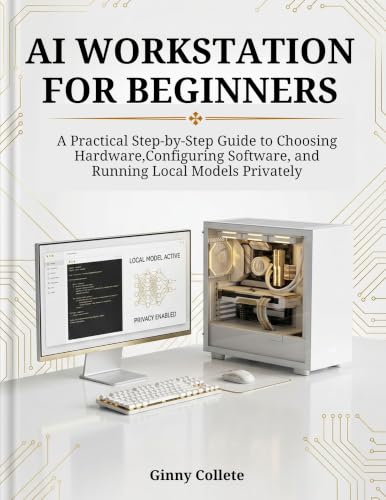
AI Workstation for Beginners: A Practical Step-by-Step Guide to Choosing Hardware, Configuring Software, and Running Local Models Privately
As an affiliate, we earn on qualifying purchases.
As an affiliate, we earn on qualifying purchases.
Key Questions
Why is VRAM capacity more important than GPU speed for local inference?
Because inference performance is bandwidth-bound, fitting the model into GPU VRAM is essential. If the model spills into system RAM, performance drops dramatically, making VRAM capacity the critical factor.
Are used GPUs like the RTX 3090 a good investment for local AI inference?
Yes. They offer better VRAM-per-dollar than newer flagship cards, especially when pooled via NVLink. This makes them a cost-effective choice for running large models locally.
How does model size influence hardware choices in 2026?
Smaller models (7–14B) can run on entry-level cards, while larger models (26–70B) require more VRAM, often necessitating multiple GPUs or large unified-memory systems.
Will hardware costs decrease or increase in the near future?
While some older GPUs remain valuable, overall costs may fluctuate based on new hardware releases, software optimizations, and second-hand market trends. The focus on VRAM capacity suggests value will continue to favor cost-efficient older models unless new innovations emerge.
Source: ThorstenMeyerAI.com