📊 Full opportunity report: Signal: Four Frontier-Class Open Models in Eight Weeks — China’s Release Cadence Is the Story on ThorstenMeyerAI.com — validation score, market gap, and execution plan.
TL;DR
Over an eight-week span, Chinese laboratories released four frontier-class open models, including DeepSeek V4 and Kimi K2.7-Code. This rapid cadence indicates China’s fast-growing AI capability and shifts the global AI landscape, especially for on-premises deployment.
Chinese AI labs have released four frontier-class open models in just over two months, including DeepSeek V4, MiniMax M3, Kimi K2.7-Code, and GLM-5.2. These models are downloadable, mostly under permissive licenses, and priced significantly below Western API offerings. This rapid production cycle signals a shift in the global AI landscape, with China emerging as a dominant force in open-weight models.
Between late April and mid-June 2026, Chinese laboratories launched four major open-weight AI models, each representing a distinct strategic focus. DeepSeek V4, released on April 24, features 1.6 trillion total parameters but activates only 49 billion per pass, with a 1 million token context, and is priced at the low end of the market. Its performance ranks it just behind the proprietary leader, with an overall score of 87 on BenchLM’s July rankings, making it the top Chinese model and one of the most capable open-weight models globally.
Following that, the MiniMax M3 was launched on June 1, and within days, Kimi K2.7-Code and GLM-5.2 appeared in mid-June, all available for download and most under MIT-class licenses. The Chinese models now dominate the top tier of open-weight AI, with four out of the five most capable families coming from Chinese labs, including DeepSeek, Z.ai, Moonshot, and Alibaba. These models vary in design: DeepSeek prioritizes affordability, Z.ai emphasizes open-weight intelligence, Moonshot focuses on long-horizon stability, and Alibaba offers self-hosted, GPU-optimized variants.
In contrast, Western open-weight efforts have stagnated, with Meta’s flagship stalled and Ai2’s Olmo 3 trailing behind Chinese models in raw capability. The Chinese release cadence appears partly driven by strategic responses to US export controls, hardware scarcity, and a bid to establish dominance in the global AI substrate. The rapid refresh cycle has narrowed the gap between open Chinese models and closed proprietary models, with broad benchmarks now showing a gap of only single digits.
Four Frontier-Class Open Models in Eight Weeks
China’s Release Cadence Is the Story
Same-day-verified market pulse · July 13, 2026
The production line — spring 2026
The board this week — BenchLM overall score, July 2026
Gift & complication — the European read
The gift
Frontier-adjacent capability, permissive licenses, weeks-long refresh cycle. This cadence is what makes serious on-premises AI economically thinkable in 2026.
The complication
Still a dependency — geopolitical, not technical. Hosted Chinese APIs fall under Chinese data law; many Western agencies won’t touch the weights at all. Licensing generosity is a policy, not a law of nature.
The signal: if your infrastructure strategy assumes open models improve slowly, it’s already wrong. If it assumes the current licensing generosity is permanent, it’s unhedged.

Open Source AI Models On Mobile: Deploying Lightweight LLMs On Android And iOS Devices
As an affiliate, we earn on qualifying purchases.
As an affiliate, we earn on qualifying purchases.
Implications for Global AI Leadership
This rapid release cadence from Chinese labs signifies a major shift in the global AI landscape, challenging Western dominance in open-weight models. It reduces the capability gap, making high-performance, open-source AI more accessible and economically feasible for on-premises deployment worldwide. For European and other sovereign deployments, this means a faster decline in the capability tax of self-hosting, but also introduces dependencies on Chinese-origin models, raising geopolitical and regulatory concerns. The pace suggests that the window for Western AI dominance in open models may be narrowing, and strategic responses are needed to stay competitive.
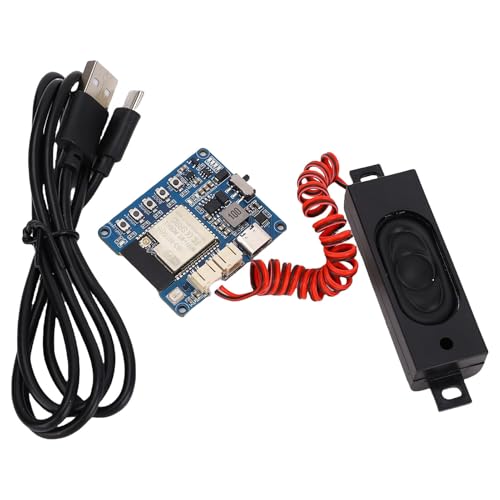
AI Voice Chat Module Type C Interface AI Large Model Support with Technology
Specifications: This AI voice chat module offers a Type C interface, built in for TP5400 battery management, integrated…
As an affiliate, we earn on qualifying purchases.
As an affiliate, we earn on qualifying purchases.
China’s Accelerating AI Model Development
Over the past two years, the Chinese open-weight AI scene has evolved from a handful of labs to a competitive landscape with four major families, each with distinct strategic aims. The recent rapid-fire releases reflect a deliberate effort to establish global leadership in open-weight AI, partly driven by hardware scarcity and export restrictions. The Chinese government and labs appear to coordinate a production line approach, with new models appearing every few weeks, significantly faster than Western counterparts.
Historically, the Chinese open AI field was limited, but recent months have seen a dramatic shift. The July BenchLM rankings place DeepSeek V4 Pro just behind the proprietary leader, indicating that Chinese models are now close contenders in raw capability. This trend is part of a broader geopolitical effort to secure AI independence and influence in the global AI ecosystem, especially as Western efforts have stalled or slowed.
“The cadence of Chinese open models is no longer a wave; it’s a production line, and it’s reshaping the global AI landscape.”
— an anonymous researcher

ASUS ESC8000A-E13 4U AI GPU Server Barebones with 3+1 3200W Titanimum CRPS Supporting Eight (8) 2-Slot Server GPUs (e.g. Pro 6000, H200), Dual (2) EPYC 9005 CPUs & 24-Channels of DDR5 ECC RDIMM RAM
[ Maximum AI Compute Power ] Dominate complex workloads with the ASUS ESC8000A-E13. This 4U rack server is…
As an affiliate, we earn on qualifying purchases.
As an affiliate, we earn on qualifying purchases.
Unclear Long-Term Impact and Regulatory Risks
It remains uncertain how long China will sustain this rapid release pace, especially given potential shifts in export policies, licensing terms, and hardware availability. The geopolitical landscape could influence model accessibility and licensing, impacting Western adoption and dependency. Additionally, the regulatory environment in Western countries may restrict the use of Chinese-origin models for sensitive workloads, complicating deployment strategies.
affordable AI model hosting solutions
As an affiliate, we earn on qualifying purchases.
As an affiliate, we earn on qualifying purchases.
Next Steps in Chinese AI Model Development
Expect further Chinese model releases in the coming months, potentially with increased capability and broader licensing options. Western efforts may attempt to accelerate their own releases or develop counter-strategies, but the current pace suggests China aims to solidify its leadership in open-weight AI. Monitoring licensing changes, export policies, and performance benchmarks will be critical in assessing how the global AI balance shifts over the next quarter.
Key Questions
Why are Chinese labs releasing models so rapidly?
Chinese labs appear to be responding to hardware scarcity, export restrictions, and strategic ambitions to dominate the global AI substrate, leading to a fast-paced production cycle.
How do these Chinese models compare to Western efforts?
Chinese models like DeepSeek V4 are now close in raw capability to proprietary Western models, with some Chinese models ranking just behind the top proprietary models as of July 2026.
What are the licensing and deployment implications?
Most Chinese models are available under permissive licenses, making self-hosting feasible and cost-effective. However, geopolitical and regulatory barriers limit their use in certain regions or sensitive workloads.
Will Western efforts catch up?
While Western labs may increase their release cadence, the current Chinese pace indicates a significant strategic advantage. Future developments depend on hardware, policy, and innovation dynamics.
Source: ThorstenMeyerAI.com