
TL;DR

Get the latest gadgets delivered free with Prime
- Fast, free delivery on millions of items
- Prime Video, Amazon Music and more included
- Member-only deals all year
Researchers are developing a phone-based shade scoring tool to objectively measure teeth whitening progress at home. This innovation could help consumers track results more accurately and choose effective products, with validation against dental standards underway.
Phone-camera shade scoring for home teeth whitening is being tested as a method to provide objective, dentist-like measurements of tooth shade changes during at-home whitening routines. This development aims to address a longstanding challenge for consumers: accurately tracking whitening progress without professional tools, which could improve product efficacy and user satisfaction.
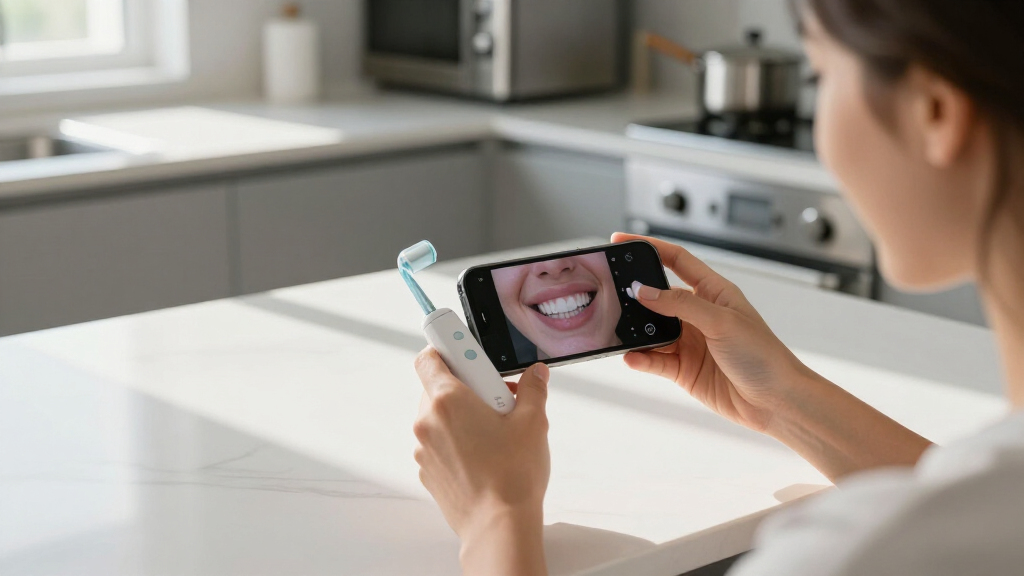
The concept involves a guided-lighting photo flow that captures images of the teeth using a smartphone camera, then compares the shade to a standardized dental shade scale. This system plots shade scores over weeks, identifies which products produce measurable whitening, and offers personalized recommendations based on user data. The initial focus is on creating a minimum viable product (MVP) that can reliably correlate with dentist readings, specifically VITA shade measurements.
According to sources familiar with the project, the app will include a subscription model and affiliate revenue streams, promoting products that demonstrably improve shade scores. The approach is targeted at consumers cycling through various whitening products such as strips, trays, and LED kits, who currently lack an objective way to evaluate their results. Validation involves benchmarking app scores against dental professionals’ VITA readings for about fifty users, with early results indicating a promising correlation.
Potential Impact on Consumer Teeth Whitening Effectiveness
This innovation could significantly change how consumers approach at-home teeth whitening by providing a reliable, objective measurement of progress. Currently, most users rely on subjective visual assessment in the mirror, which can lead to inconsistent results and unnecessary product cycling. An accurate shade measurement tool would enable users to determine which products are effective, reduce waste, and possibly lower the overall cost of whitening routines.
Additionally, this technology could foster greater confidence in home whitening, encouraging more people to pursue cosmetic dental improvements safely and effectively. For the industry, it introduces a measurement layer that could differentiate brands and boost consumer trust, potentially leading to higher satisfaction and loyalty.
As an affiliate, we earn on qualifying purchases.
Advances in Smartphone Technology and Market Drivers
The development leverages recent improvements in smartphone camera quality and guided-lighting techniques that can approximate professional dental shade assessments. The whitening market has seen rapid growth, with consumers cycling through multiple products without objective feedback on effectiveness. This gap creates a market opportunity for measurement tools that can integrate seamlessly into existing routines.
Historically, teeth shade assessment has been limited to professional dental settings using calibrated devices like VITA spectrophotometers. The challenge has been translating this precision into a consumer-friendly, portable format. Recent research and prototypes suggest that phone-based systems, combined with guided lighting, can reliably approximate professional readings, making home-based monitoring feasible.
Market analysts note that the potential for a measurement layer on top of existing products aligns with broader trends in health and beauty tech, emphasizing personalization, data-driven results, and subscription-based models. This aligns with consumer demand for transparency and measurable outcomes in cosmetic routines.
“The correlation between phone-based shade scores and dentist measurements is promising enough to consider a scalable, consumer-grade solution.”
— an anonymous researcher
smartphone teeth whitening measurement device
As an affiliate, we earn on qualifying purchases.
As an affiliate, we earn on qualifying purchases.
Unverified Aspects and Validation Challenges
While initial testing shows promising correlation with professional shade measurements, it is not yet confirmed how reliably the phone-based system will perform across diverse lighting conditions, skin tones, and tooth colors. The sample size of about fifty users provides preliminary data, but broader validation is needed to establish accuracy and consistency.
It remains unclear how quickly the technology can be refined for commercial release, what the final user interface will look like, and how well the system will integrate with various whitening products and routines. Regulatory considerations and clinical validation standards are also still to be addressed.
As an affiliate, we earn on qualifying purchases.
Next Steps for Validation and Market Readiness
The project team plans to expand testing with a larger, more diverse user base to refine the shade scoring algorithm and validate its accuracy against dental standards. They aim to publish detailed validation results within the next six months.
Following successful validation, developers will focus on finalizing the app interface, integrating product recommendations, and establishing partnerships with whitening brands. Commercial rollout could occur within the next year if validation results are favorable and regulatory hurdles are addressed.
Consumers can expect updates on the app’s availability and features as development progresses, with early access potentially offered through pilot programs or partnerships.
at-home teeth shade assessment tool
As an affiliate, we earn on qualifying purchases.
As an affiliate, we earn on qualifying purchases.
Key Questions
How accurate is the phone-based shade scoring compared to professional dental measurements?
Initial studies suggest a promising correlation with dentist VITA readings, but further validation is needed to confirm accuracy across diverse users and conditions.
Will this technology work with all types of whitening products?
The system is designed to track shade changes regardless of product type, including strips, trays, and LED kits, once validated.
Is this system safe and approved for consumer use?
Regulatory approval processes are still underway; safety depends on proper app use and guided lighting, which will be included in the final product design.
When can consumers expect to try this phone shade scoring system?
A commercial release could happen within the next year if validation and development progress as planned, with early access possible through pilot programs.
How will the app recommend whitening products based on shade scores?
The app will analyze progress over time, identify effective products, and suggest options that have historically improved shade scores for similar starting shades.
Source: IdeaNavigator AI
Halloween Picks
halloween
As an affiliate, we earn on qualifying purchases.