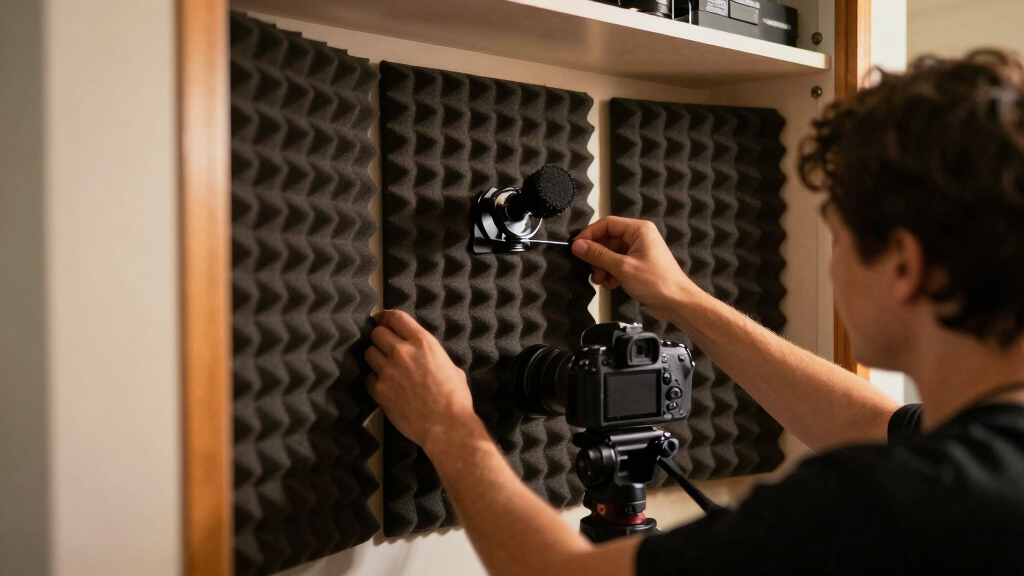

📊 Full opportunity report: Acoustic Dampening, Placement, and the “Rig in the Closet” Setup on ThorstenMeyerAI.com — validation score, market gap, and execution plan.

Get the latest gadgets delivered free — and shop member deals
- Fast, free delivery on millions of items
- Access to Prime Big Deal Days deals on October 6–7
- Prime Video, Amazon Music and more included
TL;DR
Placing AI workstations in separate rooms or closets significantly reduces noise, with ventilation being key. Proper setup can make loud rigs virtually silent at the user’s desk.
Putting high-power AI workstations in a closet or separate room can nearly eliminate noise at the user’s workspace, according to recent expert guidance. This approach is discussed in detail in Acoustic Dampening, Placement, and the “Rig in the Closet” Setup. This approach is increasingly relevant as AI workloads grow louder and more energy-intensive, making traditional acoustic treatments less effective. The key is to move the rig away from the workspace, leveraging network-based interactions while managing heat dissipation effectively.
Experts emphasize that the most effective way to reduce noise from high-performance AI rigs is to increase physical distance, such as placing the machine in another room or closet. This method surpasses traditional acoustic foam treatments, which only absorb sound within a space but do not block transmission. For example, an AI workstation located in a closet can operate at full capacity without disturbing the workspace, provided it has proper ventilation.
Placing a rig in a sealed space introduces challenges related to heat buildup. Without adequate ventilation, the ambient temperature will rise, causing the machine to throttle and fans to increase noise, negating the benefits of placement. To avoid this, experts recommend active ventilation solutions—such as quiet exhaust fans and ducted airflow—that allow heat to escape while keeping noise levels low. Purpose-built soundproof cabinets with temperature-controlled airflow are also suggested for optimal results.
Furthermore, network connectivity remains crucial. A wired connection or strong wireless link is needed for remote operation, as the physical separation means users interact with the rig over the network. This setup aligns well with modern workflows where the user’s workstation (laptop or desktop) remains quiet and distant from the noisy hardware.
Acoustic dampening
& the rig in the closet.
The most powerful noise fix isn’t a material — it’s a floor plan. A rig you can’t hear because it’s in another room beats any amount of foam. Tap the approaches in Part 1 to see what actually works.
(another room)
(levers 1–4)
(door / barrier)
(acoustic foam)
Contain the noise, not the heat
Why Remote Placement Is a Game-Changer for AI Workstations
This approach dramatically improves the work environment by significantly reducing noise pollution, which can be disruptive in shared or home offices. It also allows users to operate high-power AI rigs without investing heavily in complex acoustic treatments. The ability to run powerful hardware in a sealed, ventilated space expands possibilities for quieter, more efficient setups, especially as AI workloads continue to grow in size and heat output. However, proper ventilation remains critical; neglecting heat dissipation can damage hardware and reduce lifespan, making this method effective only with careful planning.
silent computer case for high-performance workstation
As an affiliate, we earn on qualifying purchases.
As an affiliate, we earn on qualifying purchases.
Evolution of Noise Management in High-Power AI Setups
Traditional noise mitigation relied heavily on acoustic foam and barriers within the same room, which only address airborne noise and reflections. For more on this topic, see Acoustic Dampening, Placement, and the "Rig in the Closet" Setup. Recent insights highlight that physical separation—placing the rig in another room or closet—offers the most substantial noise reduction. This concept aligns with broader trends in remote work and distributed computing, where the physical location of hardware is less constrained. The challenge has always been managing heat, which becomes more critical as hardware becomes more powerful and densely packed, prompting innovations like purpose-built soundproof enclosures with integrated cooling systems.
"The most effective noise reduction isn't acoustic foam; it's moving the hardware out of your workspace entirely. Distance and proper ventilation are the keys."
— Thorsten Meyer, AI hardware expert
soundproof server cabinet with ventilation
As an affiliate, we earn on qualifying purchases.
As an affiliate, we earn on qualifying purchases.
Unresolved Challenges in Sealed, Ventilated Enclosures
While the concept of placing rigs in closets or sealed cabinets is proven effective for noise reduction, the optimal design and cost of such solutions remain variable. You can learn more about this in Acoustic Dampening, Placement, and the "Rig in the Closet" Setup. It is still unclear how different hardware configurations respond to various ventilation methods, and long-term effects on hardware lifespan need further study. Additionally, the balance between noise suppression and cooling efficiency continues to evolve with new enclosure technologies.
As an affiliate, we earn on qualifying purchases.
Future Developments in Quiet, Cool AI Hardware Placement
Advances are expected in integrated cooling and soundproofing systems tailored for remote placement. Researchers and manufacturers are developing smarter ventilation solutions, including thermostatically controlled exhaust fans and modular enclosures. As hardware becomes more energy-efficient and heat-dense, these innovations will enable more effective, affordable solutions for silent, high-performance AI workstations in various environments.
networked AI workstation enclosure
As an affiliate, we earn on qualifying purchases.
As an affiliate, we earn on qualifying purchases.
Key Questions
Can I place any AI workstation in a closet?
Most high-power AI workstations can be placed in a closet if proper ventilation and heat management are implemented. It is essential to ensure airflow pathways are adequate to prevent heat buildup.
What are the main risks of placing a rig in a sealed space?
The primary risk is overheating, which can cause thermal throttling, reduce hardware lifespan, or cause failure if cooling is insufficient. Proper active ventilation is necessary to mitigate these risks.
Does moving the rig away from my workspace impact performance?
No. For remote AI inference setups, the physical location of the hardware does not affect performance, as interactions occur over the network. The main concern is ensuring reliable connectivity and adequate cooling.
Are purpose-built soundproof cabinets worth the investment?
Yes, especially for environments where noise reduction is critical. These cabinets combine acoustic insulation with active cooling, providing a balanced solution for quiet, high-performance operation.
Source: ThorstenMeyerAI.com
Fall Picks
fall essentials
As an affiliate, we earn on qualifying purchases.