

TL;DR
Recent discussions on Hacker News highlight evolving agent patterns for AI agent development, emphasizing practical design principles and anti-patterns. This signals a focus on structured, tool-agnostic approaches to improve AI agent reliability and efficiency.
Recent discussions on Hacker News reveal a growing emphasis on formalized agent patterns for AI development, aiming to improve the reliability, scalability, and security of AI agents across various tools and frameworks.
The reference site, agentpatterns.ai, offers a structured overview of patterns and techniques for experienced developers working with AI coding assistants. It covers foundational concepts like context engineering, agent design, multi-agent architectures, and anti-patterns, providing practical examples from tools such as GitHub Copilot and Claude Code. The site is intended as a reference resource rather than a tutorial, focusing on tool-agnostic principles that can be adapted across platforms.
The patterns are categorized into sections covering engineering practices, workflows, standards, and emerging trends. Notably, the framework emphasizes the importance of anti-patterns—common pitfalls that developers should avoid—highlighting ongoing efforts to formalize best practices in AI agent development. Discussions suggest that these patterns are part of a broader movement toward standardization in AI engineering, aiming to make agent behaviors more predictable and secure.
Why It Matters
This development matters because structured agent patterns can significantly enhance the reliability, security, and scalability of AI systems. As AI agents become more integrated into critical workflows, standardized design principles help prevent errors, reduce development time, and improve trustworthiness. For developers, adopting such patterns can lead to more maintainable and predictable AI applications, which is crucial as AI deployment expands across industries.
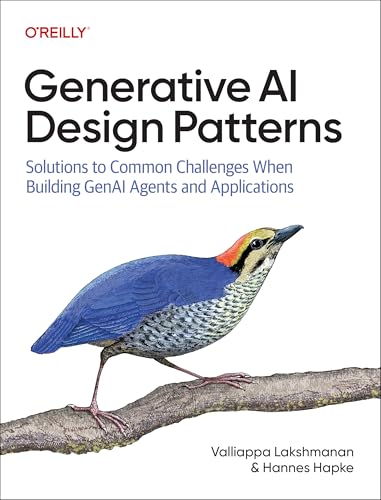
Generative AI Design Patterns: Solutions to Common Challenges When Building GenAI Agents and Applications
As an affiliate, we earn on qualifying purchases.
As an affiliate, we earn on qualifying purchases.
Background
Recent years have seen rapid growth in AI agent development, with tools like GitHub Copilot and Claude Code gaining widespread adoption. Despite this, there has been a lack of formalized, standardized patterns guiding their design. The emergence of dedicated reference sites and pattern frameworks, such as the one discussed on Hacker News, reflects an industry effort to codify best practices. Previously, many developers relied on ad hoc or platform-specific solutions; now, there is a push toward tool-agnostic, reusable patterns that can be applied across different AI systems.
“Having a set of well-defined agent patterns helps us avoid common pitfalls and accelerates development, especially when working with multiple tools.”
— Hacker News discussion participant
“Standardized agent design principles can improve the security and predictability of AI systems, which is critical as these agents become more embedded in workflows.”
— AI researcher involved in pattern development
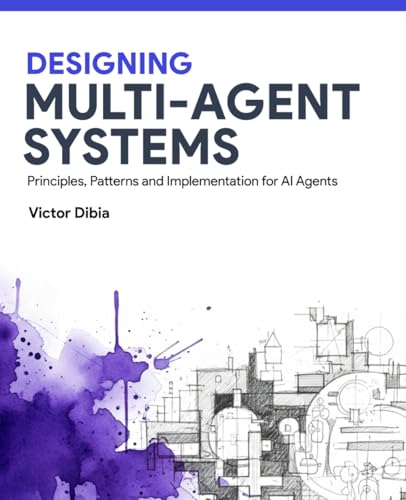
Designing Multi-Agent Systems: Principles, Patterns, and Implementation for AI Agents
As an affiliate, we earn on qualifying purchases.
As an affiliate, we earn on qualifying purchases.
What Remains Unclear
It is not yet clear how widely adopted these patterns will become or how they will influence industry standards over time. The effectiveness of the proposed anti-patterns and their integration into existing development workflows remain under discussion, with ongoing efforts to validate and refine these frameworks.

The Agentic AI Bible: The Complete and Up-to-Date Guide to Design, Develop, and Scale Goal-Driven, LLM-Powered Agents that Think, Execute and Evolve
As an affiliate, we earn on qualifying purchases.
As an affiliate, we earn on qualifying purchases.
What’s Next
Next steps include broader community validation of these patterns, integration into development tools, and formalization into industry standards. Developers and organizations are expected to experiment with these frameworks and provide feedback to improve their robustness and applicability.

AI-Assisted Coding: A Practical Guide to Boosting Software Development with ChatGPT, GitHub Copilot, Ollama, Aider, and Beyond (Rheinwerk Computing)
As an affiliate, we earn on qualifying purchases.
As an affiliate, we earn on qualifying purchases.
Key Questions
What are agent patterns in AI development?
Agent patterns are structured design principles and best practices that guide the development of AI agents, focusing on aspects like architecture, behavior, and anti-patterns to avoid common pitfalls.
Why are these patterns important now?
As AI agents become more integrated into critical workflows, standardized patterns help improve their reliability, security, and maintainability, which is vital for trust and scalability.
Are these patterns tool-specific?
No, the patterns discussed are tool-agnostic, meaning they can be applied across different AI development platforms and frameworks.
Will adopting these patterns require significant changes?
Implementation may vary, but the goal is to provide flexible, reusable principles that can enhance existing workflows without requiring complete overhauls.



![Thrive Infinite — solid brand name. Side note: more clients now ask Claude/ChatGPT "find me a coach for [their thing]" before they ever browse a site. Free 30-sec scan that shows what AI agents actually see when they look at you. Vid below.](https://geeksalad.org/wp-content/uploads/2026/05/thrive-infinite-solid-brand-name-side-note-more-clients-now-ask-claude-chatgpt-f-featured-560x300.jpg)