TL;DR

Get the latest gadgets delivered free with Prime
- Fast, free delivery on millions of items
- Prime Video, Amazon Music and more included
- Member-only deals all year
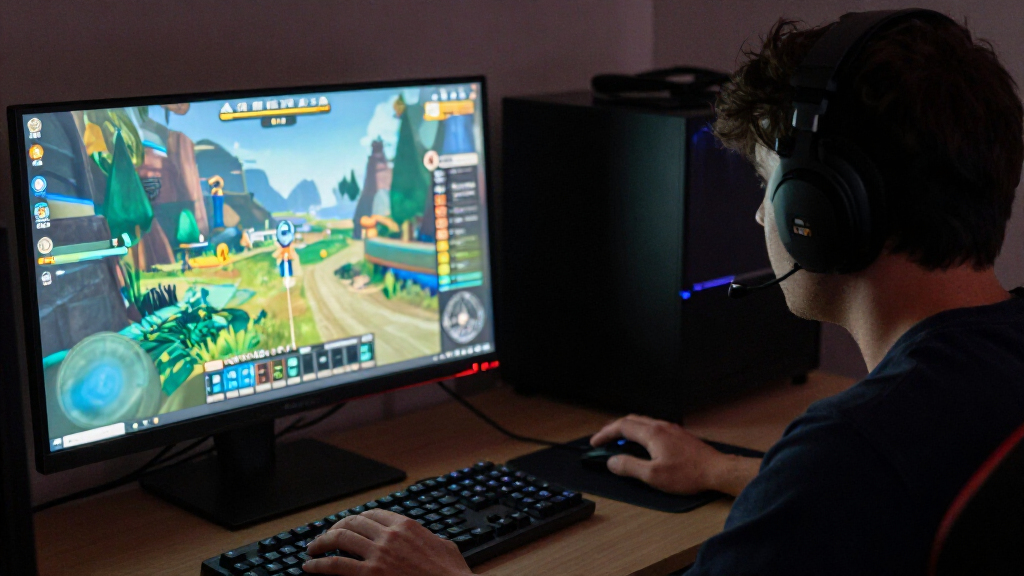
Easy Fox says the AI-powered driving game demo Teach My Little Sister How to Drive costs about $1,000 a day to operate after player numbers grew more than twentyfold over the past month. The four-person team has taken out a bank loan to support the demo but has not decided whether it will close it early.
Developer Easy Fox says it is spending about $1,000 a day to keep the demo of Teach My Little Sister How to Drive running, after a surge in players drove up the cost of its AI-powered characters. The four-person studio has taken out a bank loan to support the demo and says it may have to close it earlier than planned, though no decision has been made.
Easy Fox said the number of demo players increased more than twentyfold over the past month, according to a developer statement cited by FRVR and reported by IGN. The studio said the growth also raised operating costs considerably. The report puts the current expense of running the demo at $1,000 per day.
The game uses Google Gemini and ChatGPT to run a dynamic non-player character who responds to players’ driving instructions and can react or disobey. Each interaction requires requests to AI models, whose services charge according to usage that can include tokens. The developer said the combined cost of supporting a large player base led it to take out a loan; it did not say that any one player was unusually expensive to serve.
Easy Fox said the demo is still operating and that the team would like to keep it available. For the eventual paid release, it plans to include anticipated AI usage in the game’s price, rather than bill buyers separately for their individual token use. The studio is also exploring whether players with sufficiently capable computers could use local AI models instead.
AI Usage Shapes the Game’s Price
The situation shows how a game that depends on a hosted generative-AI service can face costs that grow with play. Traditional game distribution does not usually require a developer to pay a model provider for each conversational interaction after a player buys a copy. In this case, Easy Fox says the popularity of its demo has brought substantial ongoing expenses, creating a tension between keeping it accessible and covering its operating bill.
That cost structure could affect both the demo’s availability and the price of the full game. Easy Fox has said it intends to bundle expected AI usage into the purchase price, but it has not disclosed a price, usage assumptions, or how it would handle costs if players use the game more heavily than expected. Its proposed local-model option could reduce reliance on paid services for some users, although the studio has not provided technical details or a release timetable.
AI-powered driving game controller
As an affiliate, we earn on qualifying purchases.
As an affiliate, we earn on qualifying purchases.
A Demo Built Around AI Responses
Teach My Little Sister How to Drive is a driving-instruction simulation built around a generative-AI character whose responses change with player input. Its demo launched in February 2026, according to the report. The game later drew attention from streamers, including thinknoodles, which the source identifies as part of the rise in interest.
The development follows a broader discussion in games about the costs and use of generative AI. The source report cites separate examples of high AI-token bills at other companies, but those cases are not evidence of Easy Fox’s own expenses. The specific figures and statements here concern this game’s demo and are attributed to the developer or to IGN’s account of its statements.
“Over the past month, the number of demo players has grown more than twentyfold.”
— Easy Fox, in a statement cited by FRVR
As an affiliate, we earn on qualifying purchases.
Demo Closure Is Still Undecided
Easy Fox has not said how long the loan will cover the demo, whether the $1,000 daily expense is a fixed or recent average, or how that figure breaks down between model providers and other costs. The report does not specify the demo’s total player count, the number of AI requests per player, or the models and pricing arrangements used for each interaction.
The studio has warned that financial pressure may lead to an early closure, but it has not announced a shutdown date or confirmed that the demo will close. The price and launch date of the paid version, along with the availability and requirements of local-model support, also remain unannounced in the source material.
As an affiliate, we earn on qualifying purchases.
Pricing and Demo Plans Ahead
For now, Easy Fox says it wants to continue operating the demo, while acknowledging that costs could force an earlier closure. Players should watch for a direct update from the developer on whether the demo will remain available and when the full release is expected.
The next details likely to clarify the game’s longer-term plan are its paid-release price and how the studio estimates AI usage when setting that price. The developer has also said it is investigating local AI support for players with capable PCs, but has not set a date for a decision or implementation.
As an affiliate, we earn on qualifying purchases.
Key Questions
Why does the demo cost so much to run?
The game uses Google Gemini and ChatGPT to generate responses from its in-game character. Those interactions involve AI requests that can incur usage-based charges, and Easy Fox says the larger player base has raised the total bill.
Has Easy Fox decided to shut down the demo?
No. The developer says the demo is still running and that it has not decided to close it early, although it has warned that financial pressure could force that outcome.
Will players pay for tokens separately in the full game?
Easy Fox says it plans to include expected AI usage in the paid game’s price. It says players will not be charged separately for their individual token use after buying the game.
Could the game run AI locally on a player’s computer?
The studio says it is looking into support for local AI models for players with sufficiently capable PCs. It has not announced which models it might use or when that option could be available.
Source: fediverse
Halloween Picks
halloween
As an affiliate, we earn on qualifying purchases.