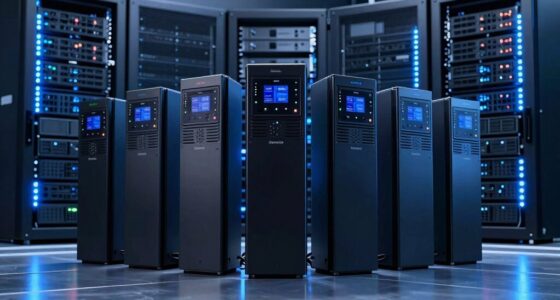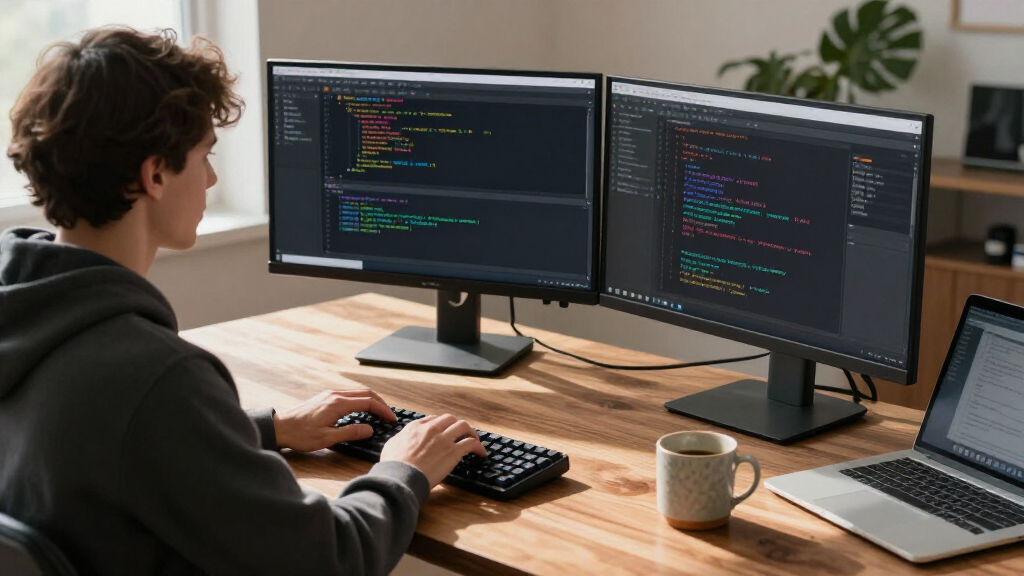
The best AI developer workstations balance local model capacity, accelerator performance, memory, software compatibility, and room to grow. My best overall pick is the GMKtec EVO-X3, whose Ryzen AI Max+ 395, 128GB of LPDDR5X memory, and 2TB SSD make a strong compact development setup. For NVIDIA-focused workflows, the MSI EdgeXpert AI Mini Desktop and ASUS Ascent GX10 stand out with GB10 Grace Blackwell hardware, while the Dell Pro Max Tower T2 offers a different path for buyers who need a workstation form factor and discrete graphics. The main tradeoffs are integrated versus discrete acceleration, unified memory versus GPU VRAM, and compactness versus upgrade options. Read on for the full comparison, selection criteria, and guidance on matching a system to your models and tools.

Get the latest gadgets delivered free with Prime
- Fast, free delivery on millions of items
- Prime Video, Amazon Music and more included
- Member-only deals all year
Complete the kit
Key Takeaways
- 128GB memory is a recurring advantage among the compact Ryzen AI Max+ 395 systems, but matching models to usable memory still matters more than choosing by capacity alone.
- NVIDIA GB10 systems serve a distinct role: the MSI EdgeXpert and ASUS Ascent GX10 are aimed at NVIDIA-centered local AI workflows rather than general-purpose mini-PC value.
- Compact systems dominate this lineup, while the Dell Pro Max Tower T2 and Andromeda Insights tower-style PC offer alternatives for buyers prioritizing discrete graphics or a fuller desktop format.
- Several entries are near-duplicates or repeated models, including two GMKtec EVO-X3 listings and two AMD Ryzen AI Halo listings, so buyers should compare exact configurations rather than assume every listing is a different workstation.
- Memory architecture and software stack separate the picks: large shared-memory configurations can suit experimentation, while dedicated NVIDIA or Radeon graphics may better fit workloads that depend on specific accelerator support.
| GMKtec EVO-X3 Mini PC with AMD Ryzen AI Max+ 395, 128GB LPDDR5X, and 2TB PCIe 4.0 SSD |  | Best for Expandable Local AI | Processor: AMD Ryzen AI Max+ 395, 16 cores and 32 threads, up to 5.1GHz | AI performance: Up to 126 TOPS; XDNA 2 NPU up to 50 TOPS | Graphics: AMD Radeon 8060S, RDNA 3.5, 40 compute units, up to 2900MHz | VIEW LATEST PRICE | See Our Full Breakdown |
| HP ZGX G1n Mini Workstation |  | Best for Large-Model Development | Processor: ARM-based Cortex X925, 10 cores | Processor speed: 3GHz base, up to 3.8GHz turbo | AI hardware: NVIDIA GB10 Grace Blackwell Superchip; 1,000 TOPS FP4 AI performance | VIEW LATEST PRICE | See Our Full Breakdown |
| MSI EdgeXpert AI Mini Desktop with NVIDIA GB10 Grace Blackwell |  | Best Compact AI Workstation | Processor: 20-core Arm CPU | AI architecture: NVIDIA GB10 Grace Blackwell | AI performance: Up to 1,000 TOPS | VIEW LATEST PRICE | See Our Full Breakdown |
| ASUS Ascent GX10 Mini PC with NVIDIA GB10 Superchip and 128GB Memory |  | Best for Paired-System Scaling | AI processor: NVIDIA GB10 Grace Blackwell Superchip | AI performance: 1 petaFLOP | Memory: 128GB | VIEW LATEST PRICE | See Our Full Breakdown |
| MINISFORUM MS-S1 Max Mini Workstation, AMD Ryzen AI Max+ 395, 64GB LPDDR5 RAM, 2TB SSD |  | Best for Multi-Display Connectivity | Processor: AMD Ryzen AI Max+ 395, 16 cores and 32 threads, up to 5.1GHz | AI performance: Up to 126 TOPS; NPU up to 50 TOPS | Graphics: AMD Radeon 8060S | VIEW LATEST PRICE | See Our Full Breakdown |
| GMKtec EVO-X2 Mini PC with AMD Ryzen AI Max+ 395, 128GB RAM, and 1TB SSD |  | Best for Flexible Local AI Development | Processor: AMD Ryzen AI Max+ 395, 16 cores and 32 threads, up to 5.1GHz | Graphics: Radeon 8060S integrated graphics, 40 RDNA 3.5 compute units | NPU: Up to 50 TOPS | VIEW LATEST PRICE | See Our Full Breakdown |
| AMD Ryzen AI Halo Personal AI Desktop Computer |  | Best for Compact Local Model Prototyping | Processor: AMD Ryzen AI Max+ 395, 16 cores and 32 threads | Graphics: AMD Radeon 8060S integrated graphics, 40 RDNA 3.5 compute units | NPU: AMD XDNA 2, up to 50 TOPS | VIEW LATEST PRICE | See Our Full Breakdown |
| NVIDIA DGX Spark Personal AI Desktop Supercomputer |  | Best for NVIDIA AI Software Workflows | Processor: NVIDIA GB10 Grace Blackwell Superchip, 20 processors listed | Processor speed: 3.8GHz | AI performance: Up to 1 PFLOP FP4 | VIEW LATEST PRICE | See Our Full Breakdown |
| HP Z2 Mini G1a Workstation Desktop, Ryzen AI Max PRO 380, 32GB RAM, Radeon 8040S, 1TB–2TB SSD, Windows 11 Pro |  | Best for Professional Windows Workflows | Processor: AMD Ryzen AI Max PRO 380, 6 cores, up to 4.9GHz | Graphics: AMD Radeon 8040S | Memory: 32GB LPDDR5X at 8533 MT/s | VIEW LATEST PRICE | See Our Full Breakdown |
| GEEKOM A9 Mega Mini PC with AMD Ryzen AI Max+ 395, 128GB RAM, and 2TB SSD |  | Best for High-Speed Networked AI Work | Processor: AMD Ryzen AI Max+ 395, up to 5.1GHz | Graphics: AMD Radeon 8060S | Memory: 128GB LPDDR5X at 8000 MT/s | VIEW LATEST PRICE | See Our Full Breakdown |
| Dell Pro Max Tower T2 FCT2250 Workstation, Intel Core Ultra 7 265, NVIDIA RTX 2000 Ada 16GB |  | Best for Certified-Style Desktop Workflows | Processor: Intel Core Ultra 7 265 vPro, 20 cores, up to 5.3GHz | Graphics: NVIDIA RTX 2000 Ada, 16GB GDDR6 | Memory: 64GB DDR5, 4800MHz | VIEW LATEST PRICE | See Our Full Breakdown |
| Andromeda Insights AI Workstation and Gaming PC with AMD Radeon AI Pro R9700, Ryzen 5 9600X, 32GB DDR5, and 1TB SSD |  | Best for Dedicated-GPU Value | Processor: AMD Ryzen 5 9600X, 6 cores and 12 threads, up to 5.4GHz | Graphics: AMD Radeon AI Pro R9700, 32GB VRAM | Memory: 32GB DDR5-6000; supports up to 256GB | VIEW LATEST PRICE | See Our Full Breakdown |
| AMD Ryzen AI Halo Personal AI Desktop Computer | | Best for Linux Local-Model Development | Processor: AMD Ryzen AI Max+ 395, 16 cores and 32 threads, up to 5.1GHz | Graphics: Integrated AMD Radeon 8060S, 40 RDNA 3.5 compute units | NPU: AMD XDNA 2, up to 50 TOPS | VIEW LATEST PRICE | See Our Full Breakdown |
| BOSGAME M5 Mini PC with AMD Ryzen AI Max+ 395, 128GB RAM, 2TB SSD |  | Best for Multi-Display Windows Development | Processor: AMD Ryzen AI Max+ 395, 16 cores and 32 threads, up to 5.1GHz | Graphics: Integrated AMD Radeon 8060S, 40 RDNA 3.5 compute units | Memory: 128GB LPDDR5X-8000 unified memory | VIEW LATEST PRICE | See Our Full Breakdown |
| GMKtec EVO-X3 AI Mini PC with AMD Ryzen AI Max+ 395, 128GB LPDDR5X, and 2TB PCIe 4.0 SSD |  | Best for External-GPU Expansion | Processor: AMD Ryzen AI Max+ 395, 16 cores and 32 threads, up to 5.1GHz | Graphics: Integrated AMD Radeon RX 8060S, 40 RDNA 3.5 CUs | AI performance: Up to 126 TOPS | VIEW LATEST PRICE | See Our Full Breakdown |
| AI developer workstation | Memory | Processor | Storage | Graphics |
|---|---|---|---|---|
| GMKtec EVO-X3 Mini PC with AMD | 128GB LPDDR5X, up to 8000MT/s | AMD Ryzen AI Max+ 395, 16 cores and 32 threads, up to 5.1GHz | 2TB PCIe 4.0 SSD | AMD Radeon 8060S, RDNA 3.5, 40 compute units, up to 2900MHz |
| HP ZGX G1n Mini Workstation | 128GB coherent unified memory | ARM-based Cortex X925, 10 cores | 4TB SSD | — |
| MSI EdgeXpert AI Mini Desktop | 128GB LPDDR5X unified memory | 20-core Arm CPU | 4TB PCIe Gen5 NVMe SSD; up to 10,000MB/s | — |
| ASUS Ascent GX10 Mini PC with | 128GB | — | — | — |
| MINISFORUM MS-S1 Max Mini Work | 64GB LPDDR5-8000 | AMD Ryzen AI Max+ 395, 16 cores and 32 threads, up to 5.1GHz | 2TB M.2 2280 PCIe 4.0 SSD | AMD Radeon 8060S |
| GMKtec EVO-X2 Mini PC with AMD | 128GB onboard LPDDR5X-8000 | AMD Ryzen AI Max+ 395, 16 cores and 32 threads, up to 5.1GHz | 1TB M.2 2280 PCIe 4.0 NVMe SSD; two additional M.2 2280 PCIe 4.0 x4 slots | Radeon 8060S integrated graphics, 40 RDNA 3.5 compute units |
| AMD Ryzen AI Halo Personal AI | 128GB LPDDR5x unified memory at 8000 MT/s; listed maximum 192GB | AMD Ryzen AI Max+ 395, 16 cores and 32 threads | 2TB M.2 SSD | AMD Radeon 8060S integrated graphics, 40 RDNA 3.5 compute units |
| NVIDIA DGX Spark Personal AI D | 128GB unified DDR5 | NVIDIA GB10 Grace Blackwell Superchip, 20 processors listed | 4TB self-encrypting NVMe SSD | — |
| HP Z2 Mini G1a Workstation Des | 32GB LPDDR5X at 8533 MT/s | AMD Ryzen AI Max PRO 380, 6 cores, up to 4.9GHz | 1TB or 2TB M.2 NVMe PCIe SSD | AMD Radeon 8040S |
| GEEKOM A9 Mega Mini PC with AM | 128GB LPDDR5X at 8000 MT/s | AMD Ryzen AI Max+ 395, up to 5.1GHz | 2TB PCIe Gen4 NVMe SSD; dual M.2 slots, up to 8TB across drives | AMD Radeon 8060S |
| Dell Pro Max Tower T2 FCT2250 | 64GB DDR5, 4800MHz | Intel Core Ultra 7 265 vPro, 20 cores, up to 5.3GHz | 2TB SSD | NVIDIA RTX 2000 Ada, 16GB GDDR6 |
| Andromeda Insights AI Workstat | 32GB DDR5-6000; supports up to 256GB | AMD Ryzen 5 9600X, 6 cores and 12 threads, up to 5.4GHz | 1TB PCIe Gen4 NVMe SSD | AMD Radeon AI Pro R9700, 32GB VRAM |
| AMD Ryzen AI Halo Personal AI | 128GB LPDDR5x unified memory, 8000 MT/s, 256GB/s bandwidth | AMD Ryzen AI Max+ 395, 16 cores and 32 threads, up to 5.1GHz | 2TB M.2 SSD | Integrated AMD Radeon 8060S, 40 RDNA 3.5 compute units |
| BOSGAME M5 Mini PC with AMD Ry | 128GB LPDDR5X-8000 unified memory | AMD Ryzen AI Max+ 395, 16 cores and 32 threads, up to 5.1GHz | 2TB NVMe PCIe 4.0 SSD; second M.2 2280 PCIe 4.0 slot | Integrated AMD Radeon 8060S, 40 RDNA 3.5 compute units |
| GMKtec EVO-X3 AI Mini PC with | 128GB LPDDR5X, up to 8000 MT/s | AMD Ryzen AI Max+ 395, 16 cores and 32 threads, up to 5.1GHz | 2TB PCIe 4.0 SSD; two M.2 2280 PCIe 4.0 x4 slots | Integrated AMD Radeon RX 8060S, 40 RDNA 3.5 CUs |
More Details on Our Top Picks
GMKtec EVO-X3 Mini PC with AMD Ryzen AI Max+ 395, 128GB LPDDR5X, and 2TB PCIe 4.0 SSD
The GMKtec EVO-X3 suits developers who want a powerful general-purpose mini workstation that can also run local AI workloads. Its 16-core Ryzen AI Max+ 395 and 128GB of onboard LPDDR5X give it more memory headroom than the 64GB MINISFORUM MS-S1 Max, which can matter when keeping larger models or several development tools in memory. The integrated Radeon 8060S graphics also make it a more balanced choice for graphics work than an AI-focused system built around a specialized accelerator.
Its standout upgrade path is OCuLink external GPU expansion, though connecting or disconnecting an eGPU requires shutting down the PC. Memory is soldered, so the 128GB configuration cannot be expanded later. The listed three-fan cooling system and broad USB4, Wi-Fi 7, and 2.5GbE connectivity add flexibility, but the available product information does not give full cooling details. Compared with the HP ZGX G1n, this is less specialized for large-model AI pipelines, but more versatile as a compact workstation.
Pros:- 16-core processor and Radeon 8060S graphics balance development, creative, and local AI work
- 128GB LPDDR5X provides room for larger workloads than the 64GB MINISFORUM MS-S1 Max
- OCuLink allows external GPU expansion
- HDMI 2.1, USB4, Wi-Fi 7, and 2.5GbE support varied desk and network setups
Cons:- Onboard memory cannot be upgraded
- OCuLink devices cannot be connected or disconnected while the PC is powered on
- The available product information does not fully describe cooling performance
Best for: Developers who want 128GB memory for local models and creative workloads, plus the option to add an external GPU for heavier graphics or compute tasks.
Not ideal for: Buyers who need upgradeable system memory, frequently hot-swap an external GPU, or want a workstation with fully documented cooling performance.
- Processor:AMD Ryzen AI Max+ 395, 16 cores and 32 threads, up to 5.1GHz
- AI performance:Up to 126 TOPS; XDNA 2 NPU up to 50 TOPS
- Graphics:AMD Radeon 8060S, RDNA 3.5, 40 compute units, up to 2900MHz
- Memory:128GB LPDDR5X, up to 8000MT/s
- Storage:2TB PCIe 4.0 SSD
- External GPU expansion:OCuLink PCIe Gen4 x4
- Display output:HDMI 2.1 and USB4; dual displays and up to 8K output
- Networking:Wi-Fi 7, Bluetooth 5.4, 2.5G LAN
Our verdict“Choose the EVO-X3 if you want a compact, well-rounded AMD workstation with 128GB memory and a practical external GPU path.”
HP ZGX G1n Mini Workstation
For developers whose workstation needs center on running and refining large models locally, the HP ZGX G1n offers a more purpose-built setup than the AMD-based GMKtec EVO-X3. Its NVIDIA GB10 Grace Blackwell Superchip, 128GB coherent unified memory, and support for models up to 200 billion parameters target AI prototyping, fine-tuning, and inference rather than general desktop versatility. HP ZGX Toolkit and DGX OS are intended to give those workflows a prepared software environment.
The 4TB SSD and listed 10GbE and 200Gb networking make it a strong fit for handling sizable model files and connected development systems. That focus comes with costs in flexibility: its ARM-based 10-core CPU is a less familiar fit for some existing x86 development stacks, and the product information does not identify its processor series. At a listed 240 watts, it also draws more power than a simple low-power mini PC. Compared with the MSI EdgeXpert, the HP has more storage and a stated 200-billion-parameter model target, while both use GB10 hardware and DGX OS.
Pros:- GB10 Grace Blackwell hardware targets demanding local AI workloads
- 128GB coherent unified memory and a stated model capacity up to 200 billion parameters
- 4TB SSD provides substantial space for model files and development assets
- HP ZGX Toolkit and DGX OS are aimed at AI development workflows
Cons:- ARM-based CPU may not suit every existing x86 toolchain or application
- Listed power consumption is 240 watts
- Product information does not identify the processor series
Best for: AI engineers and research teams seeking a compact DGX OS system for local prototyping, inference, or fine-tuning of large models.
Not ideal for: Developers who need broad x86 software compatibility, a low-power everyday desktop, or full technical clarity about the CPU platform before buying.
- Processor:ARM-based Cortex X925, 10 cores
- Processor speed:3GHz base, up to 3.8GHz turbo
- AI hardware:NVIDIA GB10 Grace Blackwell Superchip; 1,000 TOPS FP4 AI performance
- Memory:128GB coherent unified memory
- Storage:4TB SSD
- Networking:10 Gigabit Ethernet and 200 Gigabit networking
- Operating system:DGX OS
- Power consumption:240 watts
- Dimensions and weight:10.6 x 8.5 x 5.6 inches; 2.8 pounds
Our verdict“Pick the HP ZGX G1n when large-model work and a prepared NVIDIA AI software environment matter more than general-purpose compatibility.”
MSI EdgeXpert AI Mini Desktop with NVIDIA GB10 Grace Blackwell
The MSI EdgeXpert packs a dedicated AI development platform into a notably small footprint: its listed dimensions are 5.94 x 5.94 x 2.05 inches. The GB10 Grace Blackwell architecture, 128GB unified memory, and preinstalled NVIDIA DGX OS make it a closer match for model development and inference than a general-purpose mini PC such as the MINISFORUM MS-S1 Max. A 4TB PCIe Gen5 SSD also gives developers room for model files and fast local project storage.
That specialization is also the main limitation. An Arm-based system and DGX OS may not fit every existing desktop workflow, while its AI hardware can be unnecessary for routine coding or conventional office tasks. The MSI shares GB10 hardware and 128GB memory with the HP ZGX G1n, but its compact dimensions and stated 20-core Arm CPU are its clearest differentiators; the HP lists a 200-billion-parameter target and 10GbE alongside its networking. At 240 watts, the EdgeXpert is compact in size, not a low-power choice.
Pros:- Very compact chassis suits crowded desks and edge deployments
- GB10 architecture and 128GB unified memory support local AI development
- 4TB PCIe Gen5 SSD provides fast, roomy local storage
- NVIDIA DGX OS is preinstalled for an AI-focused workflow
Cons:- Specialized AI hardware may be unnecessary for general desktop tasks
- Arm-based platform may require checking compatibility with existing development tools
- Listed power consumption is 240 watts
Best for: AI developers or researchers who need a small-footprint DGX OS system with unified memory and fast local storage for model work.
Not ideal for: Buyers focused on conventional coding, x86-specific software, or a low-power desktop rather than NVIDIA AI development.
- Processor:20-core Arm CPU
- AI architecture:NVIDIA GB10 Grace Blackwell
- AI performance:Up to 1,000 TOPS
- Memory:128GB LPDDR5X unified memory
- Memory bandwidth:Up to 273GB/s
- Storage:4TB PCIe Gen5 NVMe SSD; up to 10,000MB/s
- Operating system:NVIDIA DGX OS, Ubuntu Linux-based
- Connectivity:Wi-Fi 7, Bluetooth 5.3, USB4 Type-C, Ethernet
- Dimensions and weight:5.94 x 5.94 x 2.05 inches; 2.7 pounds
Our verdict“Choose the EdgeXpert if you want a particularly small GB10-based workstation for NVIDIA-oriented local AI development.”
ASUS Ascent GX10 Mini PC with NVIDIA GB10 Superchip and 128GB Memory
The ASUS Ascent GX10 is the clearest pick here for developers planning a compact, linked AI setup. Its NVIDIA GB10 Grace Blackwell Superchip and 128GB memory target local development and inference, while NVLink-C2C and ConnectX-7 are presented as the high-speed links for communication and dual-system stacking. Compared with the GMKtec EVO-X3, the GX10 is more narrowly focused on NVIDIA AI workflows; the GMKtec offers integrated Radeon graphics and OCuLink expansion for a broader workstation role.
The GX10’s main distinction is also conditional: stacking requires a second GX10, so its scaling path depends on buying and managing a matching system. The product data gives no storage capacity, processor core count, operating system, or physical dimensions, making it harder to compare its everyday workstation fit with the MSI EdgeXpert, which lists a 4TB Gen5 SSD and compact measurements. I’d shortlist the ASUS when its interconnect features match a planned multi-system workflow, not simply for its headline AI performance.
Pros:- GB10 Grace Blackwell hardware is aimed at local AI development and inference
- 128GB memory supports substantial model workloads
- NVLink-C2C and ConnectX-7 support the stated high-speed communication setup
- Designed to support stacking with a second GX10
Cons:- Dual-system stacking requires purchasing a second GX10
- Available product data does not specify storage capacity or operating system
- Processor core count and physical dimensions are not provided
Best for: AI developers building a private on-device inference setup who plan to link two compatible systems for additional capacity or throughput.
Not ideal for: Buyers seeking a fully specified standalone workstation, general-purpose desktop, or expansion plan that does not involve a second GX10.
- AI processor:NVIDIA GB10 Grace Blackwell Superchip
- AI performance:1 petaFLOP
- Memory:128GB
- Networking:NVIDIA ConnectX-7
- Interconnect:NVIDIA NVLink-C2C
- Form factor:Mini PC
Our verdict“Choose the Ascent GX10 if paired-system NVIDIA AI development is your goal and you can work around the missing configuration details.”
MINISFORUM MS-S1 Max Mini Workstation, AMD Ryzen AI Max+ 395, 64GB LPDDR5 RAM, 2TB SSD
The MINISFORUM MS-S1 Max is a strong fit for developers who value ports, fast networking, and storage flexibility over maximum memory capacity. Its Ryzen AI Max+ 395 and Radeon 8060S share the same core platform as the GMKtec EVO-X3, but this configuration has 64GB of memory instead of 128GB. That gap matters for local AI work: projects that fit comfortably on the GMKtec may need smaller models or tighter memory management here.
In exchange, the MS-S1 Max offers a distinctive set of workstation connections: five video outputs, dual 10Gb Ethernet, and an internal PCIe x16 slot operating at PCIe 4.0 x4. A second SSD slot supports added storage, while six heat pipes and two fans are specified for cooling. Memory is fixed at 64GB, however, and the product data omits dimensions and weight. Compared with the GMKtec, this is the better-connected option for multi-display and wired-network setups, but the less suitable choice for memory-hungry local models.
Pros:- Five video outputs support multi-display workstation layouts
- Dual 10Gb Ethernet offers high-speed wired connectivity
- Second M.2 slot supports additional storage up to 8TB
- Internal PCIe x16 slot and six-heat-pipe cooling add practical workstation features
Cons:- 64GB memory is not expandable and gives less room for large local models than the GMKtec EVO-X3
- Product information does not specify dimensions or weight
Best for: Developers running several displays or high-speed wired networks who want an AMD mini workstation with internal storage and PCIe expansion.
Not ideal for: AI developers whose workloads depend on 128GB of memory, or buyers who need chassis dimensions before planning a desk or rack fit.
- Processor:AMD Ryzen AI Max+ 395, 16 cores and 32 threads, up to 5.1GHz
- AI performance:Up to 126 TOPS; NPU up to 50 TOPS
- Graphics:AMD Radeon 8060S
- Memory:64GB LPDDR5-8000
- Storage:2TB M.2 2280 PCIe 4.0 SSD
- Additional storage:One additional PCIe 4.0 SSD slot, up to 8TB; RAID 0 and RAID 1 supported
- Video outputs:One HDMI, two USB4, and two USB4 V2; HDMI supports up to 8K at 60Hz
- Networking:Dual 10Gb Ethernet, Wi-Fi 7, Bluetooth 5.4
- Expansion and cooling:Internal PCIe x16 slot operating at PCIe 4.0 x4; copper substrate, six heat pipes, two fans
Our verdict“Pick the MS-S1 Max if display, network, and storage connections matter more to your workflow than 128GB of memory.”
GMKtec EVO-X2 Mini PC with AMD Ryzen AI Max+ 395, 128GB RAM, and 1TB SSD
The GMKtec EVO-X2 brings a 16-core Ryzen AI Max+ 395 and 128GB of unified memory into a compact desktop, giving developers room to run memory-hungry local models alongside everyday coding and creative tools. Compared with the HP Z2 Mini G1a, its larger memory pool and stronger integrated graphics are a better fit for AI experimentation; the HP instead suits users prioritizing a professional workstation setup with Thunderbolt 4. Dual USB4, 2.5GbE, Wi-Fi 7, and support for four displays make the EVO-X2 adaptable to a multi-monitor desk or connected lab. Its main limitation is fixed onboard memory, so there is no described path to expand RAM later. The included 1TB SSD is a modest starting point for model files, though two additional M.2 slots leave room to add storage.
Pros:- 16-core processor, Radeon 8060S graphics, and an NPU support varied local development workloads.
- 128GB of onboard LPDDR5X memory gives compatible AI workloads a large shared pool.
- Two USB4 ports and support for up to four displays suit multi-device, multi-screen desks.
- Two additional M.2 slots allow substantial storage expansion.
Cons:- Onboard memory is not described as upgradeable.
- The included 1TB SSD may fill quickly with model weights and project assets.
- Extra SSDs must be purchased separately.
Best for: AI developers who want a compact Windows workstation with 128GB of shared memory, strong integrated graphics, and room to add SSD storage.
Not ideal for: Buyers who need upgradeable system memory or want several terabytes of storage included from the start.
- Processor:AMD Ryzen AI Max+ 395, 16 cores and 32 threads, up to 5.1GHz
- Graphics:Radeon 8060S integrated graphics, 40 RDNA 3.5 compute units
- NPU:Up to 50 TOPS
- Memory:128GB onboard LPDDR5X-8000
- Storage:1TB M.2 2280 PCIe 4.0 NVMe SSD; two additional M.2 2280 PCIe 4.0 x4 slots
- Display support:Up to four displays; HDMI 2.1 and DisplayPort 1.4 up to 8K at 60Hz
- Connectivity:Two USB4 ports up to 40Gbps, Wi-Fi 7, Bluetooth 5.4, and 2.5GbE
- Cooling and power modes:Vapor chamber, three heat pipes, two CPU fans, one system fan; 54W, 85W, and 120W modes
Our verdict“Choose the EVO-X2 if you want 128GB of memory and flexible SSD expansion in a small local-AI workstation.”
AMD Ryzen AI Halo Personal AI Desktop Computer
The Ryzen AI Halo focuses on local inference in a particularly small 6 × 6 × 2-inch chassis, pairing the Ryzen AI Max+ 395 with 128GB of unified memory. Its stated support for models up to 200 billion parameters makes it a candidate for developers exploring large-model workflows on a desktop rather than relying entirely on remote services. Compared with the GMKtec EVO-X2, the Halo includes a 2TB SSD and 10GbE, while the EVO-X2 offers dual USB4 and more detailed display connectivity. The listed 192GB maximum memory could matter to buyers planning bigger workloads, but the product information does not explain how to reach it. Its compact dimensions also leave less room for expansion than a larger workstation, and the listed video output is limited to HDMI 2.1b.
Pros:- 128GB unified memory is suited to compatible memory-intensive AI workloads.
- The product is specified to support models up to 200 billion parameters.
- 10GbE and Wi-Fi 7 provide fast wired and wireless networking.
- Included 2TB M.2 storage offers more capacity than the EVO-X2’s 1TB configuration.
Cons:- The route from 128GB to the listed 192GB maximum is not explained.
- The compact chassis may limit internal expansion.
- Only HDMI 2.1b is listed for video output.
Best for: Developers prototyping local inference who want a tiny desktop, 128GB of unified memory, and fast wired networking.
Not ideal for: Users who need clear RAM-upgrade instructions, broad display outputs, or expansion space for workstation add-ons.
- Processor:AMD Ryzen AI Max+ 395, 16 cores and 32 threads
- Graphics:AMD Radeon 8060S integrated graphics, 40 RDNA 3.5 compute units
- NPU:AMD XDNA 2, up to 50 TOPS
- Memory:128GB LPDDR5x unified memory at 8000 MT/s; listed maximum 192GB
- Memory bandwidth:256GB/s
- Storage:2TB M.2 SSD
- Operating system:Windows 11 Pro
- Networking and video:10GbE LAN, Wi-Fi 7, Bluetooth 5.4, HDMI 2.1b
- Dimensions:6 × 6 × 2 inches
Our verdict“Pick the Ryzen AI Halo for a small local-inference desktop with 10GbE, but skip it if you need clearly documented upgrades or varied display connections.”
NVIDIA DGX Spark Personal AI Desktop Supercomputer
The DGX Spark is the lineup’s clearest choice for developers who want an NVIDIA-based local AI platform rather than a general-purpose mini PC. Its GB10 Grace Blackwell system is specified for up to 1 PFLOP of FP4 performance, with 128GB unified memory and 4TB of self-encrypting NVMe storage. The included DGX OS and NVIDIA AI software stack distinguish it from the AMD-based GMKtec EVO-X2 and GEEKOM A9 Mega, which offer more conventional Windows desktop configurations. That software focus can make the Spark a better fit for NVIDIA-centric model development, while the listed specs give less detail on expansion and port variety than those mini PCs. Its compact build also may not suit users who expect desktop-style upgrades. I would choose it for the software ecosystem and integrated storage, not for maximum hardware flexibility.
Pros:- NVIDIA GB10 Grace Blackwell platform and DGX OS target AI-focused development.
- Up to 1 PFLOP FP4 performance is specified for AI workloads.
- 128GB unified memory supports large compatible models.
- 4TB self-encrypting NVMe storage provides substantial local project and model capacity.
Cons:- The compact system may offer fewer expansion options than a full-size desktop.
- The listed specifications give limited detail about connectivity and upgradeability.
- DGX OS may be a less natural fit for developers whose workflows depend on Windows.
Best for: AI engineers building or testing NVIDIA-oriented inference, fine-tuning, and analytics workflows on a compact local system.
Not ideal for: Developers who need clear internal upgrade paths, a Windows workstation, or detailed port and expansion choices.
- Processor:NVIDIA GB10 Grace Blackwell Superchip, 20 processors listed
- Processor speed:3.8GHz
- AI performance:Up to 1 PFLOP FP4
- Memory:128GB unified DDR5
- Storage:4TB self-encrypting NVMe SSD
- Operating system:NVIDIA DGX OS
- Connectivity:Bluetooth, Ethernet, HDMI, and USB
- Ports:Four USB ports and one HDMI port
- Dimensions and weight:9.5 × 9.5 × 6 inches; 1.2kg
Our verdict“Choose the DGX Spark if NVIDIA’s AI software stack is central to your work; choose an AMD mini PC if you want a more conventional Windows setup.”
HP Z2 Mini G1a Workstation Desktop, Ryzen AI Max PRO 380, 32GB RAM, Radeon 8040S, 1TB–2TB SSD, Windows 11 Pro
The HP Z2 Mini G1a takes a different path from the 128GB AI-focused systems: its Ryzen AI Max PRO 380, 32GB of memory, and Windows 11 Pro target professional CAD, modeling, rendering, and business work. For developers whose AI use is occasional or limited to smaller workloads, that workstation orientation and Thunderbolt 4 connectivity may matter more than a large unified-memory pool. Compared with the GMKtec EVO-X2, the HP has less listed memory and a less capable graphics configuration, so it is not my pick for running large local models. It does offer support for four monitors and a broad mix of USB and display connections. The key constraints are fixed 32GB memory and a listing that says the computer was resealed to upgrade the SSD, details buyers should weigh before choosing it.
Pros:- Windows 11 Pro and a Ryzen AI PRO processor suit business and professional workstation use.
- Two Thunderbolt 4 ports add fast peripheral and docking connectivity.
- Supports up to four monitors, with output listed up to 8K at 60Hz.
- Configurable 1TB or 2TB NVMe storage offers a choice of capacity.
Cons:- 32GB memory is not expandable beyond the listed configuration.
- Its memory capacity and Radeon 8040S graphics are less suited to large local AI workloads than the EVO-X2.
- The listing says the computer was resealed to upgrade the SSD.
Best for: Windows-based CAD and software professionals who want a compact workstation for standard development workloads and multi-monitor use.
Not ideal for: Developers planning large local AI models or workloads that need more than 32GB of non-expandable memory.
- Processor:AMD Ryzen AI Max PRO 380, 6 cores, up to 4.9GHz
- Graphics:AMD Radeon 8040S
- Memory:32GB LPDDR5X at 8533 MT/s
- Storage:1TB or 2TB M.2 NVMe PCIe SSD
- Operating system:Windows 11 Pro
- Ports:Two Thunderbolt 4, USB-C 3.2 Gen 2, five USB-A, two Mini DisplayPort 2.1, Ethernet, and audio combo jack
- Display support:Up to four monitors; up to 8K at 60Hz
- Wireless:Wi-Fi 7 and Bluetooth 5.4
- Dimensions and weight:7.87 × 6.61 × 3.37 inches; 5.1 pounds
Our verdict“Choose the HP for compact Windows professional work and Thunderbolt 4, not for memory-heavy local AI development.”
GEEKOM A9 Mega Mini PC with AMD Ryzen AI Max+ 395, 128GB RAM, and 2TB SSD
The GEEKOM A9 Mega combines the Ryzen AI Max+ 395 and Radeon 8060S with 128GB of LPDDR5X memory, but its standout distinction is dual 10GbE. That makes it appealing for developers moving datasets between a workstation and a fast local server or shared storage. Compared with the GMKtec EVO-X2, the A9 Mega includes twice the SSD capacity and faster listed wired networking; the EVO-X2 specifies two M.2 expansion slots and more detail about cooling and power modes. The GEEKOM also lists dual USB4, seven USB ports, and support for four displays, giving it a useful mix of desk connections. Its shared memory still has to serve both the processor and integrated GPU, so available capacity for other tasks can shrink during graphics-heavy AI work. The advertised model workflows also depend on compatible software and setup.
Pros:- Dual 10GbE and Wi-Fi 7 give it strong network options for dataset-heavy work.
- 128GB LPDDR5X memory and a 2TB PCIe Gen4 SSD provide substantial starting capacity.
- Supports up to four displays, including resolutions up to 8K.
- Dual USB4 and seven USB ports provide broad peripheral connectivity.
Cons:- GPU use draws from the shared memory pool, leaving less memory available for other tasks.
- Advertised AI workflows require compatible software and setup.
- The listed LPDDR5X memory is not described as upgradeable.
Best for: AI developers with a 10GbE network or fast shared storage who want a compact system with 128GB memory and 2TB onboard storage.
Not ideal for: Buyers who need dedicated graphics memory, fully specified AI software support, or independently upgradeable RAM.
- Processor:AMD Ryzen AI Max+ 395, up to 5.1GHz
- Graphics:AMD Radeon 8060S
- Memory:128GB LPDDR5X at 8000 MT/s
- Storage:2TB PCIe Gen4 NVMe SSD; dual M.2 slots, up to 8TB across drives
- Operating system:Windows 11 Pro
- Networking:Dual 10GbE and Wi-Fi 7
- Display support:Up to four displays, with output up to 8K
- Ports:Seven USB ports, two HDMI ports, and dual USB4
- Dimensions and warranty:5.32 × 5.2 × 1.8 inches; 3-year limited warranty
Our verdict“Pick the GEEKOM A9 Mega if fast wired networking and a larger included SSD matter more than dedicated graphics memory or RAM upgrades.”
Dell Pro Max Tower T2 FCT2250 Workstation, Intel Core Ultra 7 265, NVIDIA RTX 2000 Ada 16GB
The Dell Pro Max Tower T2 suits developers who need a traditional workstation with a dedicated GPU, substantial memory, and Windows 11 Pro. Its RTX 2000 Ada with 16GB VRAM offers a different path from the shared-memory design of the AMD Ryzen AI Halo Personal AI Desktop Computer: it gives graphics-heavy engineering and visualization work a discrete GPU, while the Halo offers far more unified memory for fitting larger local models. Dell’s 20-core processor, 64GB RAM, and 2TB SSD make this a capable starting configuration for coding alongside several demanding applications. Four-display support and extensive wired ports also suit fixed desks. The tradeoffs are meaningful: this upgraded unit has been resealed, includes no Wi-Fi or Bluetooth, and lacks a keyboard. Choose it over the compact AMD systems when discrete graphics and a conventional tower matter more than size or wireless convenience.
Pros:- RTX 2000 Ada provides 16GB of dedicated graphics memory.
- 20-core processor, 64GB DDR5, and 2TB SSD give demanding development workloads room to run.
- Supports up to four displays, including 8K at 60Hz.
- Broad wired connectivity includes Thunderbolt 4 and a DVD±RW drive.
Cons:- No Wi-Fi or Bluetooth; networking requires Ethernet or separate adapters.
- Resealed after memory and SSD upgrades, so buyers should account for the upgrade history.
- Keyboard is not included.
Best for: Windows-based developers and technical teams who need a discrete professional GPU, several displays, and wired workstation connectivity.
Not ideal for: Developers who need large unified-memory local models, built-in wireless networking, or a compact system; the AMD Ryzen AI Halo offers 128GB unified memory, while this Dell has no Wi-Fi or Bluetooth.
- Processor:Intel Core Ultra 7 265 vPro, 20 cores, up to 5.3GHz
- Graphics:NVIDIA RTX 2000 Ada, 16GB GDDR6
- Memory:64GB DDR5, 4800MHz
- Storage:2TB SSD
- Operating system:Windows 11 Pro 64-bit
- Display support:Up to four displays; 8K at 60Hz
- Networking:RJ-45 Ethernet; no Wi-Fi or Bluetooth
- Ports:3 USB-C, 1 Thunderbolt 4, 6 USB-A, 2 DisplayPort 1.4a
Our verdict“Choose the Dell if you want a Windows tower with discrete professional graphics and broad wired expansion, not a compact large-model workstation.”
Andromeda Insights AI Workstation and Gaming PC with AMD Radeon AI Pro R9700, Ryzen 5 9600X, 32GB DDR5, and 1TB SSD
The Andromeda Insights AI Workstation makes a case for developers who want a discrete AI-oriented GPU without stepping up to a tower like the Dell Pro Max Tower T2. Its Radeon AI Pro R9700 with 32GB VRAM is the standout: that graphics memory can accommodate larger GPU workloads than the Dell’s 16GB RTX 2000 Ada, although the supplied data does not establish which card is faster across specific frameworks. The six-core Ryzen 5 9600X and 32GB system RAM are more modest, so this configuration puts its emphasis on GPU capacity rather than balanced high-core-count multitasking. A 1TB Gen4 SSD gets development projects started, and Wi-Fi and Bluetooth are included. The 32GB RAM may call for an upgrade as projects grow. Compared with the 128GB AMD Ryzen AI Halo, this is a better fit for dedicated-GPU workflows than memory-hungry local models.
Pros:- Radeon AI Pro R9700 includes 32GB of graphics memory for GPU workloads.
- DDR5-6000 memory and a PCIe Gen4 NVMe SSD provide a responsive development base.
- Includes Wi-Fi and Bluetooth alongside Ethernet.
- Warranty includes two years of parts coverage plus lifetime labor and technical support.
Cons:- Six-core processor is less suited to heavily parallel CPU workloads than the 16-core Ryzen AI Max+ systems.
- 32GB system memory is limited for large local models and intensive multitasking.
- 1TB storage may fill quickly with datasets, model files, and media projects.
Best for: Independent AI developers and creators who want a discrete Radeon AI Pro GPU with 32GB VRAM and built-in wireless connectivity.
Not ideal for: Developers who need 128GB of memory for large local models, extensive CPU parallelism, or a larger project drive out of the box.
- Processor:AMD Ryzen 5 9600X, 6 cores and 12 threads, up to 5.4GHz
- Graphics:AMD Radeon AI Pro R9700, 32GB VRAM
- Memory:32GB DDR5-6000; supports up to 256GB
- Storage:1TB PCIe Gen4 NVMe SSD
- Operating system:Windows 11 Home
- Networking:Ethernet, Wi-Fi, and Bluetooth
- Form factor:Computer tower
- Warranty:2-year parts warranty, lifetime labor, lifetime technical support
Our verdict“Pick this Andromeda system if dedicated GPU memory matters more to your work than maximum system RAM or CPU core count.”
AMD Ryzen AI Halo Personal AI Desktop Computer
For Linux developers focused on local inference, the AMD Ryzen AI Halo centers its design on 128GB of unified memory rather than a discrete graphics card. That capacity is the key distinction from the Dell Pro Max Tower T2 and its dedicated 16GB GPU: the Halo is positioned for models that need a large shared memory pool, with support listed for models up to 200 billion parameters. Its 16-core Ryzen AI Max+ 395, Radeon 8060S graphics, and 50-TOPS XDNA 2 NPU provide a capable integrated platform, while preloaded development tools and ROCm support make the Linux focus clear. At just 6 × 6 × 2 inches, it occupies far less desk space than either tower. The cost of that compact, unified-memory approach is limited expansion detail, HDMI as the listed video output, and a one-year warranty. Choose it over the Windows-based BOSGAME M5 when Linux is central to your workflow.
Pros:- 128GB unified memory supports larger local AI workloads than the 32GB configurations in this group.
- Listed support for models up to 200 billion parameters.
- Linux, ROCm support, and preloaded development tools suit an AI-focused software workflow.
- Compact chassis includes 2TB storage, 10GbE, and Wi-Fi 7.
Cons:- Integrated Radeon graphics are not a substitute for a dedicated GPU in every graphics workload.
- One-year limited warranty is shorter than the Dell’s stated component coverage.
- HDMI 2.1b is the only video output listed.
Best for: Linux AI developers who want a compact workstation with high unified memory for local inference and a preloaded development environment.
Not ideal for: Buyers who require Windows, a discrete GPU, multiple listed video outputs, or a longer stated warranty.
- Processor:AMD Ryzen AI Max+ 395, 16 cores and 32 threads, up to 5.1GHz
- Graphics:Integrated AMD Radeon 8060S, 40 RDNA 3.5 compute units
- NPU:AMD XDNA 2, up to 50 TOPS
- Memory:128GB LPDDR5x unified memory, 8000 MT/s, 256GB/s bandwidth
- Maximum memory:192GB
- Storage:2TB M.2 SSD
- Operating system:Linux
- Networking:10GbE LAN, Wi-Fi 7, Bluetooth 5.4
- Dimensions:6 × 6 × 2 inches
Our verdict“Choose the Ryzen AI Halo if Linux development and fitting large models into unified memory matter more than discrete graphics or Windows.”
BOSGAME M5 Mini PC with AMD Ryzen AI Max+ 395, 128GB RAM, 2TB SSD
The BOSGAME M5 combines the Ryzen AI Max+ 395 platform’s 128GB unified memory with Windows 11 Pro and support for up to four displays. That makes it a strong alternative to the Linux-first AMD Ryzen AI Halo for developers who want a similar high-memory, integrated-graphics approach without switching operating systems. Its second M.2 slot also gives buyers a clear storage-expansion route beyond the included 2TB drive, useful when model files and datasets accumulate. The Radeon 8060S and 50-TOPS NPU support local AI and creative work, but integrated graphics do not offer the same dedicated VRAM arrangement as the Dell Pro Max Tower T2 or Andromeda’s discrete card. The 240-watt power figure is another tradeoff for a small desktop. Choose this configuration for a compact Windows workspace, not for maximum discrete-GPU performance.
Pros:- 128GB unified memory gives local AI and multitasking workloads a large shared pool.
- Windows 11 Pro suits users who need a Windows workstation environment.
- Second M.2 2280 slot allows storage expansion beyond the included 2TB SSD.
- Supports up to four displays, with Wi-Fi 7 and 2.5GbE networking.
Cons:- Integrated Radeon graphics may fall short of a dedicated GPU for some workloads.
- Listed power consumption is 240 watts, high for a compact desktop.
- The compact format offers less room for hardware changes than a tower.
Best for: Windows developers who need 128GB unified memory, four-display support, and room to add another SSD in a compact workstation.
Not ideal for: GPU-heavy developers who need dedicated graphics, or buyers seeking a low-power mini PC; its graphics are integrated and listed power consumption is 240 watts.
- Processor:AMD Ryzen AI Max+ 395, 16 cores and 32 threads, up to 5.1GHz
- Graphics:Integrated AMD Radeon 8060S, 40 RDNA 3.5 compute units
- Memory:128GB LPDDR5X-8000 unified memory
- NPU:50 TOPS; total AI performance up to 126 TOPS
- Storage:2TB NVMe PCIe 4.0 SSD; second M.2 2280 PCIe 4.0 slot
- Operating system:Windows 11 Pro
- Display support:Up to four displays; up to 8K at 60Hz
- Networking:Wi-Fi 7, Bluetooth 5.4, 2.5GbE
- Power consumption:240 watts
Our verdict“Choose the BOSGAME M5 for a high-memory Windows mini workstation with multi-display and storage expansion, but not for dedicated-GPU workloads.”
GMKtec EVO-X3 AI Mini PC with AMD Ryzen AI Max+ 395, 128GB LPDDR5X, and 2TB PCIe 4.0 SSD
The GMKtec EVO-X3 stands apart from the BOSGAME M5 through its OCuLink port, which provides a route to an external GPU for developers whose graphics needs may grow beyond the integrated Radeon RX 8060S. That flexibility pairs with the Ryzen AI Max+ 395, 128GB of onboard LPDDR5X, and a 2TB SSD for local AI, coding, and creative workloads in a compact Windows Pro system. Dual M.2 slots add internal storage capacity, while Wi-Fi 7 and 2.5GbE cover modern network setups. Unlike the Dell Pro Max Tower T2, this is not a ready-made discrete-GPU workstation: an OCuLink dock and GPU are separate purchases, and memory is onboard rather than a routine upgrade. The listed 54-watt power figure is modest beside the BOSGAME’s 240 watts, though the one-year limited warranty is short. Pick it when upgrade flexibility matters more than out-of-box GPU power.
Pros:- 128GB LPDDR5X unified memory supports memory-intensive local AI workloads.
- OCuLink enables external GPU expansion with a separate dock and graphics card.
- Two M.2 slots provide room to expand storage beyond the included 2TB SSD.
- Wi-Fi 7, Bluetooth 5.4, and 2.5GbE provide flexible networking.
Cons:- External GPU expansion requires buying a dock and GPU separately.
- Onboard LPDDR5X memory is not a routine user-upgrade path.
- One-year limited warranty provides a short stated coverage period.
Best for: Developers who want a compact, high-memory AI desktop now and the option to connect an external GPU later.
Not ideal for: Buyers who need a discrete GPU included, expandable system memory, or a longer stated warranty.
- Processor:AMD Ryzen AI Max+ 395, 16 cores and 32 threads, up to 5.1GHz
- Graphics:Integrated AMD Radeon RX 8060S, 40 RDNA 3.5 CUs
- AI performance:Up to 126 TOPS
- Memory:128GB LPDDR5X, up to 8000 MT/s
- Storage:2TB PCIe 4.0 SSD; two M.2 2280 PCIe 4.0 x4 slots
- External GPU expansion:OCuLink, PCIe 4.0 x4
- Networking:2.5GbE Ethernet, Wi-Fi 7, Bluetooth 5.4
- Operating system:Windows Pro
- Warranty:1-year limited warranty
Our verdict“Choose the EVO-X3 if you want a compact 128GB AI workstation with an external-GPU path, and can accept onboard memory and extra expansion hardware.”
How We Picked
I ranked these workstations by how well their stated hardware supports practical AI development: running local models, testing inference workflows, handling data preparation, and keeping everyday development tasks responsive. I weighed accelerator capability alongside memory capacity and type, storage, system form factor, and the likely fit with common software ecosystems. A large memory figure alone did not earn a top position; the platform also needed to make sense for the kinds of workloads a developer is likely to run.
The order reflects distinct buyer needs rather than treating every machine as interchangeable. Compact systems with substantial memory rank well for local experimentation, while GB10 models stand out for NVIDIA-oriented workflows and tower systems for buyers who prefer discrete graphics and a larger desktop format. Where product names or configurations repeat, I treated them as configuration checks rather than separate evidence of better performance. I also weighed practical tradeoffs such as limited upgrade paths in mini PCs and the need to verify software compatibility before choosing an accelerator.
Factors to Consider When Choosing Best AI Developer Workstations
AI workstation decisions are easiest when they start with the workload, not the product label. I would first identify the models, frameworks, and development stages the machine must support, then decide how much memory, accelerator specialization, and upgrade room those tasks need.
Match Memory to the Models You Will Run
Model size is only one part of the memory calculation: context length, batch size, quantization, and concurrent tools also affect what fits. A workstation with 128GB of shared memory may handle larger experiments than a lower-memory mini PC, but that capacity is shared with the system and does not behave exactly like dedicated GPU VRAM. Check the usable memory available to your chosen framework and leave headroom for the operating system, data, and development environment. A common mistake is buying for a model’s minimum memory requirement, then finding that real inference settings or fine-tuning workflows exceed it. For work that mostly uses compact quantized models, paying for maximum capacity may bring less benefit than choosing a compatible, easier-to-maintain system.
Choose an Accelerator for Your Software Stack
Hardware performance matters only when your tools can use it well. NVIDIA-focused frameworks and libraries can make a GB10-based workstation a natural fit, while AMD systems may suit developers whose software supports their accelerator stack and who value high shared-memory capacity. Before buying, check support for the specific operating system, drivers, inference runtime, and training libraries you plan to use. Do not assume that a workstation marketed for AI will accelerate every framework or model workflow equally. If you move between several stacks, prioritize documented compatibility and a clear setup path over a headline accelerator specification.
Decide Between Shared Memory and Dedicated Graphics
Compact Ryzen AI Max+ systems in this roundup emphasize substantial system memory shared with integrated graphics, while tower options pair a CPU with discrete graphics. Shared memory can make a compact machine appealing for local experiments that need capacity, but dedicated graphics provide a separate pool of VRAM and may suit software built around GPU acceleration. Neither design is automatically better: the workload determines whether capacity, accelerator support, or sustained graphics performance matters most. Check the GPU’s memory and framework support rather than comparing only total system RAM. Developers who expect to expand graphics capability later should also confirm whether the case, power supply, and available slots allow it.
Treat Mini PC Size as a Tradeoff, Not a Free Benefit
Mini workstations save desk space and are easy to place beside a development display, but their compact design can restrict upgrades and cooling headroom. Sustained model work may keep the system under load for long periods, so cooling behavior and noise deserve attention alongside peak specifications. A tower such as the Dell Pro Max T2 or the Andromeda Insights system takes more room, yet its format may be a better match for expansion and component access. Check which memory and storage components are replaceable before purchase, since some compact systems use memory that cannot be upgraded. If the machine will run unattended jobs or frequent long inference sessions, prioritize serviceability and thermal design over the smallest footprint.
Buy for the Development Stage You Actually Need
Local inference, data preparation, prototyping, and full model training place different demands on a workstation. A compact high-memory system can be a productive tool for testing and inference, but it should not be mistaken for a substitute for every multi-GPU training environment. Many developers benefit from using a workstation for rapid iteration and sending larger jobs to a server or cloud service. Before paying for specialized hardware, estimate how often your work must stay local and whether privacy, latency, or offline access makes that requirement valuable. This avoids spending on an oversized system for occasional experiments or choosing an entry configuration that cannot support daily work.
Compare Exact Configurations and Expansion Costs
Several listings in this roundup repeat a product family or name, and configurations can differ in memory, storage, and included software. Verify the exact model number and component list instead of assuming two listings are identical or that a larger SSD changes compute capability. Look beyond the initial system to the cost and effort of adding external storage, displays, networking, or backup capacity. Also check warranty and service terms, especially for systems with soldered memory or limited access to internal components. A slightly less specialized machine can be the better long-term choice if it is easier to maintain and supports the tools you already use.
Frequently Asked Questions
Is 128GB of memory necessary for an AI developer workstation?
No; the right amount depends on the models and workflows you run. The 128GB configurations in this roundup can give developers more room for larger local experiments, longer contexts, or multiple processes, but shared system memory is not identical to dedicated GPU memory. Smaller quantized models and routine application development may work well with less. Check your framework’s actual memory behavior and leave room for the operating system and data. Choose more capacity when it enables a workload you need, not simply because the number is larger.
Should I choose a GB10 workstation or a Ryzen AI Max+ 395 mini PC?
Start with the software you intend to run. The MSI EdgeXpert and ASUS Ascent GX10 are the more direct choices for buyers building around NVIDIA-oriented tools, while Ryzen AI Max+ 395 mini PCs offer high shared-memory configurations in compact systems. Compare framework support, available memory for your workload, and setup requirements rather than treating the processor or accelerator name as a complete performance answer. If you rely on libraries with specific NVIDIA support, favor the platform that best matches them. If your priority is broad local experimentation with substantial system memory, evaluate the AMD options against your model requirements.
Can a mini workstation replace a tower for AI development?
A mini workstation can replace a tower for many local inference, prototyping, and development tasks, especially when a compact footprint matters. It may be a poor fit if you need expansion slots, replaceable components, or a path to add more powerful graphics later. Tower systems in this roundup provide a different balance, with discrete graphics or a roomier desktop design, but take more space. Check sustained workload cooling and upgrade access before deciding. If your work includes frequent long training runs or planned hardware changes, a tower or remote compute setup may be the more practical choice.
Are the repeated GMKtec EVO-X3 and AMD Ryzen AI Halo listings different workstations?
The supplied lineup includes the GMKtec EVO-X3 twice with matching listed memory and storage, as well as the AMD Ryzen AI Halo twice without distinguishing configurations. That does not establish that the entries are separate hardware designs. Compare exact model numbers, seller configuration details, included operating system, and warranty terms before treating them as alternatives. The EVO-X2 listing differs in its stated 1TB SSD, while the MS-S1 Max lists 64GB of memory, so those specifications can help distinguish nearby AMD options. When listings appear duplicated, choose based on verified configuration and support rather than the repeated name.
Do these workstations make sense for training large models locally?
They can support experimentation and some local training workloads, but a desktop workstation is not automatically suited to training large models from scratch. Model scale, memory needs, accelerator support, training framework, and expected run time all affect feasibility. Compact systems with large shared-memory configurations may help with certain model sizes, while dedicated graphics can be a better match for GPU-specific software. For substantial multi-GPU jobs, a workstation may serve better as a development and testing machine paired with remote compute. Define the model and training method first, then confirm that the exact hardware and software stack support them.
Conclusion
My best overall choice is the GMKtec EVO-X3 for its combination of compact design, 128GB LPDDR5X memory, and 2TB storage. For a best value shortlist, I would compare the GMKtec EVO-X2 and the MINISFORUM MS-S1 Max by their exact memory and storage configurations rather than assume one wins for every workload. The best premium direction is an NVIDIA GB10 system such as the MSI EdgeXpert or ASUS Ascent GX10 for developers committed to NVIDIA-oriented tools. For beginners, I would favor a clearly specified configuration with a familiar software stack and enough memory for planned projects over the most specialized hardware. Choose the Dell Pro Max Tower T2 or Andromeda Insights desktop when a tower form and discrete graphics better fit your setup; choose a compact AMD model when space and shared-memory capacity come first. Verify the exact configuration and framework support before deciding.
Halloween Picks
halloween
As an affiliate, we earn on qualifying purchases.