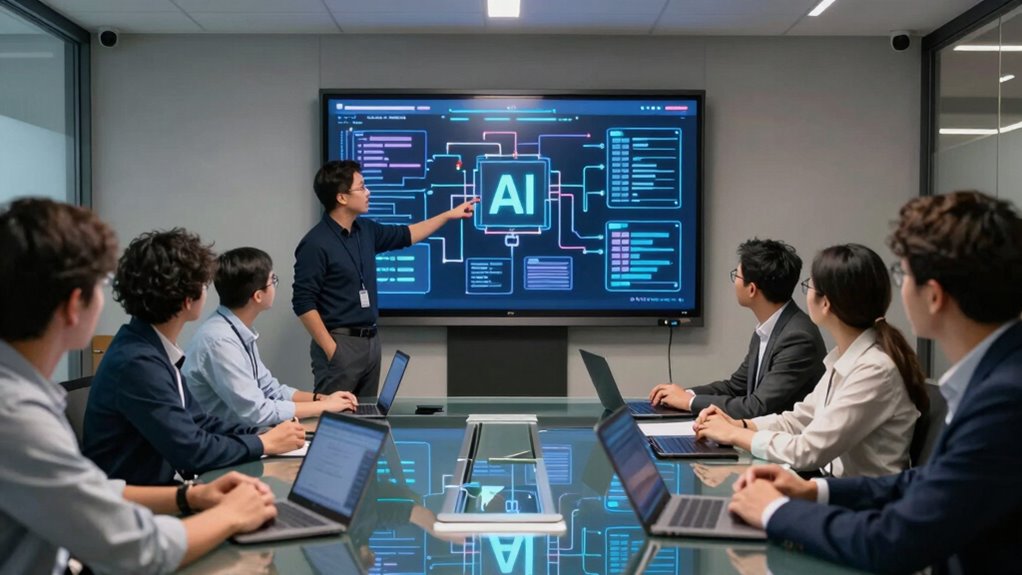

As you adopt AI, you’ll find new internal training roles become essential to bridge skill gaps and guarantee responsible use. These roles focus on updating training content, supporting change management, and fostering a culture of continuous learning. They help prevent talent shortages, address resistance, and guide employees through organizational shifts. If you keep exploring, you’ll discover how these roles can help your organization stay competitive and adapt smoothly to the evolving AI landscape.

Get the latest gadgets delivered free with Prime
- Fast, free delivery on millions of items
- Prime Video, Amazon Music and more included
- Member-only deals all year
Key Takeaways
- AI adoption requires specialized training professionals to develop and update relevant educational content for evolving tools.
- New roles emerge to address skill gaps, ensuring employees can operate, interpret, and maintain AI systems effectively.
- Change management specialists are needed to facilitate workforce adaptation and reduce resistance to AI-driven processes.
- Ethical standards and responsible AI use necessitate dedicated training roles focused on governance and compliance.
- Organizations need continuous learning strategies, creating roles focused on fostering agility and future-ready skills amidst AI advancements.

Another reason AI adoption creates new training roles is the necessity of skill gap analysis. When you introduce AI tools, you often discover that your existing workforce lacks the skills needed to operate, maintain, or interpret these systems effectively. Conducting a skill gap analysis helps identify where your team needs upskilling or reskilling. This process isn’t a one-time event but an ongoing effort to keep pace with evolving technology. You’ll need specialists who can assess current capabilities, design targeted training programs, and continuously update content as AI tools advance. These roles help prevent talent shortages and ensure your organization remains competitive. They also enable your employees to see AI as an opportunity rather than a threat, fostering a culture of learning and adaptability.
Furthermore, the emergence of AI-driven processes demands new training roles to support change management. As AI automates routine tasks, your staff will need guidance on how to shift their focus to more strategic, creative, or interpersonal work. Training professionals will play a critical role in helping employees transition smoothly, addressing fears or resistance and promoting acceptance of new workflows. They’ll also focus on educating leadership about AI’s strategic potential, ensuring decision-makers understand its capabilities and limitations. This holistic approach to training, combining ethics, skill development, and change management, becomes essential for a successful AI integration. Recognizing the importance of skill gap analysis can help organizations identify critical areas for development and tailor training initiatives effectively.
In essence, AI adoption isn’t just about technology; it’s about people. You’ll find yourself in roles that guarantee ethical standards are upheld, skills are continuously developed, and organizational change is managed effectively. These new internal training roles are indispensable for creating a responsible, agile, and future-ready workforce that can harness AI’s full potential while mitigating risks.
AI training software for organizations
As an affiliate, we earn on qualifying purchases.
As an affiliate, we earn on qualifying purchases.
Frequently Asked Questions
How Quickly Can Companies Implement AI Training Programs?
You can implement AI training programs fairly quickly, often within a few months, depending on your company’s size and resources. Focus on essential topics like AI ethics and data privacy to guarantee responsible use. Start with foundational training for your staff, then expand to advanced skills. Regular updates keep your team aligned with evolving AI standards, fostering a culture of responsible adoption and minimizing risks related to data privacy and ethical concerns.
What Skills Are Most Critical for New AI Trainers?
You need strong AI literacy to effectively train others and bridge the skill gap. Critical skills include understanding AI concepts, data analysis, and communication to make complex ideas accessible. You should also stay updated on AI trends and tools. These abilities enable you to design engaging training programs, ensuring your team adapts quickly and confidently to AI integrations, ultimately closing the skill gap and maximizing AI’s benefits for your organization.
How Does AI Training Impact Existing Employee Roles?
AI training fundamentally transforms your employee roles, making adaptation an urgent and monumental task. As AI role evolution accelerates, you must continuously learn new skills to stay relevant. Employees who embrace this change become more agile and valuable. This shift demands proactive adaptation, fostering a culture where everyone evolves alongside AI, ensuring your organization remains competitive. Embracing this change can turn challenges into opportunities for growth and innovation.
What Are the Costs Associated With Developing AI Training Roles?
You’ll face costs like conducting a thorough cost analysis to determine training needs and resources. Developing AI training roles also involves staffing challenges, such as hiring or retraining staff with specialized skills. Expect expenses for curriculum development, technology tools, and ongoing support. These costs can add up quickly, but investing in proper training guarantees your team adapts smoothly to AI integration, ultimately boosting efficiency and competitiveness.
How Do Organizations Measure Success in AI Training Initiatives?
Are your AI training initiatives truly making an impact? You measure success through performance metrics like improved accuracy or efficiency, and by tracking employee engagement levels. If employees actively participate and apply new skills, it shows your training is effective. Regular feedback and monitoring progress help you adjust strategies. Ultimately, if your team adapts and delivers better results, your AI training efforts are succeeding.
As an affiliate, we earn on qualifying purchases.
Conclusion
As you embrace AI, you’ll find new training roles essential for success. Think of a company that implemented AI-driven customer support; they needed staff to train and oversee the system, ensuring seamless interactions. By developing these skills within your team, you not only boost efficiency but also foster innovation. So, stay proactive—your team’s growth in these new roles will be key to thriving in the AI-powered future.
change management training programs
As an affiliate, we earn on qualifying purchases.
As an affiliate, we earn on qualifying purchases.
As an affiliate, we earn on qualifying purchases.
Halloween Picks
halloween
As an affiliate, we earn on qualifying purchases.