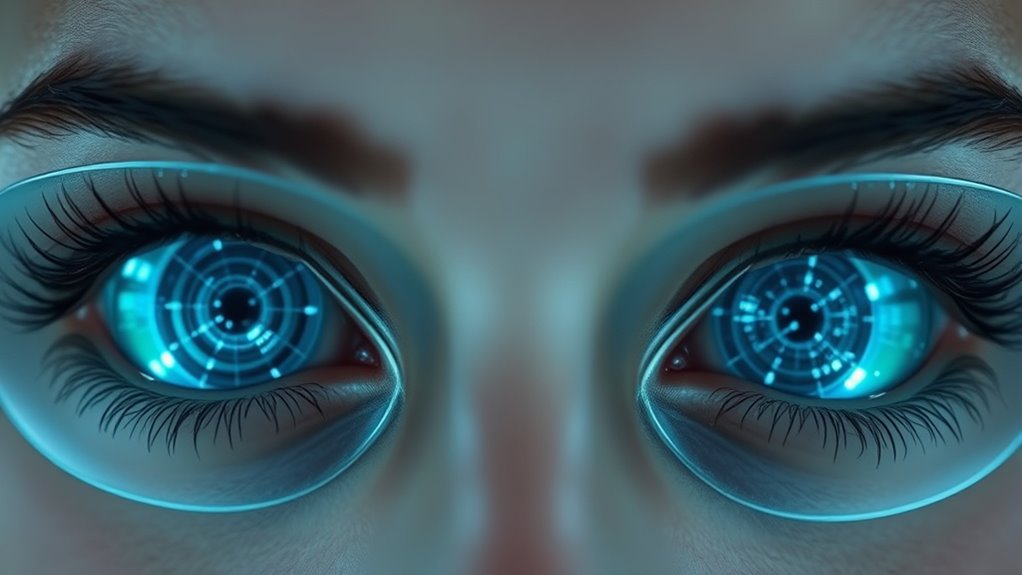

Imagine having digital information seamlessly integrated into your daily vision, without bulky headsets or screens. AR contact lenses are quickly moving from science fiction to reality, promising a discreet way to access notifications, navigation, and health data right in your eyes. As technology advances and investments grow, the potential for these lenses to transform how we see and interact with the world becomes more tangible—raising questions about what’s truly possible in the near future.

Get the latest gadgets delivered free with Prime
- Fast, free delivery on millions of items
- Prime Video, Amazon Music and more included
- Member-only deals all year
Key Takeaways
- Advances in miniaturization and flexible materials are bringing AR contact lenses closer to reality.
- Current prototypes integrate micro-LEDs, sensors, and displays into comfortable, lightweight lenses.
- Major tech companies are investing heavily to overcome challenges like battery life and safety.
- AR contact lenses promise discreet, seamless access to notifications, navigation, and health monitoring.
- Experts believe widespread adoption could redefine daily digital interactions within the next few years.
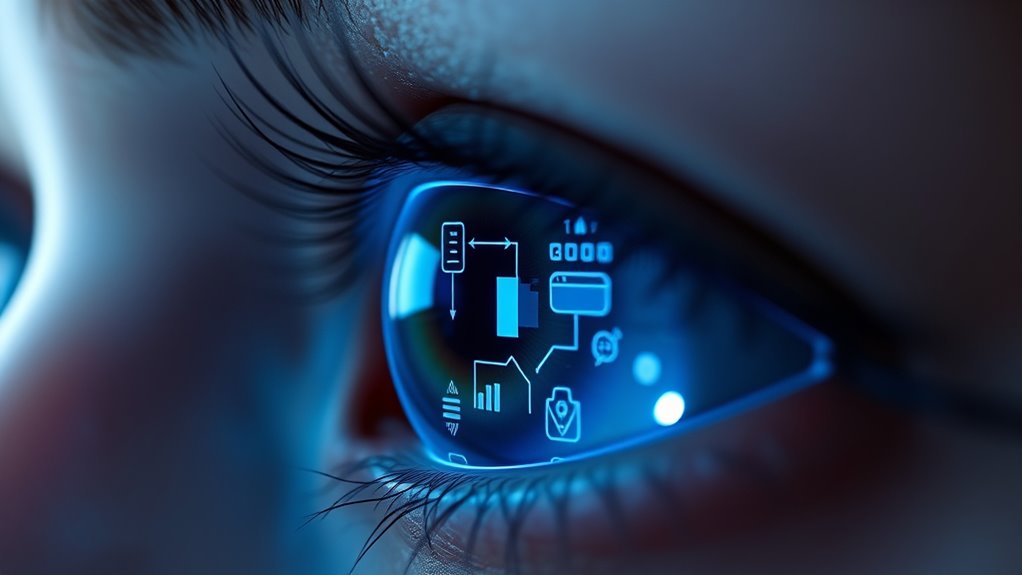
Augmented reality (AR) contact lenses are revolutionizing the way you experience digital information by seamlessly blending virtual images with your real-world view. Unlike traditional smart eyewear, which relies on bulky frames and external screens, AR contact lenses aim to integrate augmented reality directly into your field of vision. This shift means you won’t have to carry around gadgets or look through cumbersome devices—your digital world becomes part of your natural sight. With these lenses, information such as navigation directions, notifications, or even real-time translations can appear right in your line of sight. It’s a leap towards more immersive, intuitive technology that enhances daily life without distraction.
AR contact lenses seamlessly blend virtual images with your real-world view, transforming daily life into an immersive digital experience.
The concept of AR contact lenses isn’t just about convenience; it’s about transforming the way you interact with digital content. Current smart eyewear often feels clunky and isolating, but contact lenses promise a more discreet and comfortable experience. Imagine walking through a busy street while your lenses subtly project step-by-step directions, or having instant access to your calendar and messages without glancing at your phone. These lenses could also be used for complex tasks like medical monitoring, providing real-time health data directly on your eye, or for gaming, offering an ultra-immersive experience that doesn’t require external devices. The goal is to make augmented reality an invisible extension of yourself, seamlessly integrated into your everyday activities.
From a technological perspective, the development of AR contact lenses involves miniaturizing powerful displays and sensors into a tiny, comfortable form factor that can be worn all day. Researchers are working on integrating micro-LEDs, advanced optics, and miniature processors into flexible, biocompatible materials. The challenge lies in balancing battery life, comfort, and safety while maintaining high-quality visual output. As advancements continue, the potential for these lenses to serve as smart eyewear becomes more tangible. They could connect wirelessly to your smartphone or other devices, creating a truly interconnected personal digital ecosystem. Additionally, understanding the Basics of Soaring and Gliding can inspire innovations in lightweight, energy-efficient display technology. The promise is a future where augmented reality becomes indistinguishable from reality, blending digital and physical worlds effortlessly.
While some of these innovations are still in development, the progress is rapid. Tech companies and startups alike are investing heavily in bringing AR contact lenses from science fiction to everyday reality. As these lenses become more accessible, you’ll find yourself relying less on traditional screens and more on a natural, augmented view of the world around you. This technology isn’t just about convenience; it’s about fundamentally changing how you perceive and interact with digital information. AR contact lenses are on the horizon, and they’re set to redefine smart eyewear, turning what once seemed like science fiction into an everyday tool.
Products Worth Considering

Amazon Kindle Scribe (3rd Generation), 64GB, 11-inch Display, Graphite, with Premium Pen

Bose Lifestyle Ultra Compact Wireless Smart Home Speaker Bundle, Black

Bose Smart Soundbar 700 with Alexa, Black
As an affiliate, we earn on qualifying purchases.
Conclusion
As exciting as AR contact lenses sound, you might worry about privacy or comfort. But with advancements in micro-LEDs and flexible materials, these lenses are becoming more comfortable and secure than ever. They’re designed to seamlessly blend into your daily life, enhancing communication and health without intruding. So, instead of fearing the unknown, embrace the future—these lenses aim to empower you with discreet, immersive technology that truly enhances your world.