
TL;DR
AWS has announced new infrastructure offerings designed for scalable foundation model training and inference, including advanced GPU instances, high-bandwidth networking, and integrated storage. This development aims to support the growing demands of large AI models across the lifecycle.
AWS has introduced a new set of infrastructure building blocks tailored for large-scale foundation model training and inference, aiming to meet the demands of AI researchers and engineers working with massive models. This development marks a significant step in enabling scalable, efficient AI workflows on cloud infrastructure, leveraging advanced GPU instances, high-speed networking, and distributed storage solutions.
The announcement includes the availability of multiple generations of NVIDIA GPU instances on AWS, such as the P5 and P6 families, equipped with high-performance H100, H200, and Blackwell B200/B300 architectures. These instances feature substantial device memory, high FLOPS, and optimized interconnect bandwidth, supporting both pre-training and post-training phases of foundation models.
In addition, AWS emphasizes the integration of high-bandwidth, low-latency networking technologies such as NVLink and NVSwitch, crucial for efficient multi-GPU communication. The infrastructure also incorporates scalable distributed storage options, enabling large datasets and model checkpoints to be managed effectively across clusters. AWS’s approach aligns with open-source software stacks like PyTorch and JAX, which are central to model development and training workflows.
Why It Matters
This announcement is significant because it provides the foundational hardware and integrated infrastructure necessary for scaling foundation models. As models grow larger and more complex, the demand for high-performance compute, efficient data movement, and reliable storage becomes critical. AWS’s offerings aim to reduce bottlenecks in training and inference, potentially accelerating AI research and deployment at enterprise scale.
By supporting open-source frameworks and offering optimized hardware configurations, AWS is positioning itself as a key platform for AI innovation, enabling organizations to build, train, and deploy large models more efficiently and cost-effectively.
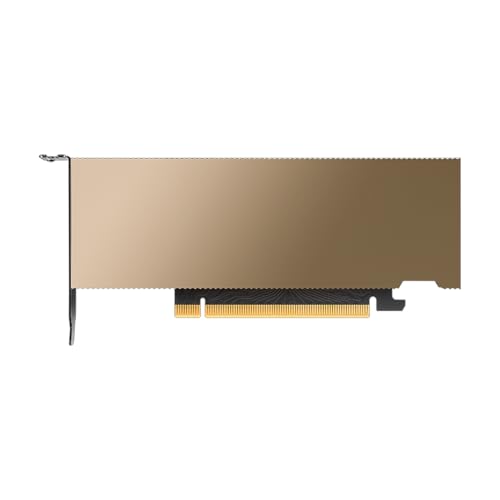
NVIDIA Tesla L4 24GB PCIe Graphics ACELLERATOR HH/HL 75W GPU 900-2G193-0000-000
24GB Video Memory
As an affiliate, we earn on qualifying purchases.
As an affiliate, we earn on qualifying purchases.
Background
Recent trends in AI emphasize the importance of scaling both pre-training and post-training processes, with empirical research showing predictable gains as compute, dataset size, and model parameters increase. Historically, scaling focused mainly on pre-training, but now the entire model lifecycle—including fine-tuning, reinforcement learning, and inference—demands robust infrastructure.
Prior to this announcement, AWS provided GPU instances suitable for AI workloads, but the new offerings enhance hardware capabilities and integration with open-source tools, reflecting industry-wide shifts toward more complex, multi-phase model development and deployment processes.
“Our new infrastructure components are designed to meet the evolving needs of foundation model training and inference, providing scalable, high-performance hardware integrated with open-source workflows.”
— AWS AI Infrastructure Team
“The latest GPU architectures like H100 and Blackwell B200/B300 are critical for accelerating large AI models, and AWS’s deployment of these instances will facilitate cutting-edge research and deployment.”
— NVIDIA spokesperson

Vvikizy Dual LGA 2011 E5 Server Motherboard, C602 Chipset Support for 8 DDR3 Slots 256GB RAM, with Multiple PCIe 3.0 Slots for AI Training GPU Workstation
[DUAL CPU POWERHOUSE FOR PROFESSIONAL WORKLOADS] This high performance workstation motherboard features dual LGA 2011 sockets supporting E5…
As an affiliate, we earn on qualifying purchases.
As an affiliate, we earn on qualifying purchases.
What Remains Unclear
Details about the specific availability timelines of these new instances, pricing, and regional deployment are still emerging. It is also unclear how these offerings will integrate with existing AWS services and what the actual performance gains will be in real-world workloads.

Foundations for Architecting Data Solutions: Managing Successful Data Projects
As an affiliate, we earn on qualifying purchases.
As an affiliate, we earn on qualifying purchases.
What’s Next
Next steps include AWS expanding access to these hardware offerings, providing detailed documentation, and supporting open-source frameworks for seamless integration. Monitoring user adoption and performance benchmarks will be key to assessing impact.

HHCJ6 Dell NVIDIA Tesla K80 24GB GDDR5 PCI-E 3.0 Server GPU Accelerator (Renewed)
Dell Nvidia Tesla K80 GPU (Nvidia Part Number: 900-22080-0000-000)
As an affiliate, we earn on qualifying purchases.
As an affiliate, we earn on qualifying purchases.
Key Questions
What specific hardware does AWS now offer for foundation model training?
AWS offers NVIDIA GPU instances including P5 and P6 families, equipped with H100, H200, and Blackwell B200/B300 architectures, featuring high FLOPS, large device memory, and fast interconnects.
How does this infrastructure support large-scale AI workflows?
It provides high-performance compute, low-latency networking, and scalable storage, all optimized for distributed training, fine-tuning, and inference, integrated with open-source frameworks like PyTorch and JAX.
When will these new instances be generally available?
Availability details are still being announced; expect phased deployment and regional rollout over the coming months.
Why is this development important for AI research?
It enables faster, more efficient training and deployment of large models, reducing bottlenecks and supporting the rapid advancement of AI capabilities at scale.