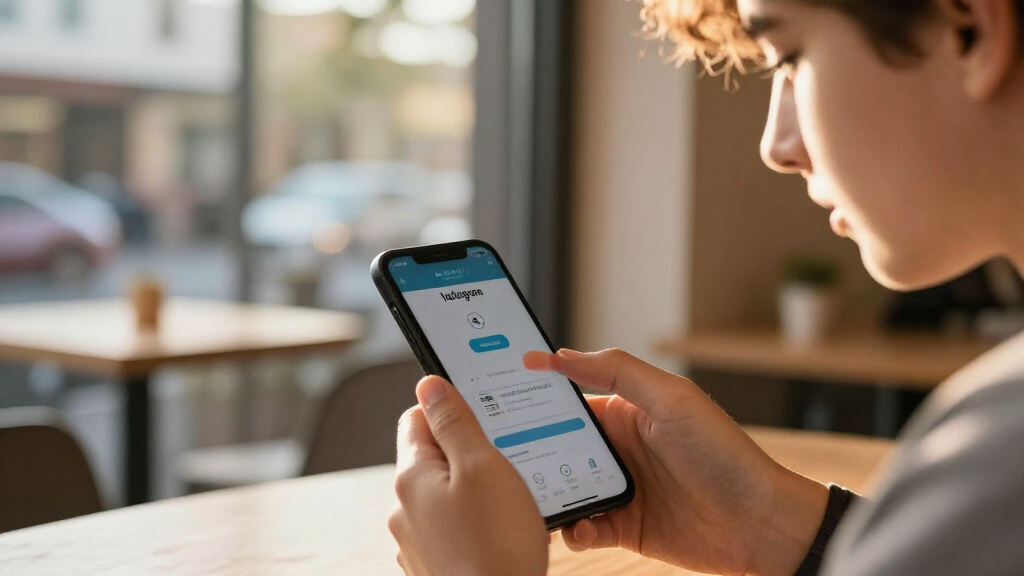

🔍 Read the full analysis: The Risks Of Instagram’s AI Deciding Who Is A Teen on ThorstenMeyerAI.com

Get the latest gadgets delivered free with Prime
- Fast, free delivery on millions of items
- Prime Video, Amazon Music and more included
- Member-only deals all year
TL;DR
Meta announced on November 9, 2026, that Instagram is expanding AI age estimation worldwide to identify suspected users aged 13 to 17, including those whose accounts list an adult birthday, and place them in Teen Account protections. Meta has not published how often the system misclassifies adults or detailed how users can appeal a mistaken decision.
Meta said on November 9, 2026, that Instagram is expanding its AI age-estimation technology worldwide, using it to identify users it suspects are 13 to 17 and place them in Teen Accounts even if they entered an adult birthday. The company says the expansion will bring millions more teens under restrictions on contact, content and time, but has not disclosed the system’s error rate or a detailed appeal process for adults it misclassifies.
Meta says the system looks for signs that an account belongs to a teenager who may have misrepresented their age. Teen Accounts are Instagram’s restricted settings for people under 18. According to Meta, they limit who can contact users, the content they see and their time on the app. Users under 16 need a parent or guardian’s approval to change those settings, Meta has said.
Meta has described some of the signals its AI may use, including profile context such as birthday celebrations and references to school grades in posts, comments, biographies and captions. It has also described visual analysis of photos and videos. Meta says this is not facial recognition: its July 2026 correction said the system does not use biometric data, create facial fingerprints or identify people in images, and instead looks for general visual patterns associated with someone underage. The company said visual analysis was available only in selected countries at that time.
The announcement also covers other services and parent communications. Meta said it would roll the technology out on Facebook and begin launching similar technology globally on Threads later in 2026. In Australia, it says it also uses an age-range signal provided by Apple when a parent sets up a phone for a teen. Meta said US parents would receive an Instagram in-feed video this month explaining the approach and how to check that a teen’s age is accurate.
The Risks of Instagram’s AI Deciding Who Is a Teen
Meta is expanding AI age estimation worldwide to place suspected 13-to-17-year-olds in Teen Accounts—even when their birthday says they are adults. The company has not published the system’s error rate or a detailed appeal process.
How the system makes an estimate
Meta describes contextual and visual clues, but has not disclosed how much each signal counts.
Signals may include birthday celebrations and references to school grades in posts, comments, bios and captions.
Meta says it looks for general patterns associated with someone underage, not facial identity or biometric data.
Accounts suspected to belong to teens may receive limits on contact, content and time, despite an adult birthday.
What changes for users
The same decision can extend protections to teens or wrongly restrict an adult.
- Teen Account restrictions can apply even when the account lists an adult birthday.
- Users under 16 need parent or guardian approval to change those settings.
- An incorrect estimate may affect account settings and experience.
- Meta has not detailed a specific appeal process for the global rollout.
A wider rollout, with open questions
Meta says the technology will extend beyond Instagram, while key operational details remain unpublished.
| Area | What Meta says | What remains unclear |
|---|---|---|
| Accuracy | No error rate published | How often adults are classified as teens |
| Appeals | Some age changes may require ID or age estimation | Review steps, alternatives and timing |
| Other apps | Facebook rollout and Threads launch planned | Specific scope and timing |
When an AI Guess Changes Account Settings
The global rollout gives Instagram a way to apply teen protections even when a user’s birthday does not identify them as a minor. That may address a gap Meta says exists when teens enter an adult age, and could change the experience of millions of accounts. The same mechanism, however, can affect adults if it wrongly infers their age.
For users, the practical issue is not only how accurately the system identifies teens, but what happens after it makes a decision. Teen Account restrictions shape who can contact someone and what they can see. Meta has said that in some cases a person seeking to change a birthday from under 18 to over 18 must verify their age with an ID or Yoti’s facial age-estimation tools. That creates a distinction between Meta’s claim that its own visual analysis does not use biometric data and the separate verification options a user may encounter.
The move also places an automated age assessment in a sensitive area: access to a social platform and the protections attached to a user’s account. Without published error rates or clear information about review procedures, users and parents have limited public evidence with which to judge how often the system is right or how quickly a mistaken classification can be corrected.
Products Worth Considering

Bose QuietComfort Wireless Noise-Cancelling Headphones, Sandstone

Samsung Galaxy Tab S7 11-inch Android Tablet 128GB Wi‑Fi with S Pen Mystic Black

LG UltraGear 27-inch QHD OLED Gaming Monitor, 240Hz
As an affiliate, we earn on qualifying purchases.
From Country Tests to Global Use
Meta previously described the age-estimation system as operating in a set of countries. Its November announcement changes the scale of the Instagram deployment, rather than introducing a wholly new account setting. Meta said it was encouraged by results where the system had already run, but did not publish figures in the material provided to support that assessment.
The global expansion concerns teenagers aged 13 to 17 whom Instagram suspects are using an adult birthday. It is separate from enforcement against children under 13, who are not allowed on Instagram. Meta says accounts it believes belong to under-13s can be deactivated, with the account holder required to prove their age to prevent deletion. The two processes have different outcomes: suspected teens may be placed in Teen Accounts, while suspected under-13 accounts face removal.
The timing comes amid legal and regulatory scrutiny of child safety on Meta’s platforms. The source material cites an agreement involving 52 US attorneys general and an April 29, 2026, preliminary finding by the European Commission that Meta was doing too little to keep under-13s off Instagram and Facebook. These developments provide context for the company’s stated safety rationale; they do not, by themselves, establish how accurate the age-estimation system is.
“expanding our AI age-estimation technology globally”
— Meta, in its November 9, 2026, announcement
Accuracy and Appeals Remain Unreported
Meta has not published an error rate for the system, the number of adults it may classify as teens, or a breakdown of which signals carry the most weight. The company’s description of contextual and visual clues offers examples, not a complete specification of the model or its decision thresholds.
The source material also does not describe a specific appeal process for people placed in Teen Accounts during the global expansion. Meta has previously said users could change settings if the system made a mistake. Its May 2026 explanation says someone changing a birthday from under 18 to over 18 may have to verify age with an ID or a third-party age-estimation tool. It is not clear how that rule applies in every case, what alternatives are available, or how long a review may take.
Meta has separately said AI-assisted reviews of reports about underage accounts were more accurate and faster than human review alone in its testing, but it provided no figures in the cited statement. That claim concerns reported underage accounts and should not be treated as a published performance measure for the global Teen Account placement system.
Rollout Across Meta’s Apps Continues
Instagram’s global deployment is underway following Meta’s November 9 announcement. In the US, the company said it would show parents an in-feed video this month linking to information about age assurance and ways to check a teen’s age. Meta has not announced a public schedule for publishing accuracy data or further details about correcting a mistaken classification.
The company said Facebook would also receive the technology and that similar technology would begin launching globally on Threads later in 2026. The scope, timing and age-related settings for those deployments remain to be detailed. Further information from Meta on misclassification rates, appeals and verification options would help users assess how the system works in practice.
Key Questions
What did Meta announce for Instagram?
Meta said Instagram is expanding its AI age-estimation system worldwide. It is intended to identify users it suspects are 13 to 17, including people whose account birthday says they are adults, and place them in Teen Accounts.
What restrictions do Teen Accounts have?
Meta says Teen Accounts limit who can contact users, the content they see and their time on the app. The company has also said users under 16 need parent or guardian approval to change those settings.
How does Instagram’s age-estimation system work?
Meta says it can analyze profile context, including references to birthdays and school grades, and use visual analysis of photos and videos in some countries. The company says its visual system does not use biometric data or identify people, but it has not published the model or a complete list of signals.
Can adults be wrongly placed in Teen Accounts?
That possibility has not been quantified. Meta has not published an error rate or the number of adults it may misclassify. The company has described age-verification requirements for some users who try to change a birthday from under 18 to over 18, but a complete appeals process for this rollout is not clear.
Is this the same as Instagram removing under-13 accounts?
No. Meta describes the global Teen Account placement as a process for suspected users aged 13 to 17. Accounts believed to belong to children under 13 are handled separately and may be deactivated unless the account holder proves their age.
Source: ThorstenMeyerAI.com