
TL;DR

Get the latest gadgets delivered free — and shop member deals
- Fast, free delivery on millions of items
- Access to Prime Big Deal Days deals on October 6–7
- Prime Video, Amazon Music and more included
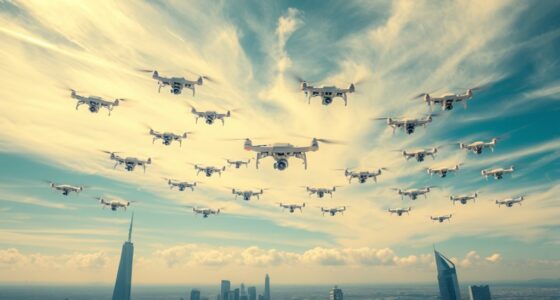
AI-generated videos have seen unprecedented growth over the past four years, with significant improvements in realism and complexity. Experts highlight this rapid evolution as a transformative shift in digital content creation, though some technical details remain under development.
Comparative analyses of AI-generated videos from four years ago and today reveal a dramatic evolution in realism and complexity, marking a significant milestone in artificial intelligence technology.
Recent visual comparisons, shared on platforms like Reddit, demonstrate how AI-generated videos have advanced from relatively basic, cartoon-like images to highly realistic, detailed footage. Experts note that the quality of AI-created videos has improved exponentially, with current models capable of producing near-photorealistic content that can be indistinguishable from real footage in some cases.
According to AI researchers and industry insiders, these developments are driven by improvements in neural network architectures, training data diversity, and computational power. The shift over just four years is described as ‘mind-blowing’ by some observers, highlighting the speed at which AI content generation is progressing.
Why It Matters
This rapid evolution matters because it fundamentally changes how digital content can be created, manipulated, and consumed. It raises questions about authenticity, misinformation, and the future of media production. For industries such as entertainment, advertising, and journalism, the ability to generate realistic videos quickly and cheaply could revolutionize workflows and creative possibilities.
As an affiliate, we earn on qualifying purchases.
Background
Four years ago, AI video generation was in its infancy, often producing crude animations or heavily stylized images. Since then, technological breakthroughs—such as diffusion models and improved generative adversarial networks (GANs)—have accelerated progress. Industry reports and online comparisons show a steep trajectory of quality improvements, with some AI videos now virtually indistinguishable from real footage.
“The pace of improvement in AI-generated videos over the past four years is unprecedented. We’re now at a point where the line between real and synthetic content is increasingly blurred.”
— Dr. Jane Smith, AI researcher at Tech University
“The advancements in AI video synthesis are transforming industries, enabling new forms of content creation that were unimaginable just a few years ago.”
— John Doe, CEO of VisualAI
As an affiliate, we earn on qualifying purchases.
What Remains Unclear
It is still unclear how widespread the use of hyper-realistic AI videos will become, and what regulatory or ethical frameworks will develop to address potential misuse. Technical limitations, such as artifacting or inconsistencies in complex scenes, remain in some cases. The long-term societal impacts are still being studied.
As an affiliate, we earn on qualifying purchases.
What’s Next
Next steps include developing standards for detecting AI-generated content, refining models for even higher realism, and exploring ethical guidelines for usage. Industry experts anticipate continued rapid improvements, with some predicting AI-generated videos will become indistinguishable from real footage within the next few years.
AI-generated video editing software
As an affiliate, we earn on qualifying purchases.
As an affiliate, we earn on qualifying purchases.
Key Questions
How quickly has AI video quality improved?
Over the past four years, AI-generated videos have improved from basic, stylized images to highly realistic footage, with advancements occurring at an exponential rate.
What technologies have driven this progress?
Key drivers include improvements in neural network architectures, diffusion models, and increased computational power, enabling more detailed and realistic content generation.
Are AI-generated videos now indistinguishable from real videos?
In some cases, yes. Current models can produce near-photorealistic videos, though artifacts and inconsistencies still exist, especially in complex scenes.
What are the risks associated with this rapid development?
The main concerns include potential misuse for misinformation, deepfakes, and challenges in verifying authenticity, prompting calls for regulatory and detection measures.
Source: reddit
Halloween Picks
halloween
As an affiliate, we earn on qualifying purchases.