
Choosing a camera lens for talking head videos comes down to more than background blur. Your camera mount, available room, desired framing, and whether you need reliable autofocus all affect which lens will work in a real recording setup. I’ve ranked these three options by how well their stated features serve talking head filming, with compatibility and usable framing weighted alongside aperture.

Get the latest gadgets delivered free with Prime
- Fast, free delivery on millions of items
- Prime Video, Amazon Music and more included
- Member-only deals all year
The SIRUI VP-1 50mm T1.4 is my most adaptable full-frame pick for creators whose camera supports its mount system and who want cine-style manual control. The SIRUI Sniper 56mm f/1.2 is the portrait-focused choice for compatible Sony APS-C cameras, pairing a tight head-and-shoulders perspective with subject tracking. The YOLOLIV 18mm F1.4 is the wide, lightweight option for the YoloCam S7, though its camera compatibility is narrow. The key tradeoff is between framing flexibility, autofocus, and the distance you can place between yourself and the camera.
Complete the kit



Key Takeaways
- For a flexible full-frame cine setup: I’d start with the SIRUI VP-1, whose interchangeable E, RF, Z, and L mounts broaden camera-system options, though changing systems may involve hardware swaps.
- For Sony APS-C head-and-shoulders framing: the SIRUI Sniper 56mm gives an approximately 85mm-equivalent view and quiet autofocus with Eye AF and tracking on compatible cameras.
- For a YoloCam S7 in a tight room: the YOLOLIV 18mm is the wide-field choice here, but it requires a current firmware update and is listed as compatible only with that camera.
- A fast aperture does not guarantee easy video focus: the two SIRUI lenses have bright apertures, but the VP-1 is a cine lens and the Sniper’s autofocus is better suited to creators who move during a take.
- Plan your camera distance: the 56mm APS-C lens favors a more compressed portrait view and needs room to frame comfortably, while the 18mm lens fits closer camera positions more readily.
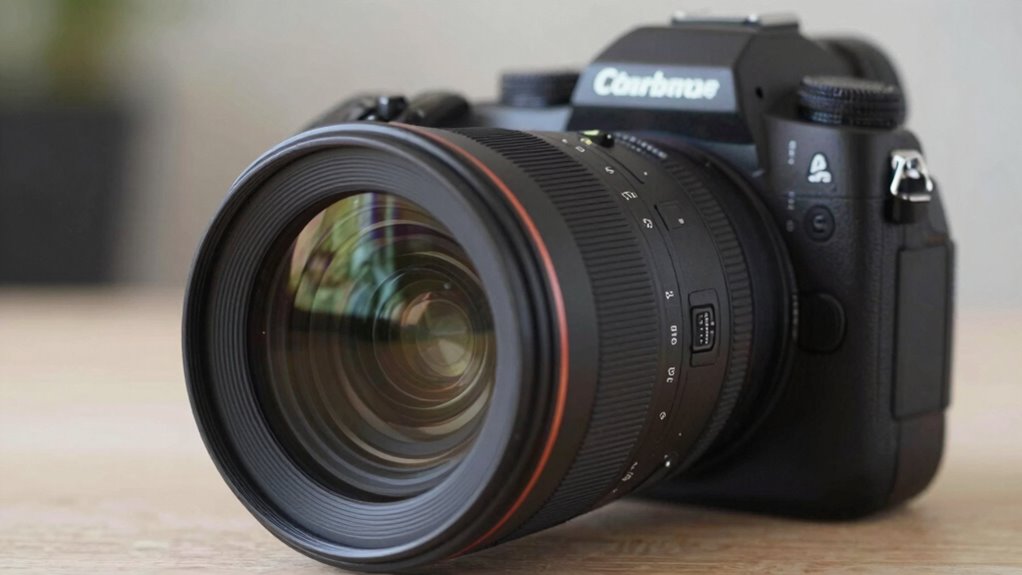
| SIRUI VP-1 Vision Prime 1 50mm T1.4 Full-Frame Cine Lens |  | Best Overall for Full-Frame Cine Setups | Focal length: 50 mm | Aperture: T1.4 | Format: Full frame | VIEW ON AMAZON | See Our Full Breakdown |
| SIRUI Sniper 56mm f/1.2 Autofocus APS-C Lens for Sony E Mount |  | Best for Sony APS-C Portrait Framing | Focal length: 56 mm | Maximum aperture: f/1.2 | Format: APS-C | VIEW ON AMAZON | See Our Full Breakdown |
| YOLOLIV 18mm F1.4 Micro Four Thirds Lens |  | Best for Close Setups and YoloCam S7 | Mount: Micro Four Thirds (M43) | Focal length: 18 mm | Maximum aperture: F1.4 | VIEW ON AMAZON | See Our Full Breakdown |
| camera lens for talking head video | Focal length | Format | Focus | Maximum aperture |
|---|---|---|---|---|
| SIRUI VP-1 Vision Prime 1 50mm | 50 mm | Full frame | Cine lens; autofocus not specified | — |
| SIRUI Sniper 56mm f/1.2 Autofo | 56 mm | APS-C | — | f/1.2 |
| YOLOLIV 18mm F1.4 Micro Four T | 18 mm | — | Autofocus and manual focus | F1.4 |
More Details on Our Top Picks
SIRUI VP-1 Vision Prime 1 50mm T1.4 Full-Frame Cine Lens
I put the SIRUI VP-1 first because it offers the broadest system flexibility in this lineup while retaining a focal length that can suit a composed talking head shot. Its 50mm full-frame view is a middle ground: less tight than the Sniper 56mm on APS-C, and much narrower than the YOLOLIV 18mm. That can make a presenter look naturally framed without the wide perspective of a close camera position, provided the room allows enough distance between camera and subject.
The VP-1 is a cine lens with a T1.4 aperture, described as supporting low-light filming and soft bokeh. Its aluminum alloy body and roughly 600 g weight make it the heavier option compared with the lightweight YOLOLIV, while still described as compact for its class. Unlike the Sniper, its listing does not describe autofocus; I would choose it for a controlled, repeatable setup where manual focus is acceptable, rather than a solo creator who needs the camera to track them while they move.
Its interchangeable E, RF, Z, and L mount system is the clearest differentiator. That breadth can make it relevant to creators with different supported camera bodies, though swapping mounts involves hardware changes and is less convenient than a lens made for one fixed system. The Sniper is a more straightforward autofocus pick if you already use Sony APS-C; the VP-1 makes more sense when full-frame coverage and cine-style operation take priority. Skip it if you need hands-off tracking autofocus or record in a small room where 50mm framing forces the camera too far away.
Pros:- Full-frame 50mm focal length suits controlled head-and-shoulders compositions.
- T1.4 aperture is suited to low-light filming and soft background rendering.
- Interchangeable mounts cover E, RF, Z, and L systems.
- Aluminum alloy construction balances a compact cine body with a substantial build.
Cons:- No autofocus is specified, making focus management more involved for solo presenters.
- Changing camera systems may require swapping mount hardware.
- Its 50mm framing can demand more subject-to-camera distance than a small room allows.
Best for: Full-frame creators with a compatible E, RF, Z, or L camera who can set focus deliberately and want a cine-oriented 50mm view.
Not ideal for: Solo presenters who move around and depend on autofocus tracking, or anyone who needs a wide view from close camera distance.
- Focal length:50 mm
- Aperture:T1.4
- Format:Full frame
- Mounts:E, RF, Z, L
- Focus:Cine lens; autofocus not specified
- Body material:Aluminum alloy
- Weight:Around 600 g
- Filter thread:67 mm
Our verdict“I’d choose the VP-1 as the most adaptable full-frame talking head option when cine-style manual focus fits the recording workflow.”
SIRUI Sniper 56mm f/1.2 Autofocus APS-C Lens for Sony E Mount
If I were building around a compatible Sony APS-C camera and wanted a polished, compressed head-and-shoulders view, I’d pick the SIRUI Sniper 56mm. Its approximately 85mm full-frame-equivalent perspective is much tighter than the YOLOLIV 18mm and more portrait-focused than the VP-1’s full-frame 50mm. That framing can separate a face from a busy background, but it asks for room to position the camera farther back. It is a poor fit for desk setups where the camera has to sit close.
The f/1.2 aperture is the brightest stated maximum aperture in this group, and the lens description connects it with low-light shooting and shallow depth of field. Those qualities can help the subject stand out, but the thin focus plane can make leaning or swaying more consequential. Here the Sniper has a practical advantage over the VP-1: its quiet STM autofocus supports Eye AF and subject tracking on compatible Sony cameras. That makes it the most compelling option of these three for a presenter who may shift position during a recording.
The tradeoff is a narrower system fit. This is a Sony E-mount APS-C lens, not a general full-frame choice, and it is not described as water resistant. Compared with the VP-1, it gives up mount flexibility and cine-lens positioning for autofocus convenience. Compared with the wide YOLOLIV, it prioritizes flattering portrait perspective over close-range coverage. I’d skip it if your camera is not compatible, if you need a broad view in a cramped room, or if you want forgiving focus while moving significantly toward and away from the camera.
Pros:- 56mm focal length gives an approximately 85mm-equivalent portrait perspective on APS-C.
- Bright f/1.2 aperture supports low-light recording and subject-background separation.
- Quiet STM autofocus supports Eye AF and subject tracking on compatible Sony E cameras.
- Eleven diaphragm blades are specified for the lens.
Cons:- APS-C coverage and Sony E mount limit camera compatibility.
- Tight framing requires more camera distance than the YOLOLIV 18mm.
- Not water resistant.
Best for: Sony APS-C creators who want a tight portrait look and useful Eye AF or subject tracking during talking head takes.
Not ideal for: Full-frame camera owners, creators filming in cramped spaces, or presenters who move enough to make very shallow focus difficult.
- Focal length:56 mm
- Maximum aperture:f/1.2
- Format:APS-C
- Mount:Sony E
- Autofocus motor:STM
- Angle of view:28.5 degrees
- Diaphragm blades:11
- Filter size:58 mm
Our verdict“I’d choose the Sniper for Sony APS-C talking head videos when portrait compression and autofocus tracking matter more than room flexibility.”
YOLOLIV 18mm F1.4 Micro Four Thirds Lens
The YOLOLIV 18mm F1.4 takes a different approach from the two SIRUI lenses: it favors a wider view and closer camera placement over portrait compression. That makes it the most plausible fit in this group for a small room or a desk-bound presenter who cannot move the camera far back. Its 18mm focal length is paired with a bright F1.4 aperture, so the lens can support background softness while keeping more of the surrounding scene in frame. A wider view can also make a close camera position look less flattering than the Sniper’s portrait perspective, so placement still matters.
This pick earns its place through its stated autofocus and manual focus support, plus a stepper motor described as providing smooth focusing. Those features offer more flexibility than a manual cine approach such as the VP-1, although the listing does not describe tracking features comparable to the Sniper’s Eye AF support. Its lightweight design and nano multi-layer coating, which is intended to reduce flare and ghosting, are practical touches for a compact recording setup. The minimum focusing distance is 0.19 m, which is ample for a presenter framing use case but also hints at close-up flexibility.
The major limit is decisive: the supplied compatibility is YoloCam S7 only, and the camera needs the latest firmware before use. That makes this a poor general-purpose recommendation for someone choosing among lenses for a Sony, Canon, Nikon, Panasonic, or other unrelated camera system. The VP-1 is much more adaptable across its supported mounts, while the Sniper has more clearly specified tracking support. I’d choose the YOLOLIV only when the S7 fit and wide framing solve a real space constraint.
Pros:- Wide 18mm focal length suits closer camera placement in limited space.
- F1.4 maximum aperture supports soft background blur.
- Autofocus and manual focus provide two focus approaches.
- Lightweight body and nano multi-layer coating are useful for compact video setups.
Cons:- Compatibility is listed only for the YoloCam S7.
- YoloCam S7 requires the latest firmware before use.
- The wide perspective is less portrait-compressed than the SIRUI Sniper 56mm.
Best for: YoloCam S7 owners recording in a close or compact setup who want autofocus and a wide 18mm view.
Not ideal for: Buyers seeking a lens for multiple camera brands, Sony APS-C portrait framing, or a lens that works without a camera firmware update.
- Mount:Micro Four Thirds (M43)
- Focal length:18 mm
- Maximum aperture:F1.4
- Aperture range:F1.4–F22
- Focus:Autofocus and manual focus
- Optical structure:7 elements in 7 groups
- Minimum focusing distance:0.19 m
- Filter size:46 mm (P=0.75)
- Compatible camera:YoloCam S7; latest firmware required
Our verdict“I’d pick the YOLOLIV when a YoloCam S7 and close camera position make its wide framing more useful than broader system compatibility.”

How We Picked
I ranked these lenses around the specific demands of talking head video: whether the stated mount fits a likely camera setup, how the focal length shapes a seated presenter’s framing, and whether the focus approach suits solo recording. Aperture matters because it can help in lower light and soften the background, but it does not outweigh fit or practical working distance. A very shallow depth of field can also make focus more demanding when a presenter leans forward or shifts position.
I gave credit for clearly described video-relevant details, including the Sniper’s quiet STM autofocus and Eye AF support, the VP-1’s cine orientation and mount choices, and the YOLOLIV’s lighter build and wide 18mm focal length. I also treated limitations as part of the ranking: the YOLOLIV’s YoloCam S7 restriction, the VP-1’s mount-switching caveat, and the Sniper’s APS-C Sony E fit all affect who can use each lens. Product descriptions do not establish identical camera-body performance, autofocus behavior on every camera, or room-specific framing, so I keep recommendations tied to the supplied compatibility and specifications.
| camera lens for talking head video | Format | Focus | Maximum aperture | Mount |
|---|---|---|---|---|
| SIRUI VP-1 Vision Prime 1 50mm | Full frame | Cine lens; autofocus not specified | — | — |
| SIRUI Sniper 56mm f/1.2 Autofo | APS-C | — | f/1.2 | Sony E |
| YOLOLIV 18mm F1.4 Micro Four T | — | Autofocus and manual focus | F1.4 | Micro Four Thirds (M43) |
Factors to Consider When Choosing Camera Lens For Talking Head Videos
I’d narrow the choice in this order: camera compatibility first, then framing distance, then focus behavior. The fastest aperture is useful only if the lens fits your body and the shot you can physically compose.
Match the lens to the camera before comparing apertures
The YOLOLIV is listed for the YoloCam S7 and needs a firmware update. The Sniper is an APS-C Sony E-mount lens. The VP-1 is specified for full-frame use and has interchangeable E, RF, Z, and L mounts. These labels define the practical shortlist before blur or low-light capability enters the decision. I would check the specific camera body and mount configuration, especially for the VP-1, since its mounts may need to be switched when moving between systems.
Choose focal length around your room
Camera-to-subject distance shapes the result as much as focal length. The 18mm YOLOLIV is the broadest view here and gives more options when the camera sits close, though wide framing may include more of the room. The 56mm APS-C Sniper gives a tighter, portrait-like view that usually calls for more working distance. The VP-1’s 50mm full-frame focal length lands between them by intended use, but body format also affects the field of view. I would set up a rough camera position before buying a lens with a tight perspective.
Balance background blur with focus tolerance
All three lenses have bright maximum apertures: F1.4, T1.4, and f/1.2. They can help in lower light and make a background appear softer, but shallow depth of field leaves less room for movement. For a presenter staying seated and marked to a consistent position, that can support a distinct subject-background separation. If you lean in and out or record without monitoring focus, autofocus features matter more. The Sniper specifically lists Eye AF and subject tracking on compatible cameras; the VP-1 listing does not specify autofocus, while the YOLOLIV offers autofocus and manual focus without the same stated tracking details.
Decide how much focus control you want
A manual cine workflow can suit a fixed frame where focus is set and left alone, which is the VP-1’s clearest role. For solo recording with small movements, the Sniper’s quiet STM autofocus and compatible-camera tracking features are more convenient. The YOLOLIV gives autofocus and manual options, making it more flexible in operation than a manual-only cine approach, although its tight camera compatibility is the main catch. I would favor a repeatable focus distance and a little extra depth of field if the presenter moves often.
Think about the complete recording setup
These lenses weigh and operate differently: the YOLOLIV is described as lightweight, the VP-1 weighs around 600 g, and no Sniper weight is supplied here. A lens mounted on a small camera or arm can affect balance, while filter sizes of 46 mm, 67 mm, and 58 mm determine what accessories fit. I would also account for lighting: a fast aperture can help, but a stable, flattering light source often makes talking head footage easier to control than relying on a wide-open lens alone.
Frequently Asked Questions
Which of these lenses is easiest for a solo presenter to focus?
The SIRUI Sniper 56mm has the clearest solo-recording focus advantage in the supplied details because its quiet STM autofocus supports Eye AF and subject tracking on compatible Sony E-mount cameras. The YOLOLIV also supports autofocus, but the description does not specify equivalent tracking features. The VP-1 is a cine lens and its listing does not identify autofocus, so I’d reserve it for a controlled setup where focus can be set deliberately.
Which lens works best when my recording room is small?
The YOLOLIV 18mm is the widest option in this selection and is the most accommodating when the camera must sit close, assuming you own the compatible YoloCam S7 and update its firmware. The Sniper’s 56mm APS-C framing is much tighter and may require more space. The VP-1’s 50mm full-frame view also benefits from room to position the camera back, so I would not choose either SIRUI lens before checking your available distance.
Does the widest aperture automatically make the best talking head lens?
No. A bright aperture can help in low light and soften the background, but compatibility, framing, and focus behavior are just as relevant. The Sniper’s f/1.2 aperture is the widest stated setting here, yet its tight APS-C portrait view may not suit a close desk setup. The YOLOLIV’s F1.4 offers a broader field of view, while the VP-1’s T1.4 belongs to a cine-oriented full-frame lens. I’d choose based on the camera and room, then use aperture to refine the look.
Can I use the SIRUI VP-1 on different camera brands?
The supplied description lists interchangeable mounts for E, RF, Z, and L systems, which gives the VP-1 more system options than the Sony-only Sniper or YoloCam S7-specific YOLOLIV. The description also warns that changing mounts may require switching hardware. I would confirm that the appropriate mount is available and configured for the exact camera before planning a multi-camera workflow.
Which lens should I choose if I want a blurred background?
Each lens has a bright aperture that can support background separation, but the result also depends on subject distance, background distance, framing, and camera format. The Sniper 56mm f/1.2 pairs its bright aperture with a portrait-focused perspective, while the VP-1 offers T1.4 on full frame and the YOLOLIV offers F1.4 on the YoloCam S7 setup described. I’d select the compatible lens whose framing fits the room, then position the background farther behind the presenter to strengthen separation.
Conclusion
For a full-frame creator who can manage focus manually, I’d choose the SIRUI VP-1 for its 50mm cine perspective and interchangeable mount options. For a Sony APS-C presenter who wants portrait framing and tracking autofocus, the SIRUI Sniper 56mm is the more targeted fit, as long as the room has enough camera distance. For a YoloCam S7 owner recording in a compact space, the YOLOLIV 18mm makes the most sense because its wider view supports closer placement. I’d make camera compatibility and room layout my first filters; after those fit, aperture and focus style can decide the final pick.
Halloween Picks

MGparty 14.5 ft Halloween Inflatable Walk-In Pumpkin House with LED Lights

Max Fun 10-Foot Halloween Dragon and Pumpkin Inflatable Archway with LED Lights

Gemmy 6.4 ft Beetlejuice Animatronic Halloween Decoration with Spinning Head
As an affiliate, we earn on qualifying purchases.