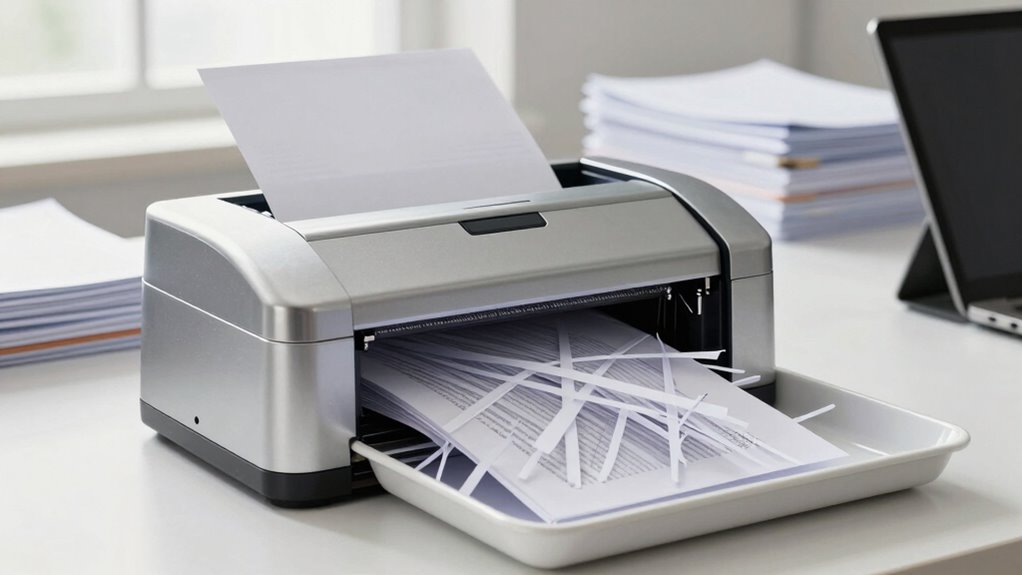

If you need a cross cut shredder for confidential files, the Bonsaii 18-Sheet Heavy-Duty (60-Minute Run Time) is the strongest all-around pick because it combines a high P-4 security level with a long continuous run time, letting you destroy large batches of tax records and client documents without constant cooldown breaks. For smaller budgets, the Amazon Basics 8-Sheet Cross-Cut handles everyday shredding of receipts and statements reliably, while the Bonsaii 6-Sheet suits deskside use where noise and footprint matter more than volume. The main tradeoffs in this category come down to run time versus price — cheap models overheat after a few minutes — and sheet capacity versus jam risk, since overstating capacity is the fastest way to clog a cutter. Security level is less of a differentiator here, as nearly every model cuts to P-4. Keep reading for the full breakdown of all ten shredders, including who each one is for and which ones to skip.

Get the latest gadgets delivered free with Prime
- Fast, free delivery on millions of items
- Prime Video, Amazon Music and more included
- Member-only deals all year
Complete the kit


Key Takeaways
- Security level is a wash across this lineup — nine of ten models cut to P-4 — so the real differentiators are run time, sheet capacity, and bin size, not shred size.
- Run time separated the top tier: the amazon.com/dp/B0C6LZ8S34?tag=geeksalad-20&ascsubtag=dc-468540″ target=”_blank” rel=”nofollow sponsored noopener”>amazon.com/dp/B09N991KVT?tag=geeksalad-20&ascsubtag=dc-468540″ target=”_blank” rel=”nofollow sponsored noopener”>Bonsaii 18-Sheet’s 60-minute continuous rating makes it the only model here suited to clearing whole file boxes in one sitting, while entry models like the Amazon Basics 8-Sheet demand patience for big purge jobs.
- The 24-sheet Amazon Basics and 20-sheet BONSEN target small offices, but higher capacity brings louder operation and bulkier footprints — a poor fit for shared home spaces.
- Bin size quietly drives daily satisfaction: the 3.4-gallon Bonsaii 6-Sheet needs emptying after roughly 60 sheets, while pullout-basket models save mess and time during document purges.
- Credit card and CD shredding is standard at 8 sheets and above, so buyers only paying for media destruction on a budget should start at the Amazon Basics 8-Sheet, not the cheapest option.
| Bonsaii 12-Sheet Cross-Cut Paper Shredder, 5.5 Gal, P-4 Security (C275-A) |  | Best Overall | Sheet Capacity: 12 sheets per pass | Security Level: P-4 | Particle Size: 5 x 20 mm | VIEW ON AMAZON | See Our Full Breakdown |
| Amazon Basics 8-Sheet Cross-Cut Paper and Credit Card Shredder, P-4 Security, Auto Shut-Off, Black |  | Best Budget Pick | Sheet Capacity: 8 sheets of 20 lb bond paper | Security Level: P-4 | Cut Size: 0.2 x 0.7 inches (5 x 18 mm) | VIEW ON AMAZON | See Our Full Breakdown |
| Fellowes Powershred 12-Sheet Cross-Cut Paper Shredder for Home Office |  | Best for Junk Mail and Daily Home Office Use | Sheet Capacity: 12 sheets per pass | Security Level: P-4 | Particle Size: 5/32 x 1-9/16 inches | VIEW ON AMAZON | See Our Full Breakdown |
| Amazon Basics 24-Sheet Cross-Cut Paper Shredder with Pullout Basket |  | Best for High-Volume Purges | Sheet Capacity: 24 sheets of 20 lb bond paper | Security Level: P-4 | Shred Size: 5/32 x 1-1/2 in (4 x 38 mm) | VIEW ON AMAZON | See Our Full Breakdown |
| Bonsaii 18-Sheet Cross-Cut Heavy-Duty Paper Shredder, 60-Minute Run Time |  | Best for Marathon Shredding Sessions | Sheet Capacity: 18 sheets | Continuous Run Time: 60 minutes | Security Level: P-4 | VIEW ON AMAZON | See Our Full Breakdown |
| BONSEN 20-Sheet Cross-Cut P-4 High Security Heavy-Duty Paper Shredder |  | Best Heavy-Duty Workhorse | Cut Type: Cross Cut | Security Level: P-4 | Sheet Capacity: 20 sheets per pass | VIEW ON AMAZON | See Our Full Breakdown |
| Bonsaii 12-Sheet Cross-Cut Heavy Duty Paper Shredder for Home Office (C282-A) |  | Best Balanced Home Office Pick | Cut Type: Cross-cut | Security Level: P-4 | Sheet Capacity: 12 sheets (letter size, 20lb) | VIEW ON AMAZON | See Our Full Breakdown |
| Bonsaii 12-Sheet Cross-Cut Heavy Duty Paper Shredder, P-4 Security, 5.5 Gallon |  | Best Compact Quiet Performer | Cut Type: Cross-cut | Security Level: DIN P-4 | Sheet Capacity: 12 sheets per pass | VIEW ON AMAZON | See Our Full Breakdown |
| Fellowes 14C10 14-Sheet Cross-Cut Home Office Paper Shredder |  | Best for Junk Mail Households | Cut Type: Cross-cut | Security Level: P-4 | Sheet Capacity: 14 sheets per pass | VIEW ON AMAZON | See Our Full Breakdown |
| Bonsaii 6-Sheet Cross-Cut Paper Shredder, 3.4-Gallon Bin |  | Best Budget Starter Pick | Cut Type: Cross cut | Security Level: P-4 | Sheet Capacity: 6 sheets | VIEW ON AMAZON | See Our Full Breakdown |
| cross cut shredder for confidential file | Sheet Capacity | Security Level | Bin Capacity | Particle Size |
|---|---|---|---|---|
| Bonsaii 12-Sheet Cross-Cut Pap | 12 sheets per pass | P-4 | — | 5 x 20 mm |
| Amazon Basics 8-Sheet Cross-Cu | 8 sheets of 20 lb bond paper | P-4 | 3.7 gallons | — |
| Fellowes Powershred 12-Sheet C | 12 sheets per pass | P-4 | 5 gallons, pull-out | 5/32 x 1-9/16 inches |
| Amazon Basics 24-Sheet Cross-C | 24 sheets of 20 lb bond paper | P-4 | 7 gallons, pull-out | — |
| Bonsaii 18-Sheet Cross-Cut Hea | 18 sheets | P-4 | — | 5 x 25 mm |
| BONSEN 20-Sheet Cross-Cut P-4 | 20 sheets per pass | P-4 | 6.6 gallons (25 liters) | — |
| Bonsaii 12-Sheet Cross-Cut Hea | 12 sheets (letter size, 20lb) | P-4 | 5.5 gallons (~350 sheets) | 5 x 25mm |
| Bonsaii 12-Sheet Cross-Cut Hea | 12 sheets per pass | DIN P-4 | 5.5 gallons | 5 x 40mm |
| Fellowes 14C10 14-Sheet Cross- | 14 sheets per pass | P-4 | 5 gallons (over 250 sheets) | 5/32 x 1-9/16 inches |
| Bonsaii 6-Sheet Cross-Cut Pape | 6 sheets | P-4 | 3.4 gallons | 5 x 14 mm |
More Details on Our Top Picks
Bonsaii 12-Sheet Cross-Cut Paper Shredder, 5.5 Gal, P-4 Security (C275-A)
This model earns the top spot because it balances serious P-4 security with everyday practicality. The 12-sheet capacity and 5x20mm particles mean confidential files become confetti too small to reconstruct, and the transparent 5.5-gallon bin lets you see exactly when a dump is due — something the opaque Fellowes Powershred can’t offer. Compared with the Amazon Basics 8-Sheet, it doubles your per-pass throughput, which matters when a backlog of bank statements piles up. The tradeoff is thermal: 6 minutes of continuous runtime is short for purge sessions, and the safety shutoff that kills power when the head lifts can interrupt a working rhythm. For steady, deskside destruction of sensitive paperwork, though, this pick makes the most sense for most buyers.
Pros:- P-4 security with very small 5x20mm particles for genuinely confidential files
- 12-sheet capacity handles staples, clips, and credit cards in one pass
- Transparent bin with pull-out handle makes monitoring and emptying simple
- Compact footprint fits under most desks
Cons:- Only 6 minutes of continuous runtime before cooldown
- Safety shutoff stops shredding whenever the head unit is lifted
Best for: Home-office users who shred confidential files regularly but in modest batches
Not ideal for: Anyone planning annual document-purge marathons — the 6-minute duty cycle will force constant pauses
- Sheet Capacity:12 sheets per pass
- Security Level:P-4
- Particle Size:5 x 20 mm
- Wastebasket Capacity:5.5 gallons
- Continuous Run Time:6 minutes
- Can Shred:Paper, credit cards, staples, clips
- Dimensions:12.6 x 7.91 x 18.3 inches
Our verdict“The best all-around choice for buyers who want bank-grade cross-cut security in a compact, desk-friendly package.”
Amazon Basics 8-Sheet Cross-Cut Paper and Credit Card Shredder, P-4 Security, Auto Shut-Off, Black
If your shredding needs are occasional — a few statements and expired cards a week — this is the sensible entry point. It still delivers P-4 cross-cut security, the same particle standard as the far pricier Bonsaii C275-A, so your confidential files end up just as unreadable. What you give up is throughput and endurance: 8 sheets per pass against the Bonsaii’s 12, and a 3-minute runtime followed by a 30-minute cooldown, which makes big cleanup sessions tedious. At 8.7 pounds and under 14 inches tall, it’s also the easiest model here to tuck into a closet between uses. It won’t shred metal credit cards, a limitation the larger Amazon Basics 24-Sheet doesn’t share. For light, intermittent destruction on a budget, this option stands out for doing the essentials without bloat.
Pros:- P-4 security at an entry-level price point
- Handles staples, small clips, and non-metal credit cards
- Very light and compact at 8.7 pounds
- LED indicators for overheat and overload keep operation predictable
Cons:- 3 minutes on, 30 minutes off duty cycle severely limits batch shredding
- Cannot shred metal credit cards
Best for: Students, renters, or light home users who shred small amounts of sensitive mail occasionally
Not ideal for: Small businesses or anyone with boxfuls of archived files — the duty cycle and 8-sheet limit will drag sessions out
- Sheet Capacity:8 sheets of 20 lb bond paper
- Security Level:P-4
- Cut Size:0.2 x 0.7 inches (5 x 18 mm)
- Bin Capacity:3.7 gallons
- Runtime / Cooldown:3 minutes / 30 minutes
- Noise Level:70 dB
- Dimensions:12.8 x 7.2 x 13.8 inches
Our verdict“A smart minimal buy for low-volume shredders who still want genuine P-4 file security.”
Fellowes Powershred 12-Sheet Cross-Cut Paper Shredder for Home Office
What separates this Fellowes from the otherwise similar Bonsaii C275-A is twofold: a 20-minute continuous run time — more than three times the Bonsaii’s — and the ability to swallow unopened junk mail whole, envelope and all. That combination makes it the pick for the daily grind of pre-approved credit offers and medical bills that arrive mid-session at a desk. The patented Safety Lock is a genuine differentiator too, cutting power for households with curious kids or pets. On the downside, the 5-gallon pull-out bin fills faster than the 7-gallon Amazon Basics 24-Sheet’s, and after those 20 minutes you’re parked in cooldown. This model is better suited to steady daily flow than to bulk-destroying a filing cabinet in one sitting.
Pros:- 20-minute continuous runtime handles long daily sessions without pause
- Shreds unopened junk mail, credit cards, staples, and clips
- Patented Safety Lock disables the shredder around children and pets
- Pull-out 5-gallon bin is cleaner than lift-off designs
Cons:- Still requires a full cooldown after 20 minutes
- 5-gallon bin needs frequent emptying under sustained use
Best for: Home-office workers and families who shred incoming mail daily and want child-safe operation
Not ideal for: Heavy-duty office environments needing back-to-back sessions or very large bin capacity
- Sheet Capacity:12 sheets per pass
- Security Level:P-4
- Particle Size:5/32 x 1-9/16 inches
- Bin Capacity:5 gallons, pull-out
- Continuous Run Time:Up to 20 minutes
- Supported Media:Paper, staples, clips, credit cards, unopened junk mail
- Safety Feature:Patented Safety Lock
Our verdict“The best deskside companion for households where the mail pile — and security — is a daily concern.”
Amazon Basics 24-Sheet Cross-Cut Paper Shredder with Pullout Basket
When the job is a decade of tax records rather than Tuesday’s mail, 24 sheets per pass changes the math entirely — that’s double the throughput of the Fellowes Powershred 12-Sheet and triple the budget Amazon Basics 8-Sheet. A 40-minute duty cycle plus casters and a 7-gallon pull-out bin make this the workhorse for a household document purge or a shared small-office floor. It’s also the only model in this batch that destroys CDs and DVDs, handy if your confidential archives include old backup discs. The compromises: it’s big, it demands a 50-minute cooldown after long runs, and credit cards must go one at a time through a dedicated slot, which slows mixed-batch shredding. Some units also arrive with shreds from factory testing, so a quick wipe-down is wise.
Pros:- 24-sheet capacity dramatically shortens large purge sessions
- Shreds CDs, DVDs, and credit cards alongside paper
- 7-gallon pull-out bin means fewer emptying stops
- Casters and anti-jam auto-reverse improve usability
Cons:- 50-minute cooldown after 40 minutes of use
- Large footprint dominates a home-office corner
- Credit cards must be hand-fed one at a time through a separate slot
Best for: Households or small offices tackling bulk file destruction, plus anyone shredding old CDs and DVDs
Not ideal for: Apartment dwellers or deskside users — the size and 8.7-inch entry make it awkward as a personal unit
- Sheet Capacity:24 sheets of 20 lb bond paper
- Security Level:P-4
- Shred Size:5/32 x 1-1/2 in (4 x 38 mm)
- Supported Media:CDs, DVDs, credit cards, staples, small paper clips
- Run Time:40 minutes on / 50 minutes off
- Bin Capacity:7 gallons, pull-out
- Paper Entry Width:8.7 inches
Our verdict“The clear choice when volume is the enemy and you need to make a filing cabinet’s worth of secrets disappear fast.”
Bonsaii 18-Sheet Cross-Cut Heavy-Duty Paper Shredder, 60-Minute Run Time
This is the endurance pick. A 60-minute continuous run time dwarfs every other model here — ten times the budget Amazon Basics 8-Sheet and triple the Fellowes Powershred — meaning you can empty a file box into it without ever watching a cooldown light. The 18-sheet capacity and 62 dB operation make it genuinely office-friendly, and casters let it roll between desks. Compared with the Amazon Basics 24-Sheet, you trade 6 sheets per pass for far better thermal stamina and quieter running; for sustained confidential-file destruction, that’s usually the smarter trade. Drawbacks are real, though: no CD/DVD shredding, a 6-gallon bin that still fills quickly at this volume, and it’s simply more machine than a light home user needs.
Pros:- 60-minute continuous runtime eliminates cooldown interruptions
- 18-sheet capacity with P-4 particles for confidential files
- Quiet 62 dB operation suits shared workspaces
- Auto reverse, overload, and overheat protection reduce downtime
Cons:- Cannot shred CDs or DVDs unlike the Amazon Basics 24-Sheet
- 6-gallon bin requires frequent emptying during high-volume sessions
- Corded power and heavy-duty build limit placement flexibility
Best for: Small offices or serious home archivists who shred continuously for an hour or more at a stretch
Not ideal for: Casual home users — the size, corded-only power, and office-grade build are overkill for weekly mail shredding
- Sheet Capacity:18 sheets
- Continuous Run Time:60 minutes
- Security Level:P-4
- Particle Size:5 x 25 mm
- Wastebasket Capacity:6 gallons / 23 L
- Noise Level:62 dB
- Media Shredding:Paper, credit cards, staples
Our verdict“The pick for buyers whose bottleneck is time, not space — an hour of nonstop P-4 shredding in one go.”
BONSEN 20-Sheet Cross-Cut P-4 High Security Heavy-Duty Paper Shredder
This model stands out for serious shredding sessions without interruption. The 60-minute continuous run time is the headline here — where the Fellowes 14C10 and the Bonsaii 12-sheet models force a cooldown after 10 to 15 minutes, the BONSEN keeps going long enough to clear out an entire filing cabinet in one sitting. Pair that with a 20-sheet per pass capacity and a 6.6-gallon pullout bin, and the whole job moves faster. The P-4 cross-cut particles are small enough for genuinely confidential material, and the sub-60 dB motor means it won’t take over the room. The tradeoffs are real, though: at just over 12 kg it’s the least portable option in this lineup, and it’s manual feed only, so you still have to stand there feeding stacks by hand. Compared with the Bonsaii C282-A, this is the clear pick for volume; for light weekly use, it’s overkill.
Pros:- 60-minute continuous run time handles large purge sessions in one pass
- 20-sheet capacity is the highest in this batch, cutting job time dramatically
- P-4 particles small enough for genuinely sensitive files
- 6.6-gallon pullout bin with casters reduces emptying interruptions
Cons:- At 12.05 kg, it’s heavy and awkward to reposition
- Manual feed means you babysit every stack of paper
- Corded design and large footprint limit placement flexibility
Best for: Home offices and small businesses that destroy documents in bulk — think quarterly purges of old tax files, client paperwork, and statements
Not ideal for: Anyone with occasional shredding needs or limited floor space — the weight and footprint demand a permanent spot near an outlet
- Cut Type:Cross Cut
- Security Level:P-4
- Sheet Capacity:20 sheets per pass
- Continuous Run Time:60 minutes
- Bin Capacity:6.6 gallons (25 liters)
- Noise Level:≤60 dB
- Media Types:Paper, credit cards, staples, paper clips
- Warranty:1 year
Our verdict“Buy this if you shred in bulk and hate waiting on cooldown cycles; skip it if your shredding is a few envelopes a week.”
Bonsaii 12-Sheet Cross-Cut Heavy Duty Paper Shredder for Home Office (C282-A)
This option makes the most sense for buyers who want steady everyday performance without overpaying for capacity they won’t use. The C282-A sits neatly between extremes: it shreds 12 sheets per pass — more than the compact Bonsaii 6-sheet — while staying far lighter and cheaper to live with than the BONSEN 20-sheet tank. Its differentiator is media flexibility: unlike most picks here, it destroys CDs alongside credit cards and staples, which matters if you’re retiring old data discs. The patented cooling system stretches runtime to a respectable 15 minutes, and the transparent bin window lets you check fill level without guessing. The compromise is that long sessions still trigger a cooldown, and the safety interlock stops the shredder when the bin is pulled out, which interrupts bigger jobs. Metallic cards are also off the menu.
Pros:- Shreds CDs in addition to paper, credit cards, and staples
- 15-minute continuous run time covers roughly 900 sheets before cooldown
- 5.5-gallon pullout bin with transparent window simplifies monitoring
- Jam-proof auto start/stop with manual reverse for clearing feed errors
Cons:- Cannot handle metallic credit cards
- Shredder stops when the wastebasket is pulled out, interrupting longer jobs
- 15-minute duty cycle lags well behind the BONSEN’s 60 minutes
Best for: Remote workers and small home offices with regular weekly shredding of mixed media, including old CDs and cards
Not ideal for: Anyone doing infrequent marathon purges — the 15-minute duty cycle and bin interlock will slow you down compared with the BONSEN
- Cut Type:Cross-cut
- Security Level:P-4
- Sheet Capacity:12 sheets (letter size, 20lb)
- Particle Size:5 x 25mm
- Bin Capacity:5.5 gallons (~350 sheets)
- Continuous Run Time:15 minutes
- Media Types:Paper, CDs, credit cards, staples
- Warranty:1 year professional service
Our verdict“The sweet-spot choice for a home office that shreds regularly but not in bulk, especially if CDs are part of the picture.”
Bonsaii 12-Sheet Cross-Cut Heavy Duty Paper Shredder, P-4 Security, 5.5 Gallon
Where the BONSEN prioritizes raw throughput, this Bonsaii model is built around fitting into a shared living or working space. At 7.91 inches wide and under 60 dB, it’s discreet enough for an apartment corner or a desk-adjacent spot, yet it still matches the C282-A’s 12-sheet capacity and P-4 security. The thermal overload protection with LED indicators is a thoughtful touch — you always know whether it’s running, cooling, or jammed, which the Fellowes 14C10 doesn’t communicate as clearly. Junk mail with staples and paper clips goes through without ceremony. The honest tradeoff is the 10-minute runtime, the shortest duty cycle of the mid-size picks here, and the lift-off head design means emptying is slightly messier than the C282-A’s pullout drawer. For steady small-batch shredding, though, those compromises barely register.
Pros:- Slim 7.91-inch footprint fits tight spaces where bulkier units can’t
- Quiet sub-60 dB operation suits shared rooms and apartments
- Thermal overload protection with LED indicators keeps you informed
- Handles junk mail with staples and paper clips attached
Cons:- 10-minute continuous runtime is the shortest among mid-size picks
- Lift-off head makes emptying less convenient than a pullout bin
Best for: Apartment dwellers and shared-workspace users who want full-size 12-sheet performance in a slim, quiet footprint
Not ideal for: Batch shredders with piles of backlog — the 10-minute cycle and lift-off head make big purges tedious
- Cut Type:Cross-cut
- Security Level:DIN P-4
- Sheet Capacity:12 sheets per pass
- Particle Size:5 x 40mm
- Bin Capacity:5.5 gallons
- Runtime:10 minutes continuous
- Noise Level:Below 60 dB
- Media Types:Paper, credit cards, staples, paper clips, junk mail
Our verdict“The right pick when space and noise matter more than marathon duty cycles.”
Fellowes 14C10 14-Sheet Cross-Cut Home Office Paper Shredder
The 14C10 earns its spot for one underrated capability: it swallows unopened junk mail whole. Most shredders here, including both Bonsaii 12-sheet models, want you to open envelopes first; the Fellowes lets you drop the entire credit card offer — envelope, inserts, and all — straight in. That single feature changes daily habits, turning mail-sorting into a five-second task. The patented Safety Lock is another genuine differentiator, disabling the blades between sessions — a meaningful safeguard if children or pets share the space. Capacity splits the difference at 14 sheets, two more than the Bonsaii C282-A. Against the BONSEN, though, its limits show: a 10-minute duty cycle and a modest 5-gallon bin mean heavy purge days involve waiting and emptying. This is a daily-driver machine, not a bulk destroyer.
Pros:- Shreds unopened junk mail without pre-opening envelopes
- Patented Safety Lock disables blades between uses for homes with kids
- 14-sheet capacity exceeds both Bonsaii 12-sheet models
- Quiet operation suitable for shared home environments
Cons:- Requires cooldown after just 10 minutes of continuous use
- 5-gallon bin fills quickly during heavier sessions
- Not built for commercial or high-volume shredding
Best for: Households drowning in pre-approved credit offers and junk mail that want one-step destruction plus child safety
Not ideal for: High-volume users — the 10-minute runtime and 5-gallon bin make quarterly document purges slow and interruption-heavy
- Cut Type:Cross-cut
- Security Level:P-4
- Sheet Capacity:14 sheets per pass
- Particle Size:5/32 x 1-9/16 inches
- Bin Capacity:5 gallons (over 250 sheets)
- Continuous Run Time:10 minutes
- Media Types:Paper, credit cards, paper clips, staples, unopened junk mail
- Safety Feature:Patented Safety Lock
Our verdict“The best choice for daily mail-duty shredding with safety features; wrong tool for large-volume document destruction.”
Bonsaii 6-Sheet Cross-Cut Paper Shredder, 3.4-Gallon Bin
This model is better suited to first-time buyers who shred occasionally and want real security without a big investment in size or money. Crucially, it doesn’t cut corners where it counts: the P-4 security level and tiny 5 x 14 mm particles match what the far larger BONSEN produces, so confidential files are equally protected — just far more slowly. At 6 sheets per pass and a 4-minute runtime followed by a 20-minute cooldown, this machine demands patience, and the 3.4-gallon bin fills fast if you’re ambitious. Staples, clips, and one credit card at a time are all handled fine. Compared with the Fellowes 14C10, it’s slower and less versatile, but it occupies a third of the desk footprint and suits a bedside or kitchen-corner workflow. Treat it as a personal document destroyer, not an office workhorse.
Pros:- P-4 security with small 5 x 14 mm particles despite the compact size
- Handles staples, paper clips, and credit cards
- Compact footprint with clear-view bin window
- Safety shutoff when the head is lifted, plus overheat protection
Cons:- Only 4 minutes of continuous runtime per session
- 20-minute cooldown cycle interrupts anything beyond light use
- 6-sheet capacity makes multi-page documents a multi-pass chore
Best for: Students, renters, and light users who shred bank statements and a few sensitive letters each week
Not ideal for: Anyone with document backlogs or small-business needs — the 4-minute runtime and 20-minute cooldown make bulk jobs painfully slow
- Cut Type:Cross cut
- Security Level:P-4
- Sheet Capacity:6 sheets
- Particle Size:5 x 14 mm
- Bin Capacity:3.4 gallons
- Continuous Run Time:4 minutes
- Cool Down Time:20 minutes
- Media Types:Paper, staples, paper clips, credit cards
- Warranty:1 year
Our verdict“A sensible starter shredder that delivers genuine P-4 security for light weekly use — just don’t hand it a filing cabinet.”

How We Picked
Because every serious model in this category cuts to P-4 security — small cross-cut particles that defeat reconstruction of confidential files — I ranked these shredders on the factors that actually separate them. Continuous run time carried the most weight: a shredder that overheats after five minutes turns a box of old tax returns into an hour-long chore. Realistic sheet capacity came next, judged conservatively, since feeding the advertised maximum routinely invites jams. Bin size and emptying design, noise level, jam prevention features, and footprint rounded out the evaluation.
The ranking logic is volume-based. Heavy-duty models with long run times sit at the top for buyers destroying boxes of records; mid-capacity home-office units fill the middle; compact deskside units anchor the value end. Where two models overlap on specs, I favored the one with better thermal protection, easier bin access, or a more sensible capacity-to-price balance rather than raw feature counts.
| cross cut shredder for confidential file | Security Level | Cut Type | Media Types |
|---|---|---|---|
| Bonsaii 12-Sheet Cross-Cut Pap | P-4 | — | — |
| Amazon Basics 8-Sheet Cross-Cu | P-4 | — | — |
| Fellowes Powershred 12-Sheet C | P-4 | — | — |
| Amazon Basics 24-Sheet Cross-C | P-4 | — | — |
| Bonsaii 18-Sheet Cross-Cut Hea | P-4 | — | — |
| BONSEN 20-Sheet Cross-Cut P-4 | P-4 | Cross Cut | Paper, credit cards, staples, paper clips |
| Bonsaii 12-Sheet Cross-Cut Hea | P-4 | Cross-cut | Paper, CDs, credit cards, staples |
| Bonsaii 12-Sheet Cross-Cut Hea | DIN P-4 | Cross-cut | Paper, credit cards, staples, paper clips, junk mail |
| Fellowes 14C10 14-Sheet Cross- | P-4 | Cross-cut | Paper, credit cards, paper clips, staples, unopened junk mail |
| Bonsaii 6-Sheet Cross-Cut Pape | P-4 | Cross cut | Paper, staples, paper clips, credit cards |
Factors to Consider When Choosing Cross Cut Shredder For Confidential Files
A cross cut shredder is a security tool first and a convenience second, and the wrong choice either leaves you waiting on cooldown timers or paying for capacity you will never use. These are the factors that matter most before buying.Run Time Matters More Than Sheet Capacity
The most common buying mistake is chasing the biggest sheet count while ignoring continuous run time. A 24-sheet shredder rated for three minutes of use still forces a 30-minute cooldown after shredding a modest stack, whereas a 12-sheet model with a 60-minute rating clears an entire archive drawer in one session. Run time specs are usually listed in minutes per cycle — anything under 10 minutes is a light-duty machine regardless of how many sheets it accepts. Match the rating to your real workload: daily receipt shredding tolerates short cycles, but annual document purges do not. Overheating is also the leading cause of premature motor failure, so underspending here often costs more over time. If your shredding comes in bursts — tax season, client offboarding, moving — prioritize thermal capacity above all else.
Understanding P-4 and When to Pay for More
Nearly every cross cut shredder sold for home and small-office use carries a P-4 rating, which produces particles small enough that reconstructing a confidential document is impractical for any realistic threat. That makes P-4 the sensible default for tax forms, bank statements, medical records, and personnel files. Paying more for P-5 micro-cut only makes sense if you handle legally sensitive material like legal casework, government contracts, or trade secrets — and micro-cut machines cost more, shred slower, and jam more easily on folded paper. The bigger risk for most buyers is not shred size but unshredded documents piling up because the machine is too annoying to use. A P-4 shredder you run weekly protects you better than a P-5 shredder you avoid. Buy the security level your threat model demands, not the highest number on the box.
Bin Size and Emptying Design
Bin capacity is the most underrated spec on the page. A 3.4-gallon bin fills after roughly 60–80 sheets, which means emptying it constantly during any serious purge, while 5.5-gallon and larger bins let you work uninterrupted. Just as important is the design: pullout basket drawers lift out cleanly, while lift-off lids tend to spill shredded confetti and force you to remove the cutter head, which is heavier and messier than it sounds. Check whether the bin has a window or fill indicator, because overfilled bins push strips back into the cutters and cause jams. If two models are close on other specs, the better bin almost always wins in daily use. Buyers who shred in bulk should treat anything under five gallons as a dealbreaker.
Jam Prevention and Maintenance Costs
Jams are inevitable, so the question is how gracefully the machine handles them. Look for manual reverse mode to back out misfeeds, and auto-reverse sensors that detect overload before paper wedges into the cutters. Thermal protection that shuts the motor down before damage occurs is standard on reputable brands but worth confirming on budget models. Factor in ongoing maintenance too: cross cut cutters need regular lubrication with shredder oil sheets or bottles every time you empty the bin, and skipping it is the top cause of dull blades and paper dust buildup. Budget for a bottle of oil with any purchase. A cheaper shredder that jams weekly costs more in frustration and replacement than a mid-tier one that runs clean.
Noise, Footprint, and Placement
Shredders are loud, and the difference between models is larger than spec sheets suggest — heavy-duty machines running at full capacity can be heard through a closed office door. If you shred in a shared home, apartment, or open office, noise level should influence your pick as much as capacity, and smaller motors generally run quieter. Footprint matters too: a tall 24-sheet unit with a pullout basket demands dedicated floor space, while a compact deskside model tucks under a desk but fills fast. Think about where the machine will live, because a shredder that is inconvenient to reach is a shredder that confidential documents pile up next to. The best placement is within arm’s reach of where mail gets opened. Convenience is a security feature in disguise.
What You Actually Need to Shred
Before comparing specs, inventory what you are destroying. Staples and paper clips are safe for most modern cutters, but staples dull blades faster, so removing them extends machine life. Credit cards, CDs, and DVDs require a dedicated media slot — feeding plastic through the paper path damages cutters even on machines that advertise it. Junk mail with glossy inserts or adhesive labels is a common jam source and should go through a few sheets at a time. If your confidential files include folded multi-page documents, a wider throat and higher real capacity reduce prep time considerably. Buyers who only shred statement pages can save money by skipping media shredding entirely, while small businesses should confirm CD and card destruction before purchase. Matching the machine to the material is how you avoid both overpaying and underbuying.
Frequently Asked Questions
Is a cross cut shredder secure enough for tax documents and bank statements?
Yes — a P-4 cross cut shredder reduces a page to hundreds of small particles, which is well beyond what identity thieves can practically reassemble from residential waste. P-4 is the standard recommendation for financial records, medical documents, and tax paperwork, and it is the rating carried by nearly every model in this roundup. Micro-cut shredders offer marginally smaller particles, but that extra security only justifies itself for legally sensitive or corporate material. What matters more for most households is shredding consistently rather than letting documents accumulate. A cross cut machine you actually use protects you far better than a premium one that sits in a closet.
Can I shred credit cards and CDs in any of these models?
Most models rated at 8 sheets and above in this lineup include a dedicated media slot for credit cards, and some — like the Amazon Basics 24-Sheet — also handle CDs and DVDs. Always feed cards and discs through the media slot rather than the paper throat, because plastic through the paper path gums up and dulls the cutters. If destroying expired cards and old data discs is a regular need, confirm the specific model supports it before buying, since the compact 6-sheet units generally do not. For buyers who only occasionally shred a card, any mid-range pick here will cover it. Frequent media destruction is one legitimate reason to move up to the heavier-duty tier.
Why does my shredder keep overheating, and is that damaging it?
Overheating happens because consumer shredders have duty-cycle limits — typically five to sixty minutes of continuous use depending on the model — after which a thermal switch forces a cooldown period. This is protective by design, but repeatedly hitting the thermal cutoff shortens motor life, so chronic overheating means you bought too small a machine for your workload. If you regularly shred more than a few dozen sheets at once, a model with a 45–60 minute run time, like the top pick here, eliminates the problem entirely. Smaller bursts with rest periods are fine for light-duty units. The practical rule: match run time to your biggest shredding session of the year, not your average day.
How many sheets should I actually feed at one time?
Treat the advertised sheet capacity as a ceiling, not a target — feeding roughly 75–80% of the rated maximum is the reliable working range. Paper weight varies, and a stack of thick statement stock or slightly damp mail jams far more easily than standard copy paper. Folded pages count double against capacity, and creased junk mail is a leading jam cause. Models with auto-reverse and overload sensors forgive occasional overfeeding; basic units without those features punish it. If you find yourself constantly maxing out the throat, that is a sign the machine is undersized for you, and stepping up a capacity tier will save time and frustration.
Do I need to oil a cross cut shredder, and how often?
Yes — cross cut cutters are interlocking blades that generate friction and paper dust, and without lubrication they dull, run hot, and jam more often. The standard schedule is every time you empty the bin, or after roughly every 30 minutes of cumulative shredding. You can use shredder oil drizzled across a sheet of paper and run it through, or pre-soaked lubricant sheets, which are cleaner but cost more per use. This applies to every model in this roundup regardless of price, including the heavy-duty units. A few minutes of maintenance per month routinely doubles a shredder’s working lifespan, making a bottle of oil the best accessory purchase alongside any of these machines.
Conclusion
The right pick here depends entirely on how much confidential paper crosses your desk. For best overall, the Bonsaii 18-Sheet with 60-minute run time is the clear choice — it is the only model in this lineup built to destroy entire file boxes in a single session without overheating. For best value, the Amazon Basics 8-Sheet Cross-Cut delivers dependable P-4 shredding with auto shut-off at the most accessible point in the lineup, ideal for statement-and-receipt households. For a premium small-office setup, the Amazon Basics 24-Sheet with pullout basket and the BONSEN 20-Sheet offer high-throughput destruction, trading noise and floor space for speed.
Beginners and light users should start with the Bonsaii 6-Sheet — its small bin and low capacity matter little when you shred a few pages a week, and it keeps a shredder within arm’s reach so documents actually get destroyed. For balanced home-office use, the Fellowes Powershred 12-Sheet and the Bonsaii C275-A and C282-A hit the sweet spot between capacity, bin size, and footprint. Whatever you choose, buy a bottle of shredder oil with it and place the machine where mail gets opened — a convenient shredder is the best defense for confidential files.