Technology changes quickly, but the questions behind a good purchase remain surprisingly consistent. What problem does the device solve? Will it work with the equipment and software you already use? Is it comfortable, portable, repairable, and suitable for your daily routine? Answering those questions is more useful than chasing every new specification or product announcement.
This hub is an orientation guide to technology news and gadgets, covering personal audio, computers, accessories, storage, development hardware, specialist tools, and technology-influenced culture. Use it to identify the features that matter in each category, avoid common buying mistakes, and find focused guides when you are ready to compare particular options.
How to Make Sense of Technology News
Technology news can include product launches, software updates, security developments, industry changes, scientific advances, and rumors about devices that may never appear. The most useful stories explain not only what changed, but also who will be affected and whether any immediate action is necessary.
When reading about a new product, separate confirmed information from predictions. Manufacturer announcements can establish specifications, compatibility, and availability, while independent reporting may add context about limitations and competing devices. Rumors can be interesting, but they should not determine an urgent purchase unless the supporting evidence is unusually strong.
It also helps to distinguish a meaningful upgrade from a routine refresh. A faster processor or redesigned case may matter to some users without changing the experience for everyone. Compatibility, battery behavior, software support, connectivity, and accessibility can have a greater effect on daily use than a headline specification.
A simple framework for evaluating tech news
- Identify the original source of the information.
- Check whether details are confirmed, reported, or speculative.
- Consider which users are actually affected by the change.
- Compare practical improvements rather than isolated specifications.
- Look for compatibility requirements, support policies, and hidden dependencies.
- Wait for reliable evidence when an announcement does not require an immediate decision.

JLab Go Air Pop True Wireless Earbuds, in Ear Headphones, Bluetooth Earphones, Ear Buds with 32H Playtime, Bluetooth Earbuds with Microphone, USB Charging Case, Dual Connect, EQ3 Sound, Mint
Get 9+ hours per earbud plus 26+ hours from the USB-C charging case for 35+ hours total —…
As an affiliate, we earn on qualifying purchases.
As an affiliate, we earn on qualifying purchases.
Personal Audio and Everyday Mobile Technology
Wireless earbuds are among the most frequently used personal gadgets. Their usefulness depends on more than sound alone: fit, microphone quality, controls, charging, connection stability, and compatibility can all shape the experience. Students may also care about portability, comfort during long study sessions, and the ability to move between phones, tablets, and laptops.
Before comparing earbuds, think about the environments in which they will be used. A commuter may prioritize isolation and compact storage, while someone attending online classes may care more about microphone performance. Users who wear earbuds for extended periods should pay particular attention to fit and pressure, since a highly capable pair is of little value if it becomes uncomfortable.
The guide to the best wireless earbuds for students offers a focused starting point for this category. Regardless of the model under consideration, check device support, charging requirements, included ear-tip options, and control behavior before deciding.

Nulaxy Ergonomic Adjustable Laptop Stand for Desk, Dual Foldable Computer Riser with Advanced Heat-Vent, Heavy-Duty Portable Notebook Holder for Posture Correction, Compatible with Mac 10-17" Laptops
Ergonomic Posture Correction: Designed to elevate your laptop to the perfect eye level, this adjustable laptop stand significantly…
As an affiliate, we earn on qualifying purchases.
As an affiliate, we earn on qualifying purchases.
Laptop Stands, Ergonomics, and Better Workspaces
A laptop is portable, but its built-in screen and keyboard create ergonomic compromises. Raising the screen can improve its position relative to the user’s eyes, though an elevated setup often works best with an external keyboard and mouse. The right arrangement depends on desk height, chair position, screen distance, and the amount of time spent working in one place.
Stationary and travel-friendly stands solve different problems. A substantial stand may emphasize stability and adjustment at a regular workstation. A folding model is easier to carry between home, school, coworking spaces, and offices, but may offer fewer positions or a smaller support surface.
For a permanent or semi-permanent desk, explore the guide to ergonomic laptop stands. If weight, folded size, and fast setup are more important, compare the best portable laptop stands instead.
Questions to ask before choosing a stand
- Does it support the laptop’s size and weight?
- Can it hold the screen at a useful height and angle?
- Will it block vents or interfere with connected cables?
- Does the desk have room for an external keyboard and pointing device?
- Is portability more important than maximum stability?
- Can the stand be adjusted without repeatedly removing the laptop?
Ergonomics is not created by one accessory. Regular movement, comfortable input devices, readable text, appropriate lighting, and breaks from a fixed posture are also important parts of a sustainable workspace.
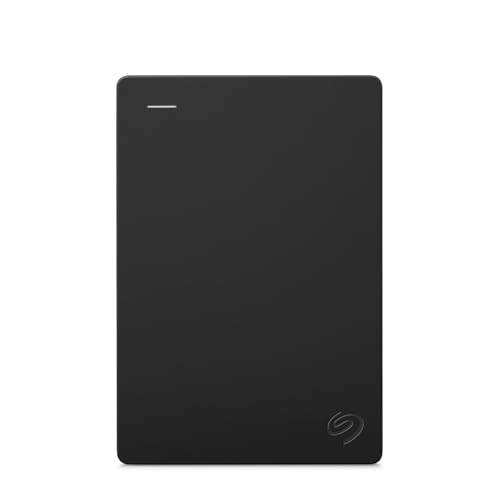
Seagate Portable 5TB External Hard Drive HDD – USB 3.0 for PC, Mac, PS4, & Xbox – 1-Year Rescue Service (STGX5000400), Black
Easily store and access 5TB of content on the go with the Seagate portable drive, a USB external…
As an affiliate, we earn on qualifying purchases.
As an affiliate, we earn on qualifying purchases.
Portable Storage, Backups, and Data Protection
External hard drives remain useful for backups, large media collections, project archives, and transferring files between computers. Capacity is only one consideration. Interface type, physical dimensions, power requirements, operating-system support, expected workload, and the value of the stored data should influence the decision.
Portable drives are convenient, but portability also exposes them to drops, lost cables, and changing environmental conditions. A carrying case and careful handling may reduce physical risk, while encryption can help protect sensitive information if a drive is misplaced. No individual drive should be treated as the only copy of irreplaceable data.
Start with the broader comparison of portable external hard drives, or consult the guide focused on portable external hard drives for reliable storage when dependability is central to the decision.
Build a backup system, not merely a drive collection
A sound backup plan keeps multiple copies and separates at least one copy from the primary device. For example, working files may live on a computer, with a local backup on an external drive and another protected copy in a separate location. The exact arrangement depends on file size, privacy requirements, internet access, and recovery needs.
Backups should also be tested. A process that appears to copy files but cannot restore them is not sufficient. Periodically confirm that important folders are included, the destination is readable, and the recovery instructions are understood.

UGREEN Revodok 6 in 1 USB C Hub Gigabit Ethernet Adapter with 4K HDMI
6 in 1 USB-C Hub: This USB C ethernent hub turns a single USB-C port into 6 ports…
As an affiliate, we earn on qualifying purchases.
As an affiliate, we earn on qualifying purchases.
Development Boards and Hands-On Electronics
Development boards make it possible to explore embedded systems, sensors, wireless communication, automation, and connected-device projects. The ESP32-C3 family is relevant to learners and experienced builders alike, but boards using the same core platform can differ in pin layout, connector type, onboard components, dimensions, and documentation.
Choosing a board begins with the intended project. Count the required inputs and outputs, identify voltage expectations, and check whether additional displays, sensors, relays, or battery hardware will be attached. Physical layout matters when a board must fit inside an enclosure or leave breadboard rows accessible.
The comparison of ESP32-C3 development boards can help narrow the field. New users should also consider documentation, example projects, community resources, and the availability of compatible cables and headers. A board with suitable support can be easier to learn than one chosen solely from a specification table.
Plan an electronics project before buying components
- Define the input, output, connectivity, and power requirements.
- Confirm logic levels and component compatibility.
- Check pin availability after reserved functions are considered.
- Decide whether soldered headers or a compact bare board are preferable.
- Allow room for debugging, programming, and enclosure access.
- Review the project’s security and privacy implications if it connects to a network.
Specialist Computing and Creative Software
Not every technology purchase is a mainstream consumer gadget. Designers, engineers, educators, researchers, retailers, and hobbyists often need specialist hardware or software. In these categories, workflow compatibility usually matters more than broad popularity.
Font-editing software is one example. A Mac user may need to create an original typeface, modify glyphs, inspect spacing, or export files for a particular production process. Interface preference matters, but so do supported formats, drawing tools, validation features, and integration with other creative applications. The guide to font editors for Mac provides a dedicated overview for that workflow.
Graphing calculators present another compatibility question. People using Linux may want a calculator that functions independently while also fitting into a computer-based workflow. File transfer, available software, connectivity, classroom policies, and the mathematical features required by a course should all be checked. See the guide to Linux-compatible graphing calculators for a closer comparison.
For inventory work, barcode scanners must be evaluated in the context of the entire system. Barcode formats, connection methods, scanning distance, device support, mounting, and the inventory application can affect suitability. A scanner that reads a code still needs to deliver the data in a form the target software understands. The overview of barcode scanners for inventory is a useful entry point for shops, offices, warehouses, and small organizations planning such a setup.
Technology, Design, and Consumer Culture
Technology culture extends beyond computers and electronics. Digital design tools, online communities, limited releases, customization, and resale platforms influence fashion and collecting as well. Sneakers illustrate how product design, visual themes, manufacturing, media, and internet culture can converge around a physical object.
Readers interested in that intersection can explore the guide to Oreo-themed Air Jordans. As with gadgets, names and visual similarities should not replace careful verification. Check the exact model, colorway, sizing information, seller details, condition, and return terms before making a purchase.
How to Compare Gadgets Without Getting Lost in Specifications
Specification sheets are useful, but they do not automatically reveal which product fits a particular person. Begin with the task, then identify the few characteristics that directly affect it. A portable drive buyer may prioritize capacity and connector compatibility; a developer may care about pin access and documentation; a traveler may judge a laptop stand primarily by folded dimensions and weight.
Create a short list of requirements before reading comparisons. Separate essential features from preferences, and note any deal-breakers. This makes it easier to reject unsuitable products even when they have impressive features in unrelated areas.
A practical gadget checklist
- Purpose: What recurring problem should the product solve?
- Compatibility: Will it work with current devices, ports, software, and operating systems?
- Usability: Is it comfortable and straightforward in the intended setting?
- Portability: Are its size, weight, cables, and power needs manageable?
- Support: Are instructions, updates, replacement parts, or accessories available?
- Longevity: Will changing standards or discontinued software limit its useful life?
- Privacy: Does it collect, transmit, or store information that needs protection?
- Recovery: What happens if the device fails or data is lost?
Use Technology as a System
The most successful technology choices fit together. An ergonomic stand may require external input devices. A development board needs compatible components and software. A storage drive becomes valuable when it is part of a tested backup routine. A barcode scanner depends on the inventory system receiving its data.
That systems perspective is the best defense against unnecessary purchases. Define the complete workflow, identify its constraints, and use focused guides to research the parts that matter. Technology news can then become a source of useful context rather than pressure to replace equipment that still meets your needs.